USA
Two years of Donald Trump's term will soon be over. Two years remain. In the midterm elections this fall, Americans can tighten the reins on the free-wheeling president.
There are many indications of a shift in power in at least one chamber of Congress. If the Democrats gain a majority in the House of Representatives, it will be much more difficult for Trump to push through his policies. So far, he has been able to rely on a completely Republican-controlled Congress.
With that power, Trump has started a major war in the Middle East, started his own so-called peace council that competes with the UN, threatened allies and ordered military attacks in a number of countries.
Regardless of the election result, the president will have great power over foreign policy and the military, but Americans' trust in Trump is declining in polls, and their patience with war is running out.
With a major defeat this fall, Trump would become more of a "lame duck" - a president paralyzed by action who quickly begins to lose influence over his party as voters disappoint.
.
Israel
Benjamin Netanyahu is often described as the prime minister with nine lives. Israel's prime minister has repeatedly overcome scandals and political setbacks and climbed back to power.
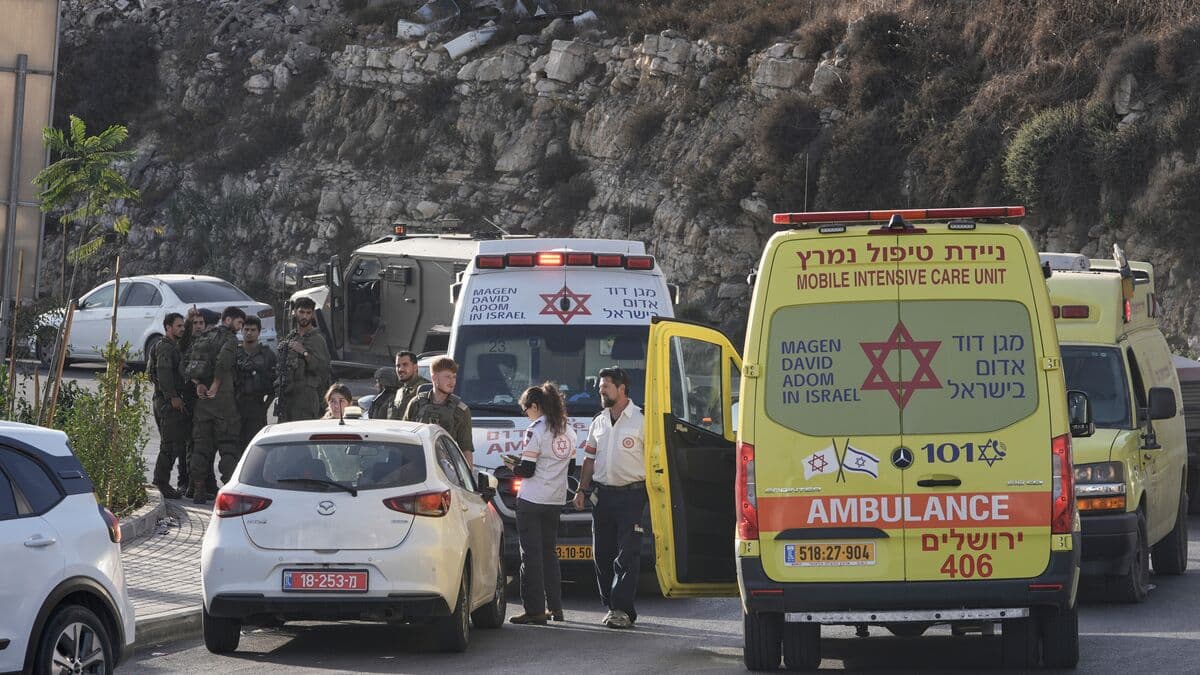
The Knesset elections are the first after Hamas' attacks on the country on October 7, 2023, and the wars that followed in Gaza, Lebanon, and Iran.
Critics and observers have long accused Netanyahu of escalating conflicts and polarizing in order to portray himself as Israel's defender. This is also the case this time, as he opposes the latest peace initiative in Gaza.
Since the last election - and during the ongoing wars in the Middle East - the Prime Minister has leaned towards smaller extremist parties and their supporters, who persistently call for an escalation of the war and attacks against Palestinians that violate international law.
Netanyahu and his ultra-religious colleagues appear to be losing support, but polls predict that neither they nor the opposition will gain a majority.
.
Russia
The State Duma election is not an election and it is clear in advance how it will go. But Vladimir Putin will have to deal with simmering discontent among Russians and try to give the appearance that the power apparatus is standing strong in the protracted war of invasion against Ukraine.
But the greater the measures it requires, the weaker it looks.
The political system is designed by and for Putin and his ruling United Russia party. Opposition parties have long been opposed or banned - most recently the liberal party Yabloko, which was barred from the elections after it took a stand against the war.
The parties that are allowed to run play by the dictator's rules and act mostly as sparring partners for him.
The presidential party's election campaign is about the "military special operation" - the Ukraine war - which is presented as absolutely crucial for Russia's security. Soldiers who are highlighted as war heroes have been given places on the candidate list.
.
UN Secretary-General
The United Nations will have a new Secretary-General at the turn of the year, when Portuguese António Guterres will step down after ten years.
The process will likely require a great deal of compromise. The permanent members of the Security Council need to agree on a candidate at a time when geopolitical tensions are higher than they have been in decades.
This speaks in favor of a candidate who can please all sides and is not expected to stick his chin out in big politics. There have been calls for nominations of women, as all general secretaries to date have been men.
An early favorite was Michelle Bachelet, former president of Chile and UN human rights chief, but in the Security Council's anonymous polls she has received several thumbs down. Two other women have received wider support: Costa Rica's former vice president Rebeca Grynspan and Guyana's former foreign minister Carolyn Rodrigues-Birkett.
.
Brazil
South America's largest country is sharply divided into right and left. Here too, Donald Trump casts a long shadow.
The incumbent leftist President Lula da Silva is running for re-election at the age of 80. The former right-wing President Jair Bolsonaro has been convicted of an attempt to retain power through a coup d'état, but his son Flávio Bolsonaro has since taken over.
Father and son Bolsonaro have strong ties to the Trump administration in the United States, which is also dividing voters. Flávio Bolsonaro visited the White House in May and Trump has imposed new import tariffs on Brazil. This is interpreted by one side as a sign of strong American support - and by the other as an American attempt to influence the Brazilian election.
If Lula da Silva and Bolsonaro the Younger were to meet in a decisive second round of elections, it would essentially be a dead heat between them, according to opinion polls.
.
Bosnia and Herzegovina
Alongside new major wars, one of the world's most sensitive peace projects is being put to the test.
Bosnia and Herzegovina is heading to the polls nearly 31 years after the end of the devastating Bosnian War, which ended in a compromise, the so-called Dayton Accords, that carefully divides power in the country along ethnic lines.
Today, tensions are higher than they have been for a long time. Bosnian Serb leaders threaten to break away and nationalists everywhere are causing political gridlock that prevents necessary reforms. The road to EU membership remains long, while the smaller neighboring country Montenegro has come much further.
September 18-20: Elections to the State Duma in Russia.
October 3: Elections to Latvia's parliament, saeima.
October 4: First round of the Brazilian presidential election (if there is a second round, it will be tentatively held on October 25). Elections for the tripartite presidency, parliament and cantons in Bosnia and Herzegovina.
October 25: Presidential elections in Bulgaria.
October 27: Elections to the Israeli parliament, the Knesset.
November 3: Mid-term elections in the United States, for a total of 35 seats in the Senate and all 435 seats in the House of Representatives. State and local elections are also held.
November 7: Parliamentary elections in New Zealand.
December 13: Haiti, which is extremely affected by the crisis, is tentatively scheduled to hold its first election in ten years.
December 22: War-torn South Sudan is tentatively scheduled to hold a first election that has been postponed several times.