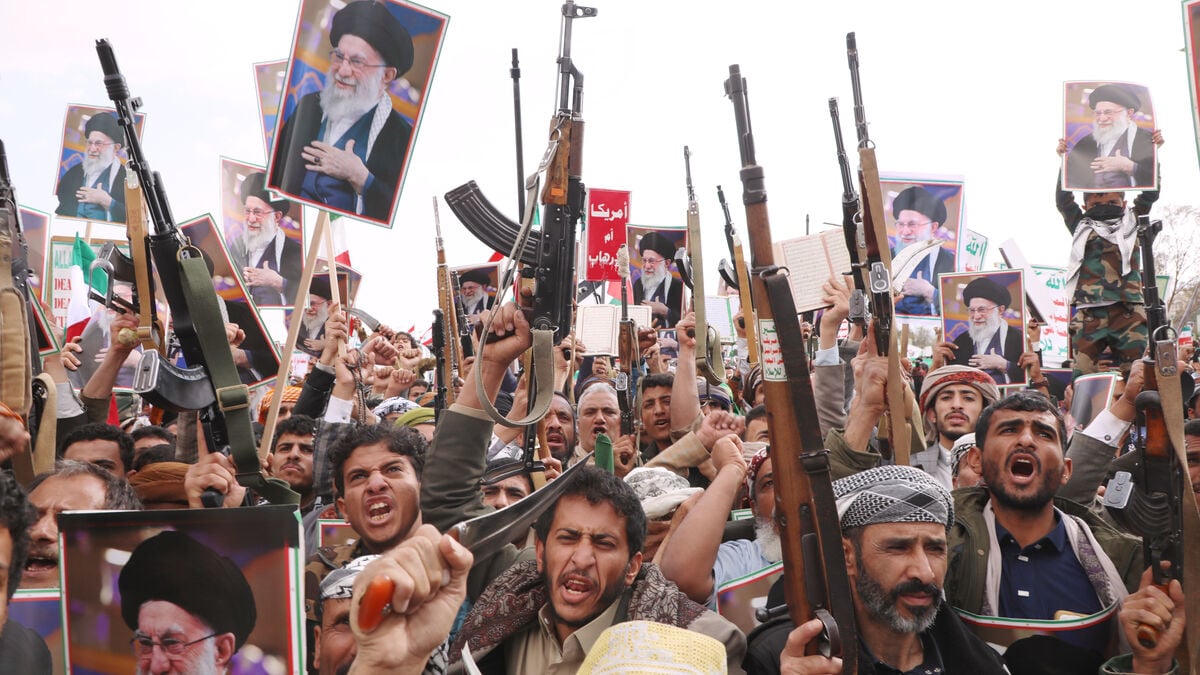
On Saturday, the Houthi movement in Yemen entered the war by firing a missile at Israel. The new front will affect Israel the most as the country will likely receive most of the attacks, says Peter Haldén, associate professor of war science at the Swedish National Defense University.
"There will be even more for them to keep track of. We have already seen that Israel's automated defenses, this three-layer system, work quite well but not flawlessly," he says.
Still a threat
Despite heavy attacks from both Israel and the United States in recent years, the Houthis still have an arsenal of weapons that poses a threat to the region, according to Peter Haldén.
During the Gaza war, the movement targeted ships in the Red Sea. Now there is a risk of closing the critical Bab el-Mandeb Strait, which connects the Red Sea to several important shipping routes. For the already pressured oil trade, the threat poses further disruption.
It reinforces the image that this situation is escalating and has not been addressed in Washington, says Peter Haldén.
Obstacles for Trump
The Houthis' entry also creates new obstacles for US President Donald Trump in reaching a solution to the conflict, notes Jan Hallenberg, professor emeritus of political science at the Swedish National Defense University. Not least if the economic situation worsens.
"The economic damage is caused by the US and Israel attacking Iran. Ultimately, it falls on the president to deal with this situation, and it will be much more difficult if the economic and political costs are higher," he says.
Jan Hallenberg still believes that Trump is looking for a quick way out of the war, despite reports that more American soldiers are about to be sent to the Middle East.
The only problem is that he doesn't have a plan. Now he's improvising because there's no plan B, he says.