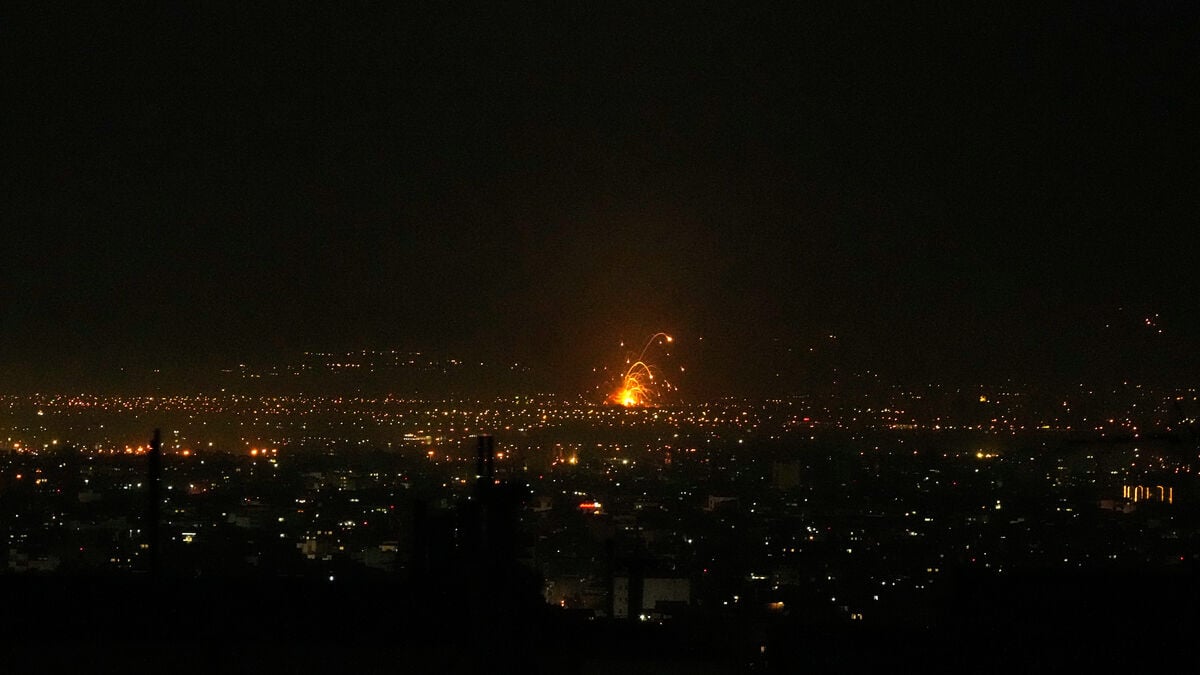
The clock is ticking. Trump's deadline expires at 2 a.m. tonight. If the US makes good on its explicit threats to attack infrastructure in Iran, such as power plants, bridges and railways, the risk of war crimes is imminent.
One of the most fundamental principles of international humanitarian law is the principle of distinction. Military force may only be directed against military objectives, not against the civilian population and civilian objects, says Mark Klamberg, professor of international law at Stockholm University.
Principle requires distinction
According to the distinction principle, the belligerent party is expected to be able to distinguish between what is military and what is civilian. If the infrastructure has dual functions, this assessment becomes more difficult.
If you have a military facility and a power plant that only supplies the military facility, then it can be considered a military target, says Klamberg.
But as a rule, power plants primarily supply the civilian population. Military facilities are usually powered by their own engines or diesel power plants.
The US and Israel have previously expressed threats to attack desalination plants that produce drinking water.
"It's, well, purely civil," he says.
Another principle that must be observed in large-scale attacks in war is the precautionary principle.
This means, among other things, that you have to determine what you are attacking.
Obligation to refuse orders
Civilian targets have already been attacked during the war. The US may have violated the precautionary principle in the case of the deadly attack on a girls' school in Minab, says Klamberg.
It may have been that the US was relying on old information that the school building belonged to a military base.
The Iranian regime has shown few signs of bowing to Trump's threats. On the contrary, the Revolutionary Guard has threatened to retaliate with attacks on infrastructure.
One's war crimes do not excuse the other's.
Regardless of whether Trump follows through on his threat to attack power plants, Klamberg believes that there are officers and lawyers in the US military who have an obligation to refuse orders if they constitute war crimes.
It is conceivable that some operations that first end up on the table will never happen. The Trump administration has fired many senior military personnel. We don't really know why, but it is conceivable that some of them protested, he says.