A collapsed ceasefire and renewed attacks are the latest developments in the conflict between the US and Iran. However, the likelihood of a full-scale war breaking out is less than the parties would like to make it appear, according to Aron Lund at the Swedish Defence Research Institute (FOI).
Both sides assume that the other is lying and are led by figures with very contrived rhetoric. But it is rare that one wants to fight to the bitter end.
Strait of Hormuz hot button issue
The memorandum of understanding signed between the US and Iran in mid-June is comprehensive and vague. Aron Lund believes that the issue of the Strait of Hormuz has been the main point of contention.
There were different interpretations of what had been agreed. Iran has read the agreement as opening the strait, but under Iranian control. The US believes it has the right to open its own route.
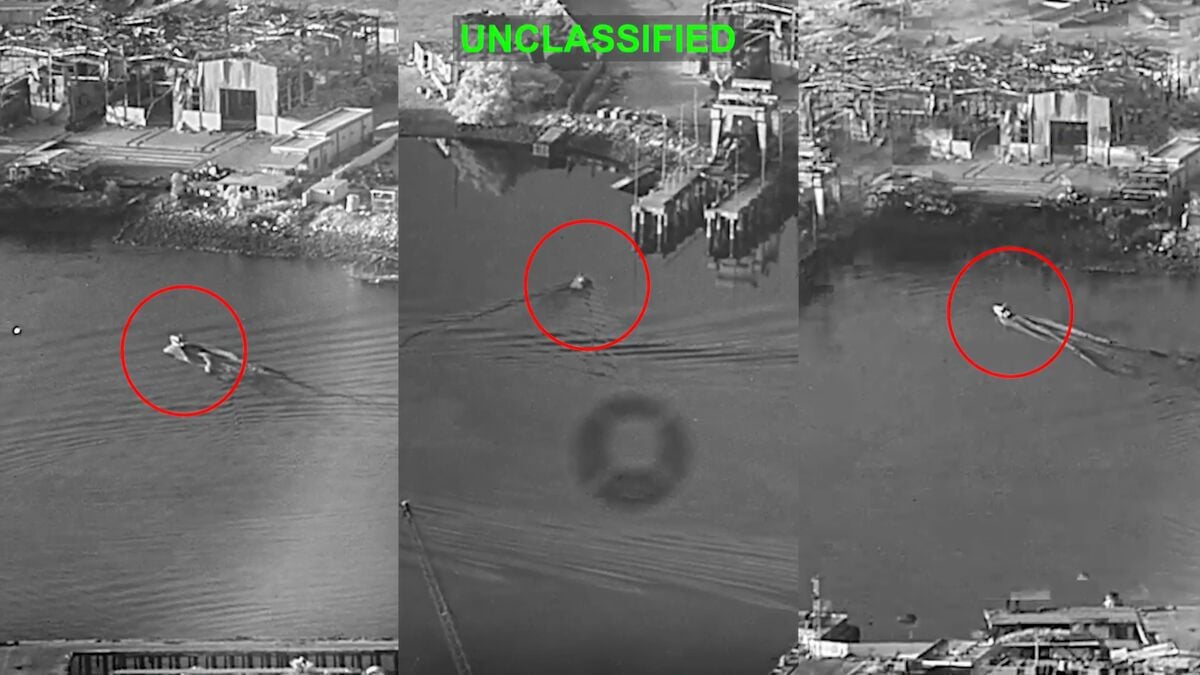
Iran has been blamed for three ship attacks in the Persian Gulf in early July. US President Trump rejected the ceasefire and airstrikes resumed.
The Iranian position is fundamentally illegal. You can't fire on civilian shipping. That said, it's surprising that the US, Arab countries, and even European leaders seem to have been taken aback by the Iranian stance on Hormuz.
Limited war back
The seemingly chaotic nature of the war makes it difficult to predict the next steps, or possible solutions. But both sides are calculating, according to Lund.
Both sides see an agreement in the offing. But the other side must be weakened - and convinced to come forward.
Until one side is thrown off balance in the power struggle, threats are used as a means of pressure.
For the US, it is mainly about expanded air campaigns and Israel's possible involvement. For Iran, it is about the price of oil and attacks in the region, supported by the militias Houthi Movement and Hezbollah.
It may take time, things may go wrong. But in practice, the terms that were agreed upon the first time are being renegotiated, says Aron Lund.
Facts: The statement of intent
The US and Iran agreed in early June to a ceasefire and a 60-day deadline to negotiate a peace solution. The declaration of intent consists of 14 points.
In a first stage, both countries and their allies will cease all hostilities. Lebanon's "territorial integrity and sovereignty will be ensured."
The US will begin to lift its naval blockade of Iran and ensure that Iranian crude oil exports can resume. Frozen Iranian assets will begin to be made available.
Iran will ensure that commercial traffic through the Strait of Hormuz can resume for 60 days, including through mine clearance. The country reiterates a promise never to acquire nuclear weapons.
In a possible peace agreement, the US will lift all sanctions against Iran and move all military forces from Iran's vicinity. The US, together with partners in the region, will develop a plan in which Iran will receive the equivalent of just over SEK 2,800 billion for "reconstruction and economic development" in an agreement.
The 60-day deadline can be extended. A final agreement must be approved by the UN Security Council.