More coordination will make EU foreign policy stronger and more modern while saving money.
At least that's what Germany and France hope, as they have jointly proposed a major transformation of the EU's "foreign affairs ministry" - the EEAS.
The idea is that the relatively independent EEAS, which was created as late as 2010, will revert to being a regular directorate-general under the Commission, but at the same time be given overall responsibility for a number of issues that are playing an increasingly important role in today's foreign policy: defence, neighbourhood policy, aid and perhaps even trade.
“Not working”
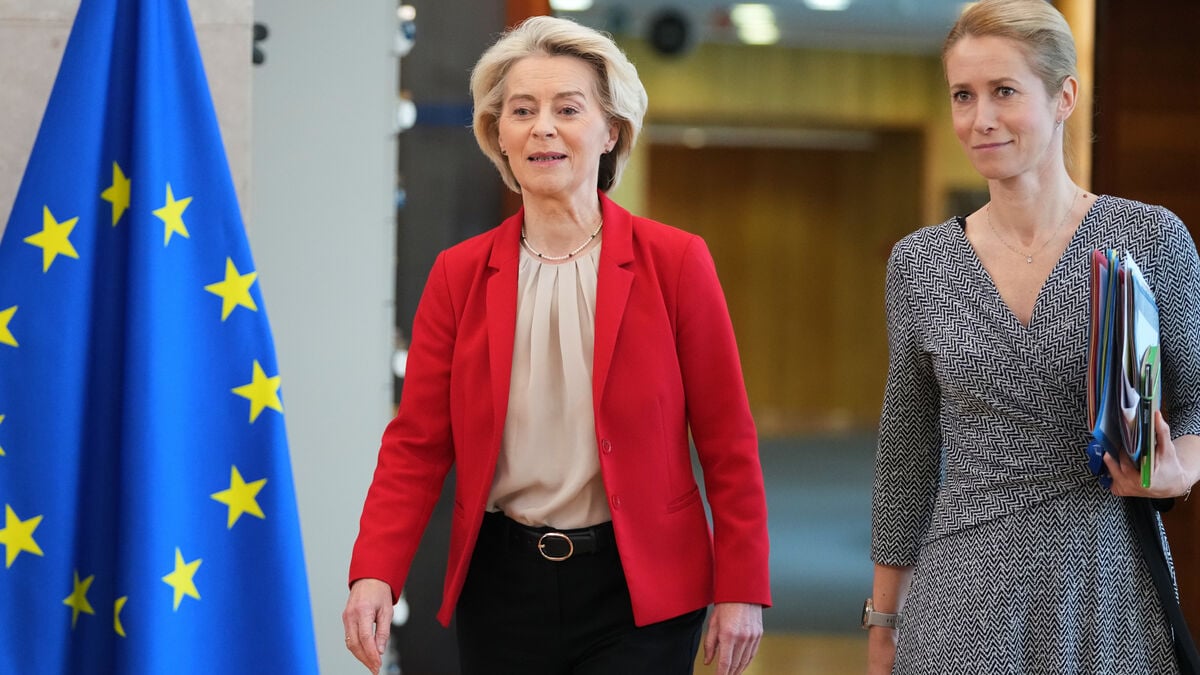
Formally, it would give more power to the EU's own "foreign minister", foreign affairs chief Kaja Kallas. On the other hand, it would tie her more closely to Vice-President Ursula von der Leyen, who clearly and willingly wants to be the one to run her entire Commission, with the help of her powerful chief of staff Björn Seibert.
It is obvious that Kallas does not want such a situation, unless she has the last word.
"If we have issues where someone above me is the one making the decisions, it doesn't work. If we move everything to the Commission, especially the small member states will lose control over foreign policy," Kallas said after last week's foreign ministers' meeting in Ireland.
Constant battle
The role of foreign minister has always been complicated, not least because many EU countries are keen to decide on foreign affairs themselves. Political background and cultural differences also play a role. Countries in the north and east have sighed heavily over how previous foreign ministers from Italy and Spain have led the operation. Now the grumbling is heard mainly from the Mediterranean about how things are working under the Estonian Kallas.
Sweden, however, is among the supporters.
Absolutely. We are very like-minded. She also puts Ukraine's cause high on the agenda. It is something that I think is completely existential, said Foreign Minister Maria Malmer Stenergard (M) when the reform issues were discussed at the meeting in Ireland.
Abandon the veto?
The Foreign Minister is mainly hoping for success with regard to another newly introduced proposal in which eleven countries, including Sweden, are pushing to make more foreign policy decisions using a qualified majority, rather than total unanimity.
"Now the focus should be on getting things done. Stop internal bickering, which we unfortunately see too much of, and ensure that EU member states can deliver and not let individual countries stand in the way of important decisions all the time," said Malmer Stenergard.
Kaja Kallas (born 1977) is the EU's High Representative for Foreign Affairs and Security Policy and Vice-President of the European Commission since 2024. She was previously Prime Minister of Estonia from 2021 to 2024, leader of the liberal Reform Party from 2018 to 2024, and a Member of the European Parliament from 2014 to 2018.
Ursula von der Leyen (born 1958) has been the President of the European Commission since 2019. She belongs to the Christian Democratic Union (CDU) and was Minister of Defense in Germany from 2013 to 2019 and before that Minister of Family Affairs and Labor since 2005.