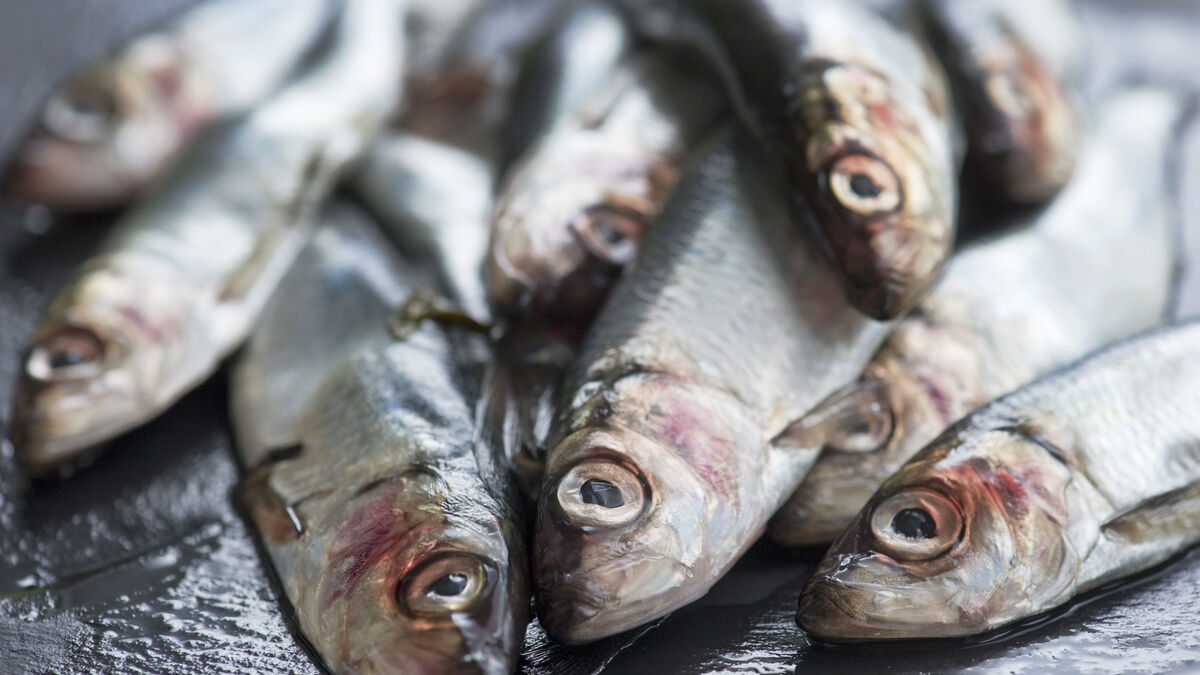
EU fisheries ministers decided on Monday that herring catch quotas in the central Baltic Sea and the Gulf of Bothnia may be increased by 71 percent and 12 percent, respectively, next year.
The higher quotas remain within the limits set by the International Council for the Exploration of the Sea (ICES) for how much fishing the herring stocks can withstand.
But Sara Söderström, a researcher at the Baltic Sea Centre at Stockholm University, warns that estimates of stock growth are always uncertain.
ICES expects the herring stocks to develop fairly well, but points out that estimates of how many fish are born are always uncertain.
“It is not at all unusual to see so-called phantom increases,” says Söderström.
Urged caution
Before the fisheries ministers’ decision, the European Commission had proposed lower catch quotas than those the ministers approved.
“The Commission explicitly urged caution,” says Söderström.
“I agree that it would have been safer for the ecosystem, the fish and the fishery if they had waited a couple of years before making such a large increase and seen how the stock actually develops.”
Herring is a so-called keystone species in the Baltic Sea and a central part of the ecosystem.
“It is food for many things, it eats a lot, and it moves both nutrients and energy throughout the ecosystem,” says Söderström.
“Fishing takes a very large part of the herring biomass.”
Turned into fishmeal
In the Gulf of Riga, they have managed to find a level of fishing that keeps the herring stock stable year after year.
But the EU’s target for the central Baltic Sea stock has not yet been reached. Many countries fish there, and that is where the catch quota is now being increased by 71 percent. A few larger Swedish fishing vessels operate in the area.
Sweden and Finland share the catch quota in the Gulf of Bothnia, with Finland receiving 82 percent.
Herring is mainly caught to be processed into fishmeal, and in Finland much of the fishmeal is used as feed on fish farms.
Small-scale coastal fishing, in which fish are caught for people to eat, does not pose a threat to herring, according to Söderström.
Sweden was the only country in the EU Council of Ministers that could have accepted the European Commission’s more cautious increase in catch quotas. In previous years, too, Sweden has been largely alone in keeping catch quotas down.

Discussion
opens with reader accounts