The proposal presented on Thursday is divided into four levels:
Children under the age of three should have no screen time at all.
Children between the ages of 3 and 13 should not have their own social media accounts or even their own devices. However, they should be able to access “child-friendly” video-sharing sites through accounts opened by their parents or guardians. A maximum of one hour per day should be allowed.
Children between the ages of 13 and 15 should be able to start “mini-accounts” on social media, under their parents’ accounts. Their opportunity for social contact should be limited - and here too the limit is set at a maximum of one hour a day.
Children between the ages of 15 and 18, however, are allowed to set up their own accounts as they wish, but with stricter content and contact conditions than for adults.
Age verification
An overarching basic rule is that “all online services must be designed to be secure” - that is, the responsibility lies with the tech giants to ensure that what they offer is okay.
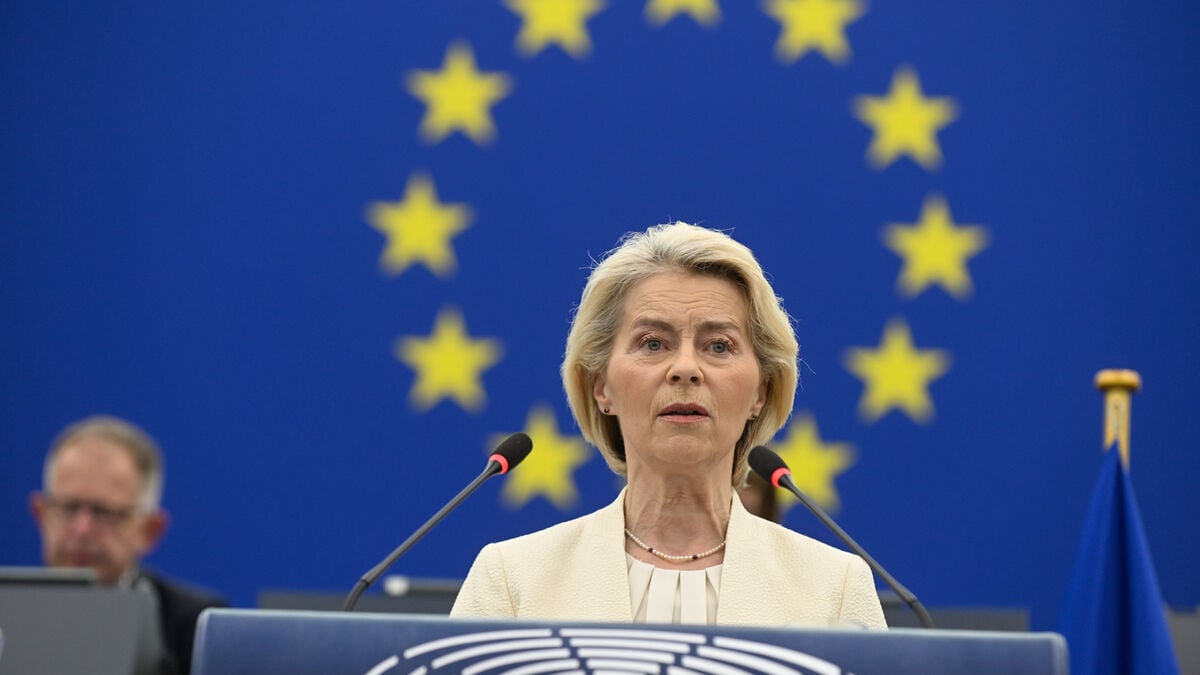
"Now is the time for the EU to act. This law sets clear limits on the digital world, just as we do in the real world," said Commission President Ursula von der Leyen at a press conference in Strasbourg.
The proposal includes several requirements for anyone who offers online social services, video sharing, games or chatbots for people under the age of 18. Among other things, there will be a ban on “addictive” services, the possibility of unlimited scrolling, reward systems and notifications during “bedtime”.
In addition, the services must ensure that they have functioning age verification systems.
Hard time limit
The legal text clearly stipulates that guardians should be able to set a maximum limit for how long each day the children should have access to the parentally approved accounts that are accepted for 13-15 year olds - but that this maximum limit must not be longer than one hour a day.
Such a function must be built in by the service provider. It should therefore not be possible to allow a maximum time longer than one hour.
The same strict rule applies to the parental accounts that children up to 13 years of age can use.
Even for adults?
The proposal is now being sent for customary consideration by the EU Parliament and EU member states.
Both criticism and praise are being heard from the European Parliament.
The Eurosceptic right-wing group ECR believes that it should be up to each country to decide on any age limits, while the Green Party group would like to see stricter rules for adults as well.
"It's not just for children that the internet is unsafe," writes Dutch MEP Kim van Sparrentak in a press release.
The European Commission's proposal aims to ensure that the same age limit and rules apply to young people's access to social media in all EU countries, with a total ban on access for those under 13 and limited access for those under 15.
Countries that have already introduced their own laws must then adapt, if and when a common line is established.
For example, France and Greece have set their limit at 15 years, while Austria has chosen 14 years.