Interest in the climate issue has wavered, says Magnus Wennerhag, professor of sociology at Södertörn University.
It began to gain attention in the late 1970s, but it did not begin to mobilize people in Sweden until the early 1990s. Then there were a few years of activity before it faded somewhat and then came back in the 2000s around the climate summit in Copenhagen.
For the great-grandchildren
Åsa Sohlman joined the Grand Panthers organization twelve years ago.
I was a little interested in the climate, but I didn't know anything about it. Then I found a notice in the newspaper about the Grand Panthers. What I thought was good about them was that they talked about the grandchildren, because I have children and grandchildren and great-grandchildren.
I think that's the case for many older people. I'll be dead before the climate crisis hits, but we feel like we want to do something for our grandchildren.
The election in which climate has perhaps played the biggest role to date was in 1988, when the Green Party entered parliament. In the 2022 parliamentary election, approximately one in five voters cited environmental and climate issues as the basis for their party choice, according to a report from the Electoral Research Program at the University of Gothenburg.
The biggest boost for the Swedish climate movement came in connection with Greta Thunberg's school strike for climate, which began before the 2018 election and also had a major impact in the rest of the world in 2019.
It was the way they packaged their opinions, that it was about young people, that children are a particularly important group because they will have to live with the effects of climate change the longest, says Magnus Wennerhag.
Spectacular actions
When the movement was at its peak, demonstrations were held in Stockholm that gathered around 50,000 people.
"As far as I know, it was completely unique in the climate issue. As it started to grow, the adult world and politics were forced to react," says Per Adman, a lecturer at Uppsala University who researches climate engagement.
Then the corona pandemic came and it became impossible to gather thousands of people in one place.
When the pandemic was over, many of the Greta generation had graduated from school, so the social network as a foundation was no longer there.
In recent years, it is not the large demonstrations that have received the most attention, but the more spectacular ones, where activists have blocked traffic or disrupted television broadcasts.
This weekend's demonstration could be the beginning of a new wave of engagement, believes Per Adman.
It seems to be driven by other organizations and networks, more by adults, like the Rebel Moms, and not by schoolchildren. This is not really surprising, because we have seen waves of climate action like this before. What stands out is that this wave is coming faster than the previous one. This could be due to climate change becoming increasingly visible and also to the harsh criticism of climate policy in recent years.
Increases election year
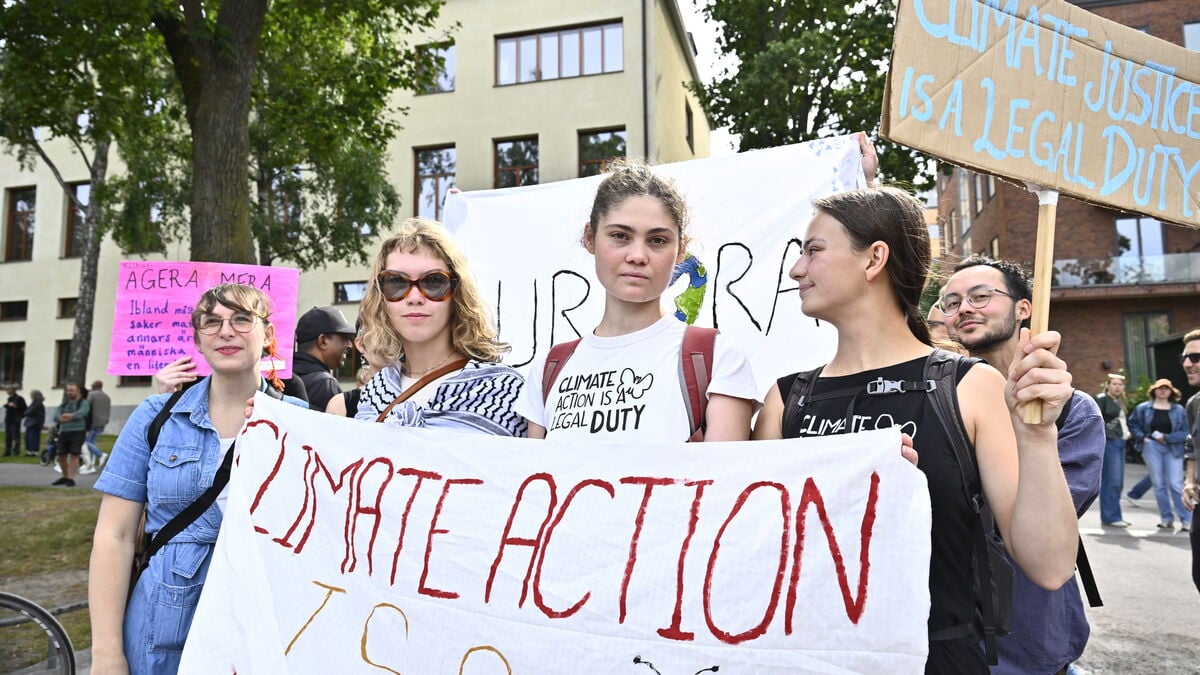
The number of participants reached the figures during the Greta years, over 50,000 joined the train on August 23.
By Swedish standards, the demonstration was very large, on par with the climate demonstration in Stockholm in September 2019, when the climate issue was at the center of the political debate. Apart from these two climate demonstrations, only Stockholm Pride has had similar participation figures in recent decades, says Magnus Wennerhag.
The fact that the climate movement is succeeding in mobilizing so many organizations from central parts of civil society should send a signal to politicians that the climate issue is engaging a great many people.
Sweden doesn't really have the same demonstration culture as countries in Southern Europe, for example, he points out. Many people choose to get involved in other ways instead, for example by being a member of an organization or donating money.
Climate commitment can take many different forms, emphasizes Ida Edling. She is 26 years old and a spokesperson for Aurora, the organization that sued the state in 2022 for inadequate climate policy.
Civil disobedience is an important part but it's a very, very, very small part of the climate movement in Sweden today. So it's interesting that it's gotten so much attention.
I think it's easy for most people to find something that suits them. There's everything from art to law to traditional demonstrations and stuff.
Requires system changes
Ida Edling got involved in Aurora in 2021, but has always been interested in environmental issues.
Science is very clear that if we are to avoid planetary collapse, greater systemic change is required than ever before in history. Therefore, it feels obvious to me, who live in Sweden where we have many democratic rights, to use them to try to contribute to the systemic changes that are required.
Per Adman thinks it is also important to pay attention to those who do not choose to get involved in the climate, and why.
Many ordinary people are concerned about the climate, but for the vast majority it does not lead to engagement. According to research, it is a combination of the fact that it feels pointless - that it is impossible to influence the issue, it is so big, complex and global. But also that there are strong more or less pronounced norms that create obstacles to getting involved - it "doesn't feel right" or is something that "others or activists do".
But events like this weekend's demonstration show that it is also possible to change things.
It shows the great commitment that exists among many ordinary people, ready to be transformed into political activity if they feel that it is socially acceptable to get involved, and feel that it can actually play a role, he says.
The demonstration was held in Stockholm on August 23 at the initiative of the Swedish Society for Nature Conservation, Rebel Moms, Rebel Dads and Researchers' Desk.
The demonstration itself was the culmination of the “24 hours for the climate” event.
More than 50,000 people from over 280 organizations participated in the climate demonstration.