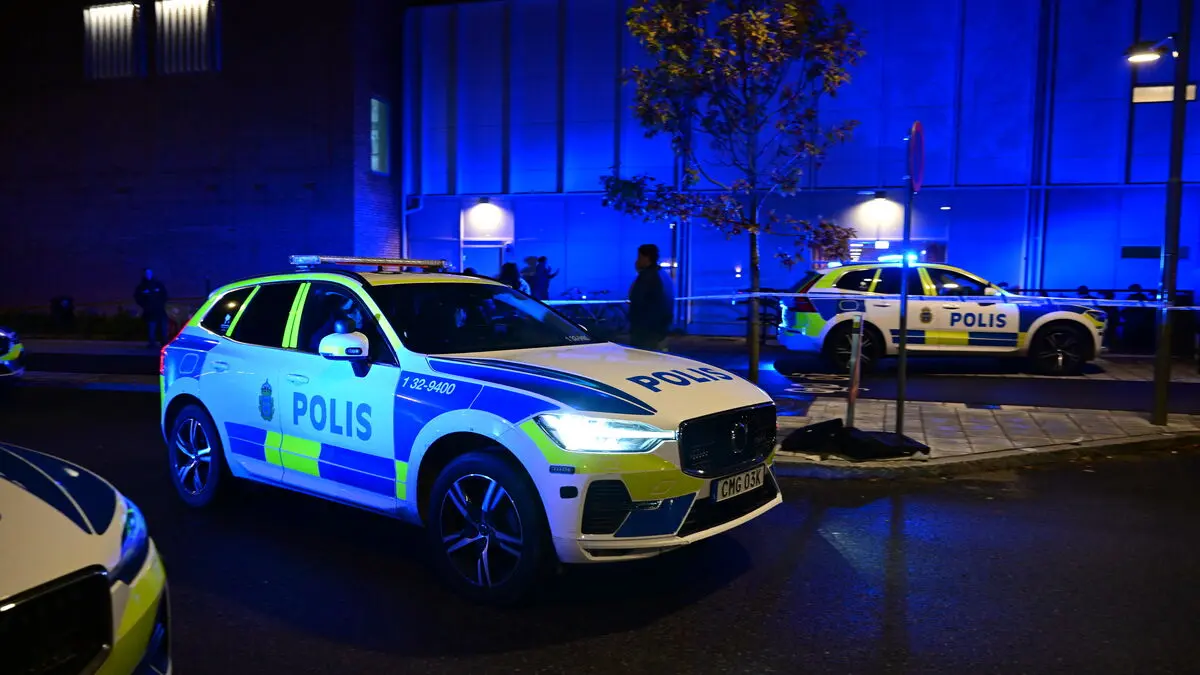
The plan is that children aged 13 to 17 may be sentenced to prison from July 1.
This is happening at the same time as the age of criminal responsibility is being lowered to 13 years for the most serious crimes. The current penalty for children, secure youth care, is being phased out by 2030.
The fact that 13-year-olds can be imprisoned has met with widespread criticism, including from the Director General of the Swedish Prison and Probation Service, Martin Holmgren. Despite the criticism, the government is now moving forward with a bill.
"Through the reform, we will strengthen society's protection against serious crime and take care of children convicted of serious crimes much better than before," says Minister of Justice Gunnar Strömmer (M) at a press conference.
Teacher-led lessons
The youth prisons are special children's and youth departments in existing institutions, but the children must be kept separate from adult inmates.
For example, they will have their own sports hall, their own playgrounds and their own medical department. The operations will be divided so that 13–14-year-olds and 15–17-year-olds will be placed in different departments. In exceptional cases, 18–20-year-olds may be placed in a youth prison, but generally they will be in an adult institution.
The inmates will also attend small school classes with the same people they share the ward with. All teachers will be qualified and these will generally be in-person, teacher-led lessons.
"My belief is that they will receive a better education while they are in prison than they would have received if they were out and not going to school," says Martin Melin, the Liberal Party's legal policy spokesperson.
New focus for Sis
Children may be locked in their rooms at night for a maximum of eleven hours. For adults, 14 hours applies. The rules for leave, release and conditional release are proposed to be more flexible than for adults.
A total of eight prisons are now being prepared to accept minors. Rosersberg, Kumla and Sagsjön will be the first to open.
Previous reports have also shown that nine out of ten young gang offenders sentenced to secure youth care reoffend. Gunnar Strömmer (M) believes that the new penalty can reduce that figure.
"Everyone understands that we cannot continue in a system where 90 percent relapse into serious crime."
The Swedish State Institutions Board (Sis) will also have new conditions, according to Strömmer.
"In the future, Sis will be able to focus on providing care to children and young people who are in compulsory care," says Strömmer.
Youth prisons
The Swedish Prison and Probation Service plans to establish special youth departments for boys at the Högsbo, Rosersberg, Österåker, Kumla, Skenäs and Täby prisons. Departments for girls are planned at the Ystad and Sagsjön prisons.
Rosersberg, Kumla and Sagsjön will be able to accept young people from July 1, 2026.
The age of criminal responsibility will be lowered from 15 to 13 years on July 3, 2026. This applies to crimes with a minimum sentence of four years.
For a 13-year-old convicted of murder, the sentence could be 1–2 years in juvenile prison and for a 14-year-old, 3–4 years in juvenile prison.
Source: Ministry of Justice