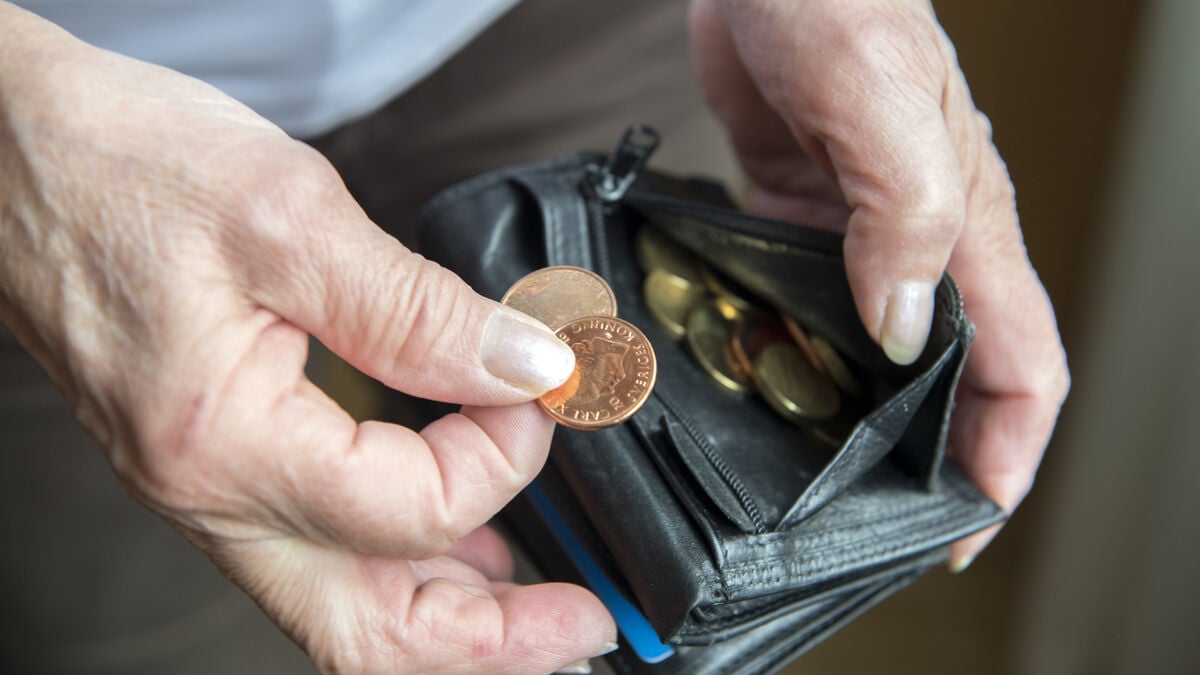
The concept of poverty is controversial. There are many ways to measure it. Actual poverty, relative poverty and self-perceived poverty.
Statistics Sweden's (SCB) figures on living conditions are based on what Swedes themselves answer.
In 2021, there were 150,000 Swedes within the Statistics Sweden definition of “Severe material and social poverty”. By 2025, that number had increased to 408,000. The number with the Statistics Sweden classification of “Material and social poverty” has doubled to 729,000.
Conflict of goals
Significantly more of the poor have a foreign background, but the increase is equally large among people with a Swedish background.
It has increased dramatically from a very low level. Sweden has been at the bottom of these extreme poverty figures in the past, but now in the 2020s it has skyrocketed, says Tapio Salonen, professor of social work at Malmö University.
Development has been ongoing since the 1990s.
"There have been conflicts of interest in the policies we have pursued, regardless of which governments we have had, between the labor line on the one hand and social and economic security on the other. In recent decades, we have had a tendency to emphasize the labor line," says Salonen.
He points out that housing allowance, child allowance and unemployment insurance, among other things, have not kept up with rising costs. The idea that lower benefits from welfare systems will speed up the path to work is not working well, according to Salonen.
There is very little, if any, scientific support for this.
Not understood
"Then people often don't understand what kind of situation others are in. They are often limited by illnesses; they have other obstacles that must be removed before they can take a job," he continues.
Timbro's chief economist Fredrik Kopsch does not agree that the gaps have increased, an argument that, according to him, often comes from the left.
That's not entirely true. Real wages increased for everyone (until 2021). Everyone is basically better off today. Of course you can find individuals who are worse off, he says.
Instead, he points to inflation as a decisive reason and to the fact that real wages were at their highest in 2021 before prices skyrocketed.
That was when we were, by historical standards, at our absolute richest in Sweden, says Kopsch, who believes that people therefore often indicate in their answers that they feel relatively poorer.
There is one thing that the Timbro economist and the sociology professor agree on - inflation hits the poor the hardest.
“Material and social poverty” means that a person cannot afford a certain standard of living.
A person who cannot afford seven or more of the 13 items below is "severely" poor. A person with at least five hits on the list is considered to be living in material and social poverty, according to the EU's definition.
Can cover unforeseen expenses of SEK 14,000
Can afford one week of vacation per year
Can pay debts on time: mortgage, rent, bills, installment purchases
Can afford a meal of meat, chicken, fish or an equivalent vegetarian option every other day
Can afford to keep the home warm enough
Can afford access to a car
Can afford internet access
Can afford to replace worn-out furniture
Can afford to replace worn-out clothes
Have at least two pairs of shoes (including a pair of all-weather shoes)
Can afford to spend a small amount on themselves each week
Can afford to regularly participate in some leisure activity that costs money
Can afford to meet family or friends for coffee or dinner at least once a month
Source: Statistics Sweden