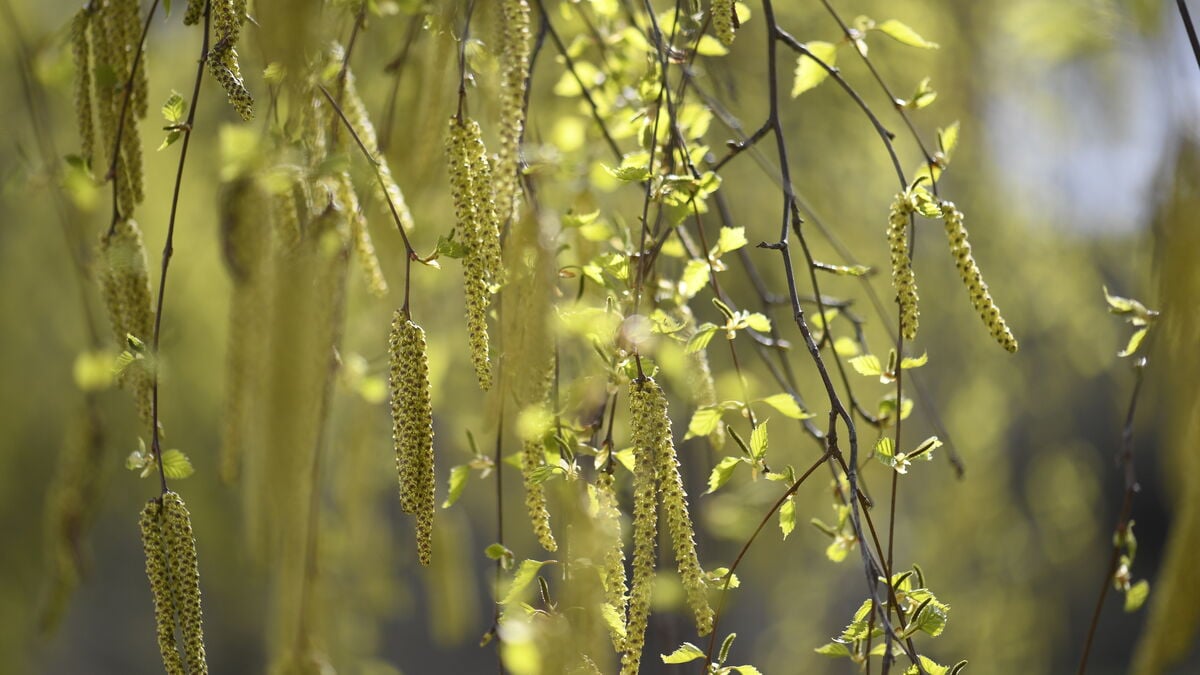
This year's winter is significantly colder than last year's, and the Swedish Museum of Natural History, which continuously measures pollen levels in the air, has noted this year that the pollen season is shifted by a full month compared to last year.
Despite this, pharmacies have begun to see an increase in sales of allergy medicine and more people are starting to notice symptoms.
How is pollen possible in sub-zero temperatures?
One explanation is that pollen arrives with southerly winds from parts of Europe where hazel has already started to bloom, says Agneta Ekebom, pollen expert at the museum.
What causes the early pollen season?
Climate change has generally led to warmer winters, which means that the pollen season is advancing as flowering occurs earlier and earlier.
Longer and more intense
Liselott Florén at the Swedish Asthma and Allergy Association says that the pollen season has also become longer and more intense.
How many people are allergic?
According to the website Pollenkoll, a quarter of the population is allergic to pollen. Liselott Florén says that the number of allergic people in the Western world is increasing.
Florén mentions the two main reasons why it is increasing in the Nordic countries.
When you are exposed to pollen for a longer period, the risk of developing allergies increases. And as the climate changes on the continent, other types of pollen move north into northern Europe.
Among other things, it concerns ragweed, which is very allergenic. It grows in Central Europe and is now starting to reach our latitudes, she adds.
Restock the medicine cabinet
What will the pollen season look like in the future?
For those who are allergic to hazel, it is good to pay attention to the forecasts and already stock up on medication, says Liselott Florén.
According to Pollenkoll, hazel is followed closely in time by alder, then elm, aspen, birch and willow. Later in the spring come oak and grass. Finally, during the summer, grey pine appears.
• Air out early in the morning and at night, not during the day when there is the most pollen in the air. It is also good to air out when it is raining.
• Dry laundry indoors to avoid pollen sticking to clothes.
• Shower before going to bed, as pollen often gets stuck in your hair.
• Dogs' fur is full of pollen. Talk to your employer if you have a dog at work.
• If you have a dog at home, you should avoid keeping it in the bedroom.
• Limit time outdoors by, for example, exercising indoors.
In addition, over-the-counter medications such as antihistamine tablets, nasal sprays and eye drops for allergy symptoms are mentioned.
It may also be a good idea to take preventative medication two weeks before you expect to have symptoms. This protects the mucous membranes before they are exposed.
Source: Swedish Asthma and Allergy Association.