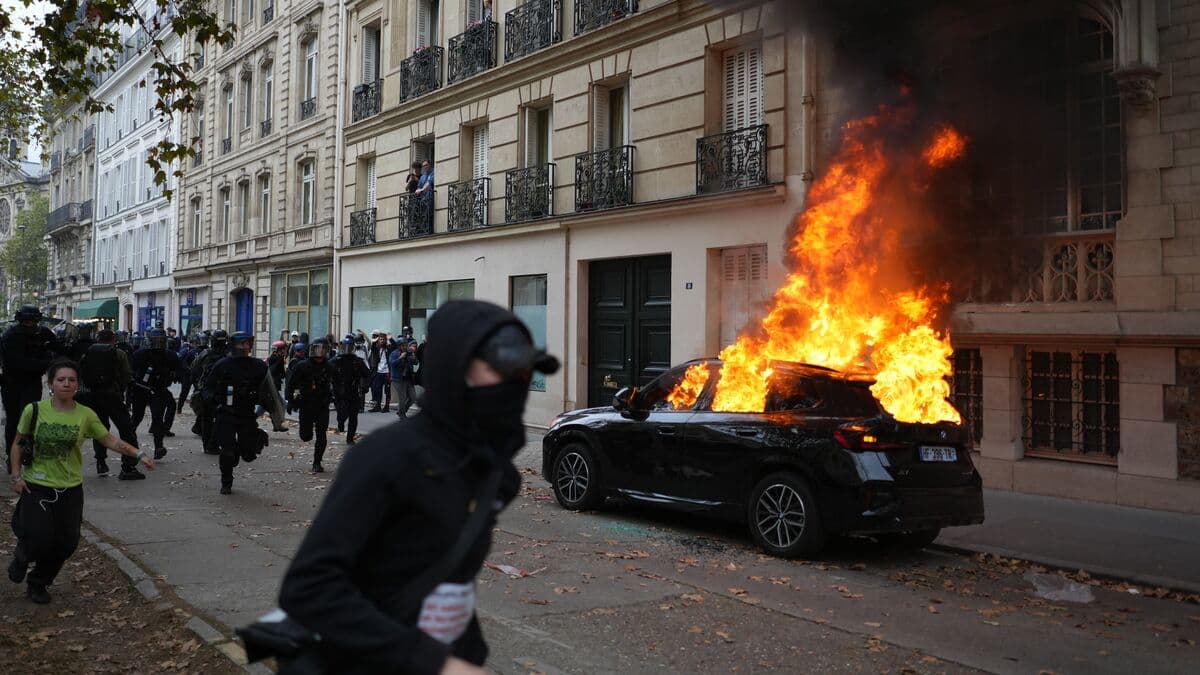
Individuals are contacted through social media and offered assignments that at first glance may seem quite harmless, warns the security police PET. This could involve photographing a warehouse building, or reporting what times a factory receives deliveries. It could involve setting fires that could have major consequences.
It also appears that Russia is managing to find willing recruits. PET claims to have caught the Russian intelligence services "red-handed" as they were preparing an attack on Denmark in the near future.
"There are such concrete signs and preparations that we see it as necessary to issue a statement that this is a threat that should be taken seriously," says Emil Græsholm, head of PET's counterintelligence, to the newspaper Berlingske.
“See it already now”
The defence industry in Denmark and operations that contribute to military support efforts in Ukraine are identified as Russia's primary targets.
"Therefore, it is not just a warning that one day it might come to Denmark. We are already seeing the planning. Very concrete," says Græsholm.
In the interview, the counterintelligence chief does not want to go into how many incidents or attempts there have been so far, but he says that the agency has had to devote significantly more resources to responding to a more extensive and intense threat.
PET has not presented any evidence, objects Russian Ambassador Vladimir Barbin in a written comment to Ritzau. There he also describes PET's alarm as an admission that Denmark's "reckless involvement in the conflict in Ukraine" and its support for the Ukrainian military "pose a security risk for Denmark and its citizens."
German reactions
In recent weeks, intelligence agencies in many NATO countries have raised the alarm that Russia will escalate hybrid warfare in European countries. The aim is believed to be to intimidate and undermine continued support for Ukraine's defence in Russia's stalled war of invasion.
The German government has explicitly blamed Russia for an attempted attack at Leipzig airport in early August, where drones with explosives were found in the vicinity.
The European Commission has described it as something akin to an attack using military means by Russian agents, and as “state-sponsored terrorism.” A number of EU countries, including Sweden, have summoned Russian ambassadors to mark the occasion.