The metropolitan area has tens of millions of inhabitants and is often noted for air that is so polluted it ranks among the world's worst.
But now India wants to follow the example of China, where several giant cities are rapidly removing exhaust fumes from the streets so that air quality improves.
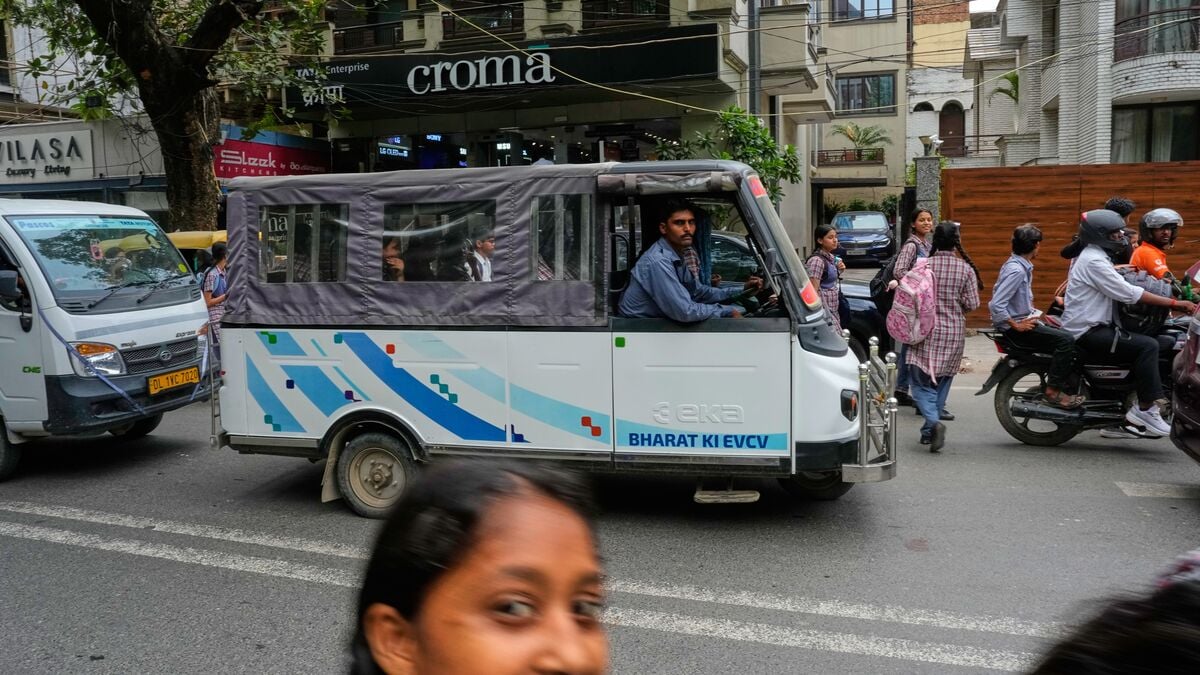
On July 1, a new law came into effect in Delhi that will gradually ban vehicles that emit exhaust fumes. Seventy percent of all vehicles in the giant city are two- and three-wheelers, ranging from mopeds to various types of rickshaws and tuk-tuks that can carry several passengers or hundreds of kilograms of cargo. From the turn of the year, no new three-wheelers with exhaust pipes will be allowed, and from 2028, two-wheelers will also be subject to the same rules.
When it comes to passenger cars and larger vehicles, authorities are taking a more cautious approach, but economic carrots are being introduced so that anyone who scraps an exhaust-emitting car or buys an electric car receives a premium, reports the AP news agency.
“Winter without smog”
The regional law is not the first in India, but it is seen as the most important. It is both unusually far-reaching and Delhi is both the capital and the country's largest city.
Delhi's electric vehicle plan is one of the most ambitious I've seen in India, Jaideep Saraswat, an expert at the think tank Vasudha Foundation, told the AP.
He sees the rules as a signal of the inevitability of the transition. As in China - where the number of electric light vehicles is in the hundreds of millions - he believes the measures will be popular.
I live in Delhi myself and I'm sure everyone will be happy about this. To experience winters without smog.
The situation is usually worst in winter, when the winds die down and pollution settles over the city like a blanket.
“Three years ago”
Commuters AP spoke to wonder if the infrastructure to keep the batteries charged will be able to keep up. But moped rider Shyam Singh is happy to have switched to electric.
It's been three years since I queued and paid for gas. In the meantime, it has become more and more expensive.
So I save even if I charge outside in the city, he tells AP .
Siddhant Jha says his old moped can probably keep going for a while longer.
"I want to wait a few years, for better models," he says, referring to the electric range.
The 150,000 rupees (about 15,000 kronor) I have in my budget will last longer then, he explains to AP.