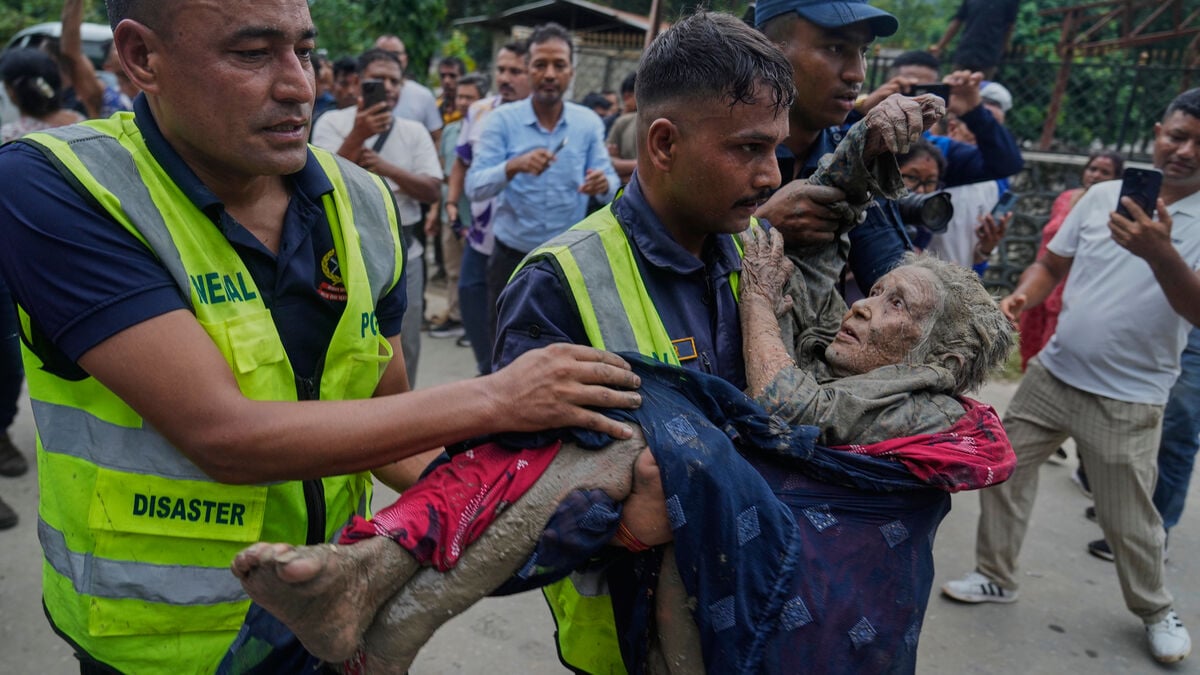
People, entire residential areas, construction sites and livestock have been swept away in powerful landslides that occurred on Wednesday.
A total of 157 bodies have been recovered in Nepal, the country's police said on Wednesday evening, Swedish time.
In Tibet, three people have been found dead, and many more are missing, according to Chinese authorities.
More than 400 people have been reported missing in Nepal, the majority of them tourists. About 100 Indians, 100 Nepalese, 50 Americans, 30 Britons and 20 Canadians are among the missing, writes the BBC.
Nepal's tourism authority said on Wednesday afternoon that 341 foreign tourists are among the missing.
The Swedish Ministry of Foreign Affairs has no information about injured or missing Swedes.
"The Ministry of Foreign Affairs is in contact with the embassy in New Delhi and the consulate in Nepal. At the time of writing, we have no information about injured or deceased Swedes," the press service writes in an email to TT.
Disaster came suddenly
Nepal's Prime Minister Balendra Shah is calling for unity.
"I ask you to be patient. The government takes full responsibility for rescue work, care, supplies and shelter. In a disaster like this, we must all stand united," he said in a statement via social media.
On Wednesday evening, the Prime Minister's Office said that nearly 1,700 rescue workers had been deployed and that more than 90 people had been rescued, writes the BBC.
Nearly 600 rescue workers in China have been deployed, Reuters reports. Earlier on Wednesday, Chinese President Xi Jinping ordered a full-scale search and rescue operation after reports of deaths in the Gyirong border area of Tibet, China's state-run Xinhua news agency reports.
The EU has deployed the Union's Copernicus satellite service to assist the rescue effort and stands ready to provide further support, European Commission President Ursula von der Leyen said.
Causes are being investigated.
The flooding reportedly began in Tibet early Wednesday, quickly causing the Bhotekoshi River in northern Nepal to rise. Dozens of villages along the riverbanks were among the first to be affected.
There are several theories about what triggered the floods and landslides, according to media reports.
An earthquake is suspected to have caused a glacier to collapse into the Lhende Khola river in Nepal, Reuters reports. The theory that an ice avalanche blocked a river in the Himalayas and then burst is being investigated. Another theory is that a glacial lake overflowed.
The event is linked to the annual monsoon rains and, by extension, to climate change, as the rains have become more intense and irregular.