The collared moose have become viewer favorites in SVT's "The Great Moose Migration." With the help of technology, both researchers and the public have been able to follow their movements 24/7, year-round via the WRAM database.
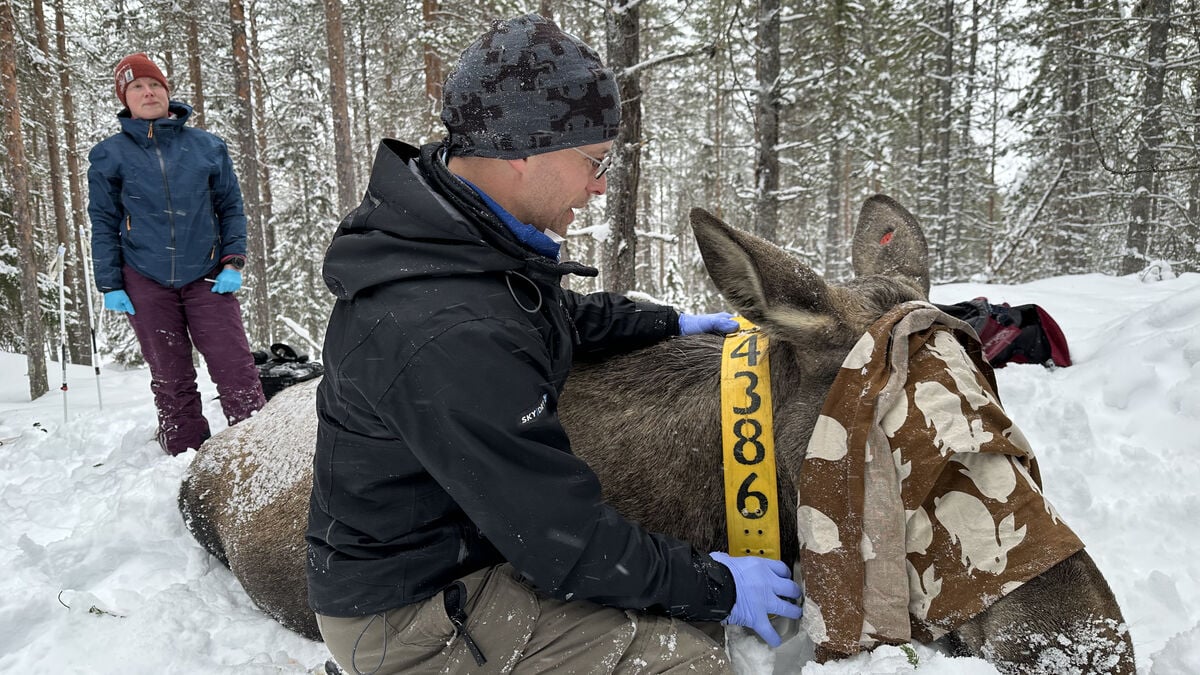
In February, researchers from the Swedish University of Agricultural Sciences (SLU) searched for the moose one last time, euthanized them and removed their collars. The project, which began in 2019 with the trio Trygga mamman, Ärrande damen and Jokern, has been completed and a compilation of the results is now awaited.
Moose behavior
We can quantify how they use the landscape and their migration behavior - when they start migrating, when they stop and to which areas, says Wiebke Neumann Sivertsson, a researcher at SLU who participated in the project.
It is also the first time that it has been possible to study how moose behave in areas with a large proportion of fast-growing contorta pine.
It's not just TV viewers who notice moose have different personalities; researchers also see differences in how they move and in their habits. Some migrate long distances, others not as far.
Pretty predictable
When you follow them for several years, you see that they pretty much stay in the same areas. A moose can be pretty predictable in where it will be during the winter and summer. They learn the landscape and know where it is good to be.
Some are bolder, others a little more cautious.
It has been special to follow the moose, who have also become TV celebrities, but Wiebke Neumann Sivertsson emphasizes that it is important to let them continue to wander without researchers.
Because they are so famous and evoke so many emotions, it is also important to remember that we are borrowing the moose for a while as research animals, and then they are allowed to return to their normal lives.
"The Great Moose Migration" has been broadcast on SVT since 2019 and quickly became a viewer favorite. In the same year, the program received the Kristallen TV Award as the year's innovator.
The program follows the moose's annual migration in the Kullberg region of Ångermanland, with a swim across the Ångerman River as the highlight.
In 2020, the broadcasts had to be extended because the cold spring made the moose unwilling to cross the water. Last year, they were in a hurry and the program had to be broadcast earlier than planned.