"The Labour Party has a process for challenging a leader, and it has not been triggered," Starmer is reported to have said at Tuesday's cabinet meeting.
To do so, 20 percent of Labour's Commons members - currently 81 people - must agree on a common challenger, who must then win a party leadership election. But no such candidate has yet emerged.
The storm at Downing Street intensified on Tuesday. Following the cabinet meeting, two junior ministers left Starmer's government, followed by two more. According to British media reports, they are expected to be joined by others.
These are ministerial titles of lower rank, roughly equivalent to a Swedish state secretary.
Jess Phillips, the deputy minister for violence against women, wrote, "I do not see the changes that I and the country expect, and therefore cannot continue to serve as a minister under this leadership," the BBC reports .
“No game”
More well-known names, such as Housing Minister Steve Reed, take a different line.
“This is not a game,” he writes on X , and argues that the challenges of leadership are harmful to the country and its people.
“We must rally behind the Prime Minister.”
The fact that no senior minister spoke out critically against Starmer when the meeting ended is also interpreted as meaning that he has managed to calm the situation for the time being.
The number of MPs demanding Starmer's resignation exceeds 80. At the same time, 110 members of the House of Commons have signed an open letter in support of Starmer.
But because Labour has over 400 members in the House of Commons, about half have not announced their stance.
Will meet
The question is who the challenger would be. Labour's landslide victory in the last election was based, among other things, on fatigue over the Tories' chaotic leadership carousel.
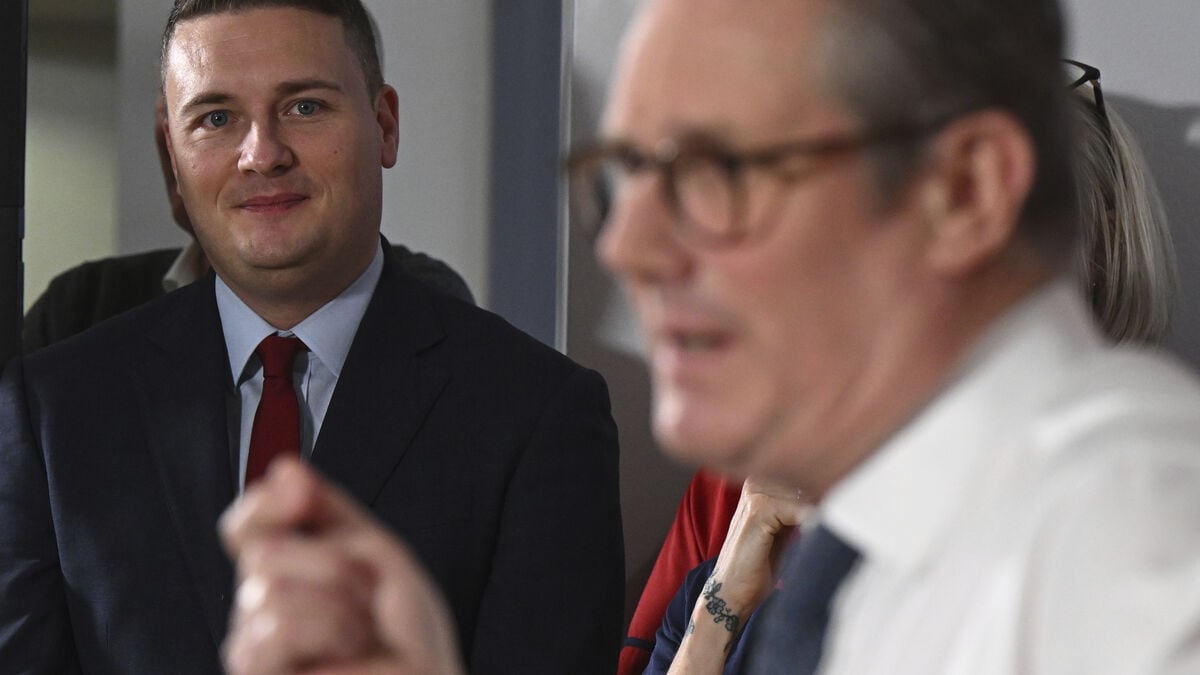
One name that has been mentioned is Health Secretary Wes Streeting. Late Tuesday, British media reported that Starmer and Streeting will meet on Wednesday morning, just before King Charles delivers the traditional State Opening of Parliament speech, where the government's agenda for the year will be presented.
The seemingly most popular candidate, Andy Burnham, is the mayor of Manchester and does not sit in Parliament - a formal requirement to become leader.
Behind the dissatisfaction is, among other things, Britain's economic decline after leaving the EU, which has fuelled a protest mood that reached a climax with a disastrous result in last week's local elections.
Facts: British Prime Ministers
Prime Ministers of Great Britain in recent decades:
1997–2007: Tony Blair, Labour. Won three elections in a row. But the Iraq War and other problems lowered his popularity, and after ten years in power he resigned.
2007–2010: Gordon Brown, Labour. Took over in the middle of a term. Lost the next election, and had to hand over power to the opposition.
2010–2016: David Cameron, Tories. Formed a coalition government with the Liberal Democrats after the 2010 election. Then won the 2015 election, and then staked everything on a referendum on EU membership. Resigned when the No side won.
2016–2019: Theresa May, Tories. Given the thankless role of trying to complete the Brexit process. But the 2017 election went badly, the 2019 EU elections even worse, and then she gave up.
2019–2022: Boris Johnson, Tories. Called a quick election, which strengthened the power of the right-wing party. Then managed to complete the EU exit. But the handling of Covid and other scandals caught up with him, and after just over three years he left office.
2022: Liz Truss, Tories. Defeated Rishi Sunak in the party's choice to succeed Johnson. Approved as prime minister by Queen Elizabeth, just two days before the monarch's death. Then presented a fiscal policy that was almost unanimously condemned, and resigned after just 50 days.
2022–2024: Rishi Sunak, Tories. As former Chancellor of the Exchequer, he had relatively high economic credibility. However, after leaving the EU, he failed to get the economy moving sufficiently, and lost heavily in the election he called in the summer of 2024.
2024–: Keir Starmer, Labour.