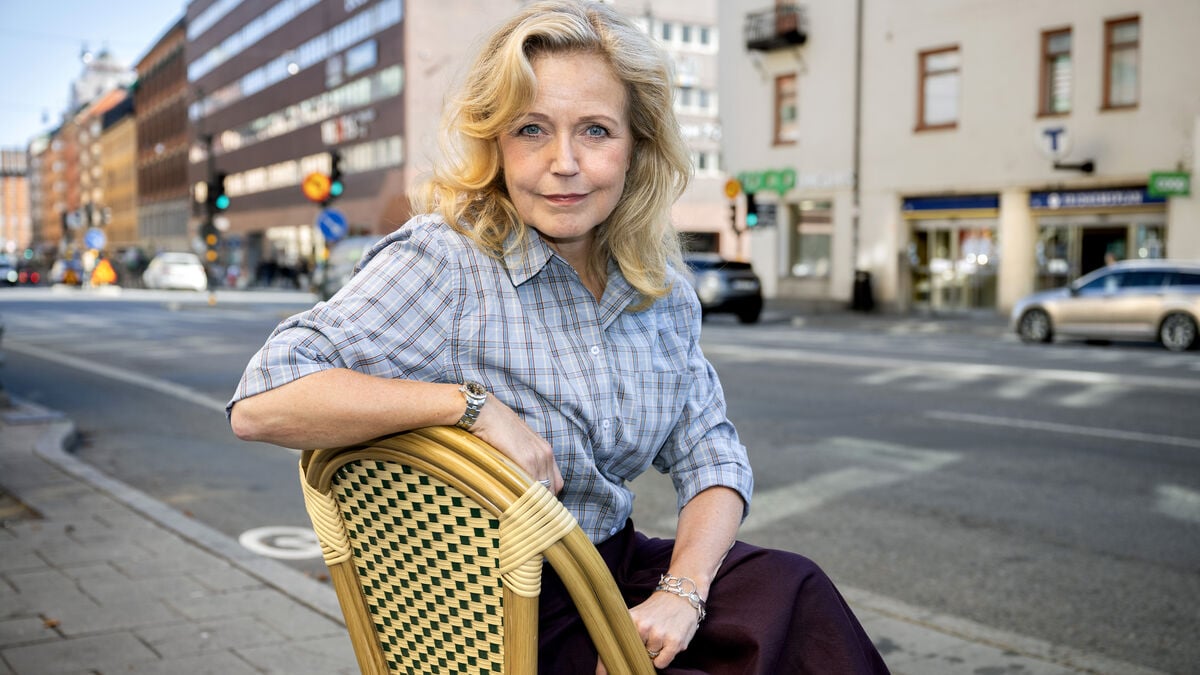
Elisabeth Thand Ringqvist has made it clear that she wants to sit in government with the Social Democrats, the Christian Democrats and perhaps the Liberal Democrats after the election. But the leader of the Christian Democrats, Ebba Busch, has rejected the Centre Party's invitation, and even if she changes her mind, the Green Party still does not want to sit in a government with the Christian Democrats.
So what do the prospects really look like?
Today it sounds impossible, yes, says Thand Ringqvist about her mid-term project.
But she believes things could change after the election.
There is a big deadlock. But when the dust has settled, a middle alternative may be what emerges, if Tidö has crashed. But that clearly requires a strong Centre Party, she says.
Difficult contradictions
She foresees that such a government formation could be tricky and "crash a few times before it becomes possible."
But then you may realize that it is the middle option that many people want, she says.
In the election race, the Centre Party hopes to attract voters from the Tidö bloc who think the climate issue is important and who do not want to see the Sweden Democrats in government. The Centre Party also hopes for traditionally conservative voters who voted for S in the last election, but who do not want to give the Left Party influence.
They want to vote for the Centre Party. Because they still think that growth is important and that the climate issue is important, she says.
If the Centre Party leader gets her way after the election, there will also be political deadlocks. She admits that there are “many difficult contradictions.”
One such issue is the Social Democrats' election promise to abolish the tax credit for workers' expenses. Elisabeth Thand Ringqvist has gone from saying a flat no to opening up a discussion on this.
We see the problem that certain professions are severely affected by having to be on site at work.
At the same time, we cannot pass that cost on to companies. If we find a way that both ensures that this perceived injustice can be handled and that companies are not left with the cost, then we can discuss it, she says.
Other knots that may be difficult to resolve are, for example, that the Centre Party wants to lower unemployment insurance while the Social Democrats want to strengthen it. The Social Democrats have proposed a bank tax that the Centre Party cannot agree to.
“Right to right”
Elisabeth Thand Ringqvist addresses the fact that the Centre Party's economic policy is sometimes described by the left as "right-wing" and says that she does not recognize herself in that description.
Our economic policy is very much about creating jobs and our way of doing that is to lower employer contributions. It's not that we're pursuing a tax-cutting policy in a conservative way.
Instead, she believes that the party's tax policy is primarily aimed at low- and middle-income earners.
It is an anchoring we made long before we started discussing collaborations with the Social Democrats, she says.
Remove employer contributions for young people, the long-term unemployed and the first ten employees in growing companies.
Reduced income tax for low- and middle-income earners by converting earned income tax deductions into a tax-free basic salary.
Expand green fossil-free electricity with technology-neutral rules.
An electric car bonus for everyone of SEK 50,000 directly upon purchase and environmental leasing for SEK 1,500 per month.
Investment in young people's mental health with at least three billion kronor, which will, among other things, shorten the queues for BUP.
More qualified and present teachers through, among other things, further training, less administration and smaller classes.
SEK 50 billion during the mandate period for welfare, infrastructure and services in rural areas.
Increase profitability for Swedish farmers through lower taxes, less hassle and support for climate change.
Increase local police presence through a police guarantee.
A national offensive against mass crime.
Source: Centre Party.