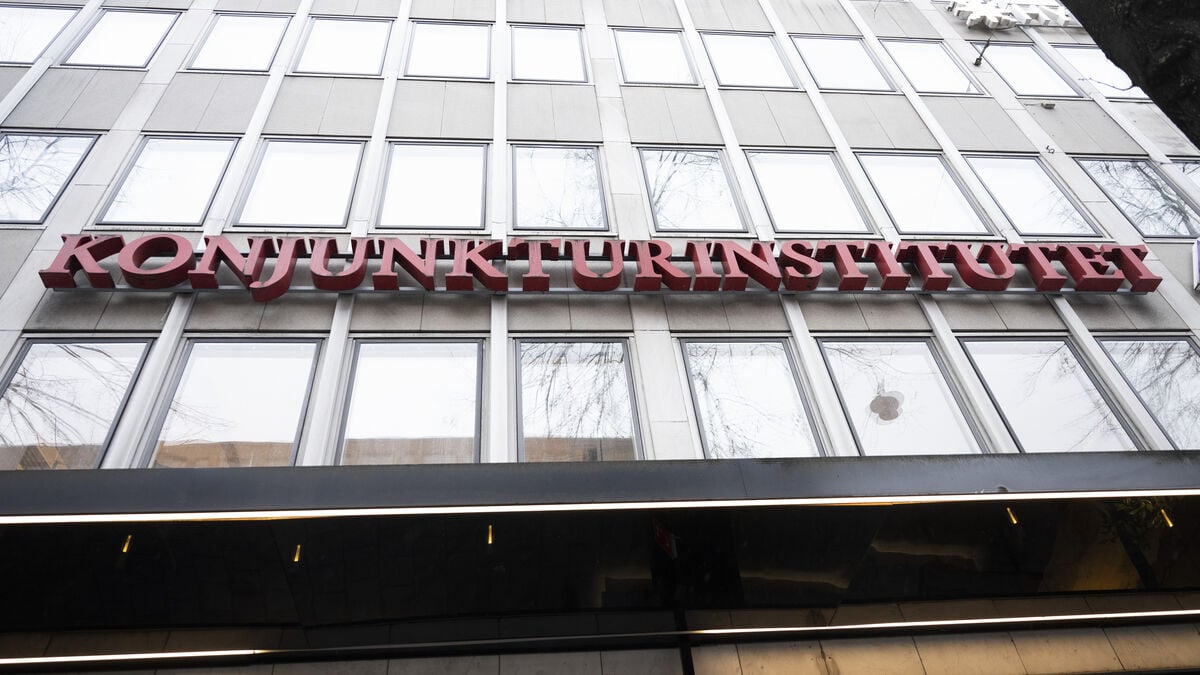
"Demand in the economy grew broadly in the third quarter. The recovery will continue in the coming quarters and the recession will subside in the second half of 2026," KI writes in a press release.
Higher growth, lower inflation
Sweden's GDP growth, adjusted for calendar changes, will increase to 2.7 percent in 2026, up from an estimated 1.8 percent this year, according to KI's report The Economic Situation. Growth is expected to continue at 2.3 percent in 2027.
In KI's forecast from September, they expected growth of 1.1 percent this year, 2.4 percent in 2026 and 2.1 percent in 2027.
Regarding unemployment, KI now expects it to fall to 8.5 percent next year, down from this year's level, which is estimated to average 8.8 percent. The decline is assumed to continue down to 7.5 percent in 2027 and ultimately down to 7.0 percent in 2030.
Inflation according to the CPIF measure – which according to the Riksbank's inflation target should be 2 percent – is assumed to fall to 0.9 percent in 2026 and then increase to 1.8 percent in 2027 and 2.6 percent in 2028.
According to the forecast, the Riksbank is expected to raise the key interest rate to 2.00 percent next year – up from today's 1.75 percent – and continue up to 2.50 percent in 2027 and 2.75 percent in 2028.
Better mood
The so-called barometer indicator for December rose to 103.7, up from 101.5 in November, according to KI. This shows a better-than-normal mood, according to KI.
At the same time, the household confidence indicator moved cautiously upwards to 95.8, from 95.7.