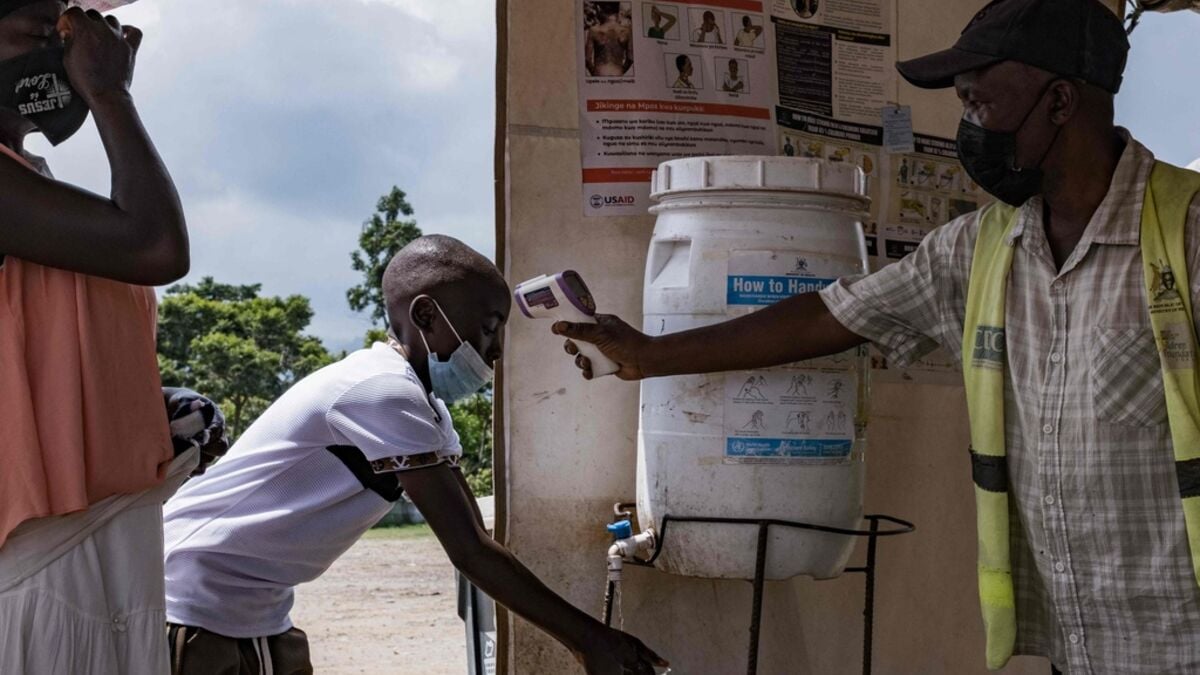
In addition, more than 543 suspected infections have been registered, Health Minister Samuel Roger Kamba said on Tuesday evening.
Many of the cases are linked to Ituri province, where the outbreak began. Difficulties with contact tracing in the area may have led to the virus spreading unchecked for several weeks, The New York Times reports.
Ituri is home to a large group of people displaced by unrest, as well as many migrant workers employed in gold mines in the province.
Tedros Adhanom Ghebreyesus warned that "large-scale population movements" risk accelerating the spread.
The virus has already spread to neighboring provinces. Suspected Ebola cases have been reported from Butembo in North Kivu, about 200 kilometers from the epicenter of the outbreak.
Two cases have also been confirmed in neighboring Uganda.
Researching vaccines
The World Health Organization (WHO) is investigating whether there are vaccines or treatments that can be used to curb the outbreak.
"We are looking at what candidate vaccines or treatments are available and whether any of them could be useful during this outbreak," said Anne Ancia, WHO representative for the Democratic Republic of the Congo, AFP reports.
The current strain of Ebola is the Bundibugyo strain, for which there are no specific vaccines or treatments. Vaccines are only available for the Zaire strain, which was identified in 1976.
World Health Organization (WHO) Director-General Tedros Adhanom Ghebreyesus has said he is concerned about how quickly and widely the disease has spread, and an emergency meeting was scheduled for Tuesday to discuss the outbreak.
International emergency
On Sunday, the WHO declared an international health emergency due to the Ebola outbreak in the Democratic Republic of the Congo and Uganda.
"I did not do this lightly, I am deeply concerned about the scale and speed of the epidemic," Ghebreyesus told the World Health Assembly in Geneva in connection with the declaration.
Nearly 29,000 people were infected with Ebola during the 2014–2016 outbreak in West Africa, the largest outbreak of the virus since it was discovered in 1976.
The disease spread to countries such as Guinea and Sierra Leone, but also outside West Africa to the United States, the United Kingdom and Italy. Over 11,000 people died.