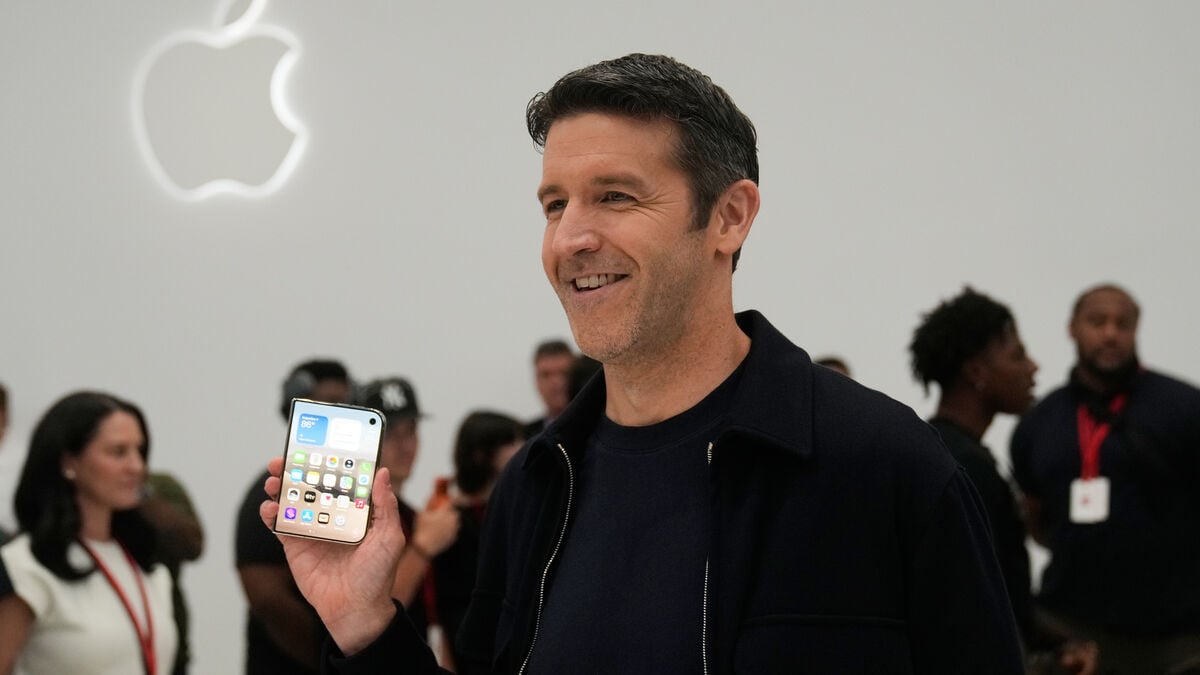
It's become a tradition. Every September, Apple, now the world's second-most valuable publicly traded company, usually unveils its new product updates at a big event at its headquarters in California.
This time, it was a foldable phone that took centre stage.
Competitors were ahead
Apple, which has historically been a leader in innovation, is hardly the first to do so. Among competitors like Samsung and Google, foldable variants have been around for a long time.
Foldable smartphones are a very small part of the mobile market. The challenge for Apple is whether it can expand this niche into a meaningful business area, said Dipanjan Chatterjee, an analyst at research and advisory firm Forrester.
John Ternus made his first major appearance as CEO of the company after replacing Tim Cook. For him, it's not just about convincing consumers why they should choose a foldable phone, but also why they should pay more for Apple's models. With a price of $1,999 and up in the US, equivalent to 19,000 kronor, it is described as Apple's most expensive iPhone to date. In Sweden, the price is about a breathtaking 27,000 kronor and up.
Lack of memory chip
The expected price increases are related to the memory chip shortage that has affected many more companies than Apple. Wednesday night's event was closely watched by the market. The stock, which had been trading in the red throughout Wednesday, had closed down 0.3 percent.
So far this year, Apple's stock has climbed about 16 percent, in line with the performance of the Nasdaq Composite Index as a whole.