
Concern about AI is spreading in Sweden. Analysts and reports warn that the technology will take over various professions.
But the question is when, and whether, that shift will become visible in the statistics.
So far in Sweden, we have not seen any signs that the use of AI is associated with a major impact on employment or unemployment overall, says Magnus Lodefalk, an associate professor of economics at Örebro University.
The Swedish Public Employment Service and Statistics Sweden (SCB), which are responsible for labor market figures, have no data showing how AI has affected jobs in Sweden.
Several statisticians and academics are instead looking to the recent report “Structural Transformation and AI”, published by Uppsala University and the Swedish Agency for Growth Policy Analysis (Tillväxtanalys).
No signs of transformation
"No clear signs of a comprehensive AI-driven structural transformation can yet be observed in the overall economy," the authors write.
Where we see certain changes that could be due to AI, they primarily affect recent university graduates, says Oskar Nordström Skans, one of the report's authors.
This is particularly true of educational programs leading to professions where AI is widely used, such as programming.
Whether it is specifically related to AI or not, we can leave that unsaid. But it is consistent with the picture that AI creates problems for those entering jobs where AI can be used to perform certain tasks historically done by recent graduates, he says.
New jobs are emerging
At the same time, there are positive aspects. AI has brought a number of new job titles into being.
A new technology like AI can automate certain tasks, but it can also create new tasks that did not exist before. This can lead to entirely new professions in the long term, says Magnus Lodefalk.
This year, positions have been advertised for coordinators in the Police Authority's AI group, AI service developers at Landskrona Municipality and AI researchers at telecoms manufacturer Ericsson.
There have also been several jobs to apply for, for example in SVT's newly established AI and automation team.
Tug of war will decide
How the labor market is affected depends on whether AI generates more or fewer new jobs than the number of jobs the technology displaces.
These two things have been well balanced historically, and of course that could continue, says Nordström Skans.
But there is a scenario that gives cause for concern - that the negative side wins the tug of war.
That would happen if AI is so useful and adopted so quickly that new jobs do not have time to emerge at the same rate as others disappear. No one knows exactly how it will turn out.
Are there safe jobs for the future?
The rise of AI is making educational choices more difficult for many young people.
But there are safe alternatives for those who want to avoid dealing with technology in the future.
If you are very afraid of uncertainty, there are some safe bets. There are practical vocational courses in upper secondary school where AI plays a very marginal role, says Nordström Skans, adding that there are also safe bets at universities.
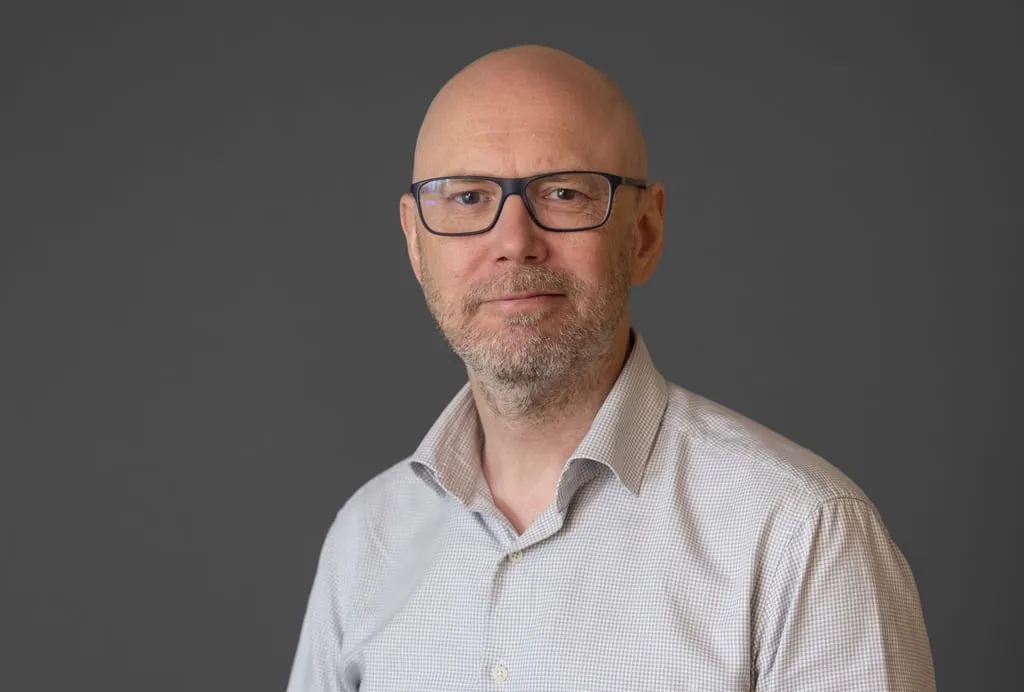
Oskar Nordström Skans, professor of economics at Uppsala University.
It is quite clear that healthcare professions are in huge demand - everything from doctors to home care.
The risk is greater for journalists, researchers and engineers.
AI can do everything that involves processing text, numbers, images and the like. That's where working life will almost certainly be greatly affected - and where you can imagine it will be harder to find a job, but we don't know.
Study further?
Mats Alvesson, a professor of business administration at Lund University, points out that the jobs of the future do not necessarily require further study.
Craft jobs, elderly care, the transport industry, cleaning and healthcare. Most of these will remain, and are in some sense the jobs of the future, he says, adding that even those who are good at AI will probably have good future prospects.
The question is whether further study will be worthwhile.
Sometimes humanities education is quite cheap, with few resources and relatively low requirements. It can be a bit lax, and then you may not be able to count on getting much out of it, says Alvesson.
Uppsala professor Nordström Skans is more optimistic.
Technology will create greater uncertainty about how the labor market will develop. But I believe there will continue to be demand for the skills that universities provide, he says.






What do you think?