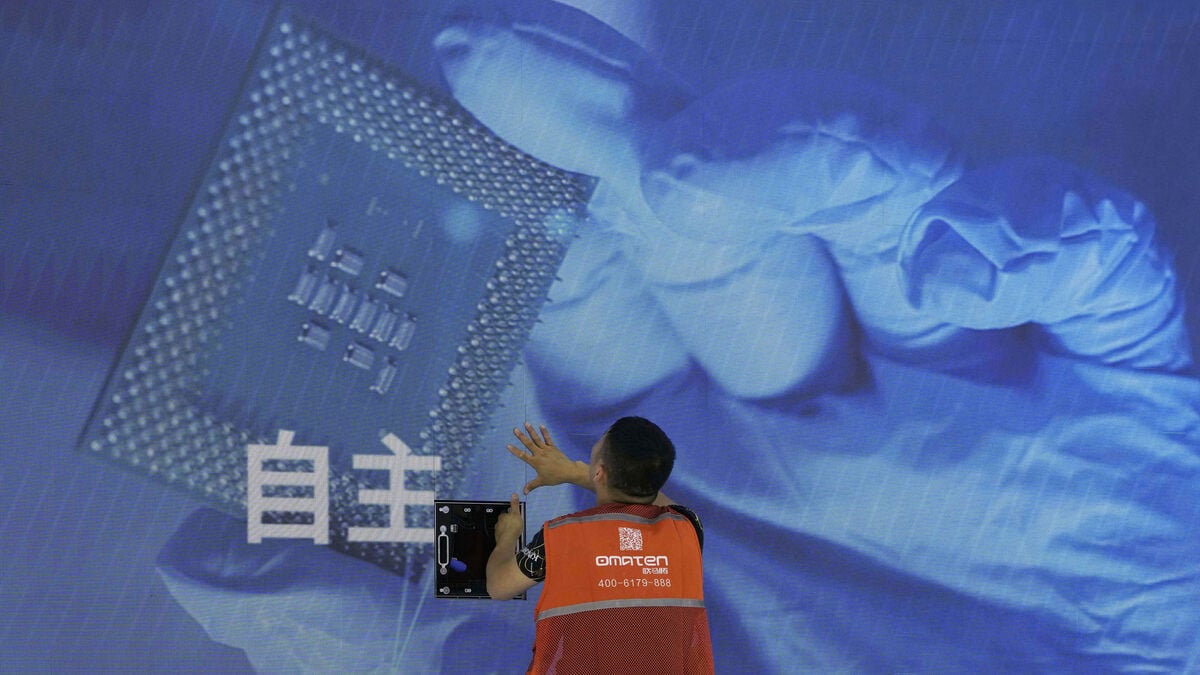
American tech companies are looking for memory chips to put in the data centres used to train and run their AI models.
This is not a repeat of the semiconductor crisis we saw during the pandemic. The problem then was that the entire supply chain came to a standstill. Now it's about AI completely changing the market and directing investments and production capacity towards a specific type of memory, says Malin Berglund.
AI uses demanding DRAM memories that are stacked on top of each other, known as HBM. They are complicated to manufacture but profitable. The three major producers have targeted them, which has caused DRAM prices to skyrocket. JP Morgan expects the price to quadruple by the end of the year compared with the beginning of 2024.
More expensive iPhones
Apple this week raised prices by at least SEK 1,500 on its older iPhone models. The major game console manufacturers have also raised prices during the year, and anyone looking for a more expensive graphics card for their PC may have to pay up to twice as much as a year ago.
Affects research
Umeå University has the HPC2N supercomputer centre, which is also used by researchers at other universities. Deputy Director Björn Torkelsson says that it has been difficult to replace old equipment.
Of course, it is something that influences research to a very great extent.
Sometimes it has not even been possible to place orders because of the shortages. In those cases where it has been possible, the price of certain components has increased significantly:
I would guess that it is about twice as expensive now as it was six months ago, says Torkelsson.
During the summer, South Korean Samsung, one of the world's largest memory manufacturers, warned that the shortage would probably intensify next year, and continue the following year.
Extreme vulnerability
Swedish companies are noticing the problems, according to Malin Berglund, even though few listed companies have complained publicly.
It may also be that some people aren't really keeping up with this yet. Because when a new technology like AI grows this explosively, it affects the entire value chain, says Berglund.
She says that Swedish companies are reporting higher prices and longer delivery times, but that they are generally better prepared than during the pandemic. They are planning their purchases further in advance and establishing alternative suppliers.
It is an extreme vulnerability in the geopolitical situation we find ourselves in.
HBM stands for high bandwidth memory and involves multiple DRAMs stacked on top of each other, allowing them to reach transfer speeds of terabytes per second. The bandwidth has made them popular for AI work. The major manufacturers are Samsung, SK Hynix and Micron.
DRAM, in turn, is used as working memory (where data is temporarily stored) in computers, graphics cards and mobile phones.
As AI companies chase HBM, manufacturers have increasingly shifted from traditional DRAM to HBM, creating shortages for mobile phone and console manufacturers, for example. New memory factories take years to build.
Sources: Counterpoint, Lenovo, Rambus