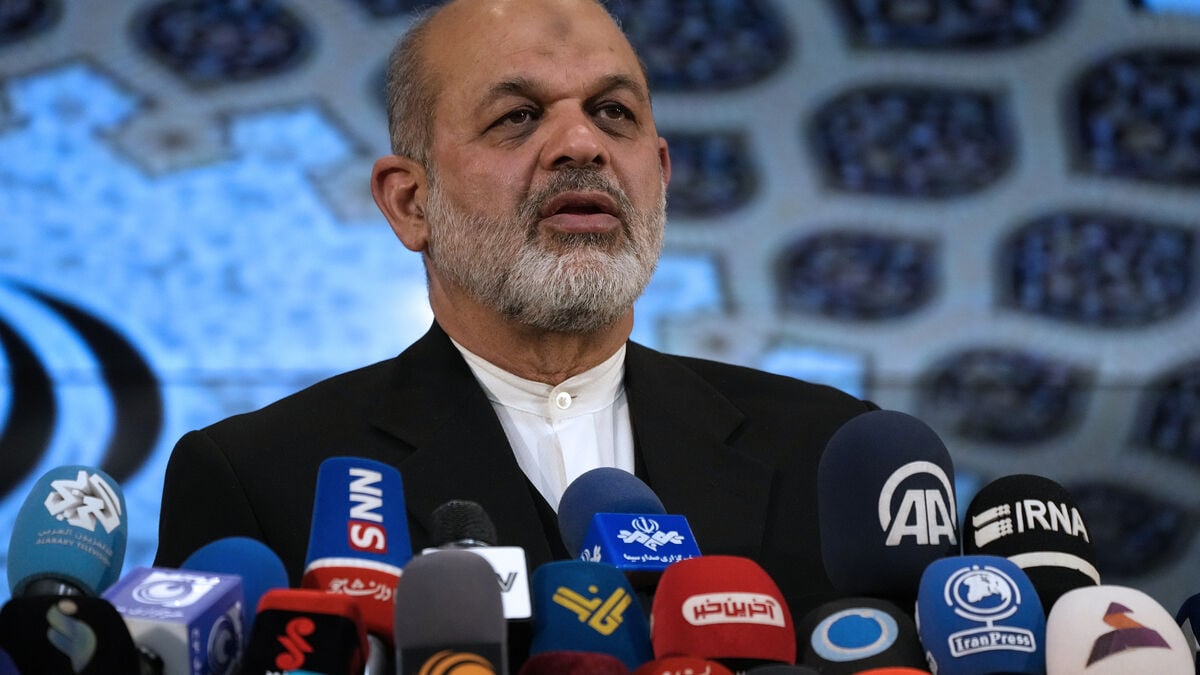
He has not been seen in public for more than three months, and is believed to be one of the few people who has direct contact with the country's supreme leader, Mojtaba Khamenei. General Ahmad Vahidi has long been a central figure in Iranian power and the military, and has served as both defense and interior minister in the hardline Iranian regime. In March of this year, he took over the role of leader of the Revolutionary Guard, after his predecessor was killed in a US attack at the beginning of the war.
“Main obstacle to peace”
When Vahidi took over, Iran adopted an - if possible - even harder line in indirect contacts with US President Donald Trump, writes The New York Post. The newspaper, which is usually seen as relatively Trump-friendly, calls the general “Trump’s main obstacle to peace.”
According to the Washington-based think tank ISW, Ahmad Vahidi and his closest men not only control Iran's military operations but also the country's negotiating policy. A source with insight into the mediation tells the AP news agency that Vahidi's negotiating role has become even more important after rounds of talks in Pakistan in April between the parties yielded nothing.
“Infinite resistance”
Iran's strategy of keeping the Strait of Hormuz closed, thereby cutting off the world market's access to fossil fuels from the Persian Gulf, has contributed to the global energy crisis that was feared at the start of the war. In addition, Iranian attacks on oil facilities, hotels and infrastructure in neighboring Arab countries have fueled instability throughout the region.
“He comes from a stance of ‘endless revolution, endless resistance,’” says Iran expert Kenneth Katzman of the Soufan think tank to the AP, “and he believes that the United States must always be confronted.”
Since 2007, Vahidi has been wanted by Interpol, accused of playing a major role in the terrorist bombing of a Jewish center in Argentina in 1994, in which 85 people lost their lives and hundreds were injured.