Especially at the beginning and end of May, it has been unusually dry in large parts of the country, according to SMHI's soil moisture data.
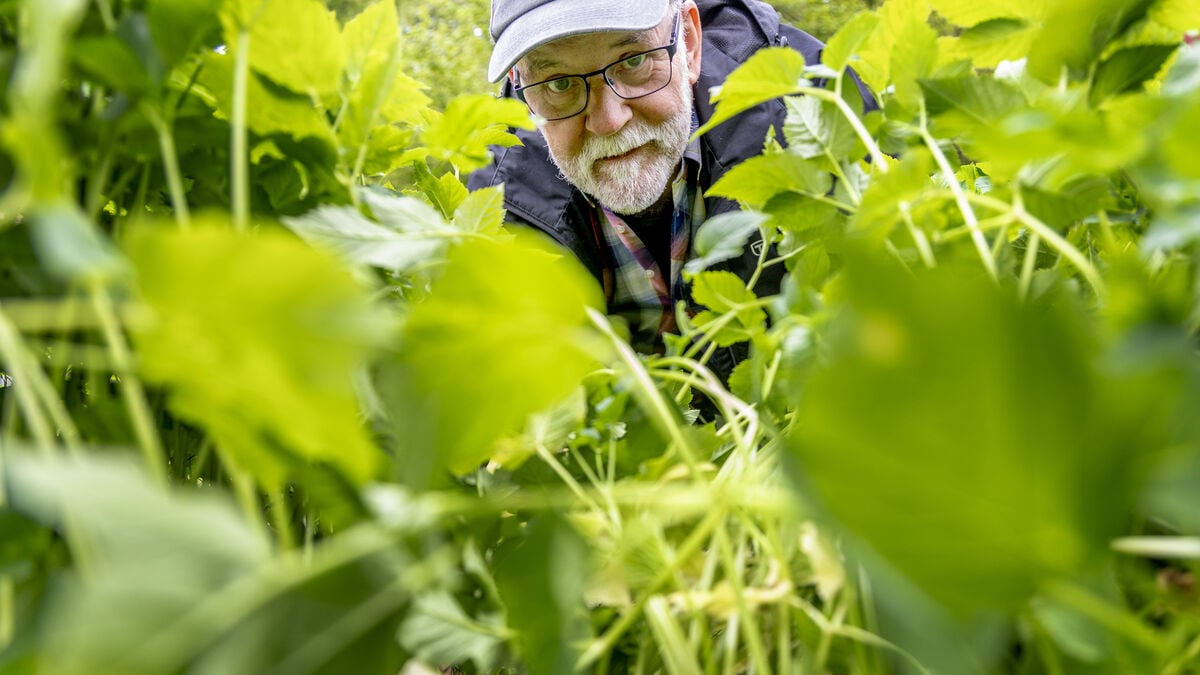
"I've been to places I always check and there are almost no snails. I get the same message when I talk to people out in the countryside - that there are very few snails this year," says Ted von Proschwitz, curator at the Gothenburg Museum of Natural History.
A killer slug can, even without a partner, lay hundreds of eggs each season, and now in May the young slugs that overwintered underground have emerged.
"If it's dry, they have a very tough time. Then many of them will die, because these small animals are sensitive to drought," says Ted von Proschwitz, curator at the Gothenburg Museum of Natural History.
Invasive species
The invasive assassin slug is spreading north in Sweden and has in recent years been seen in Vilhelmina, Östersund and along the coast towards Luleå.
It is spread by humans moving plants, soil and other objects that can carry eggs or snails, says von Proschwitz.
Since the snails are hermaphroditic and can self-fertilize, just one is enough to establish itself in a new location.
"A snail can lay up to 400 eggs, and since we don't have females and males - everyone can lay eggs - the numbers quickly add up."
Displaces native slug
In addition to causing chaos in gardens and agriculture, it is also displacing the native black forest slug, which is now red-listed.
"It is quite common to see the assassin slugs mating with our native species and producing hybrids. Slowly, slowly, the black forest slug disappears and is absorbed into the assassin slug's gene pool."
For those who have problems in the garden, you can try protecting the flowerbeds with copper (plates, wire or tape), which slugs dislike. There are also poisons that cause the slugs to lose their appetite and starve to death.
But in places that have few assassin slugs this year, it is a golden opportunity to go hunting now, before they have started laying their eggs, preferably at dusk or with a flashlight in the dark.
"Use a garden hoe or a shovel with a sharp edge. Then you don't even have to bend down, and you can very easily decapitate the slug."
"We won't get rid of them that way, but we can keep them at bay."
Facts: How to fight killer slugs
The common slug (Arion vulgaris, formerly known as the Spanish wood snail) is an invasive species. It is best to control the slugs in the spring before they lay eggs.
The easiest way to kill slugs is to cut or snip off the head, about half a centimeter from the front end. This can be done with garden shears or a shovel with a sharp blade.
Another method that results in instant death is to collect the slugs in a container and pour boiling water over them.
The dead slugs can be buried or left as carrion, as they attract their cannibalistic relatives.
Source: Gothenburg National Museum of Natural History