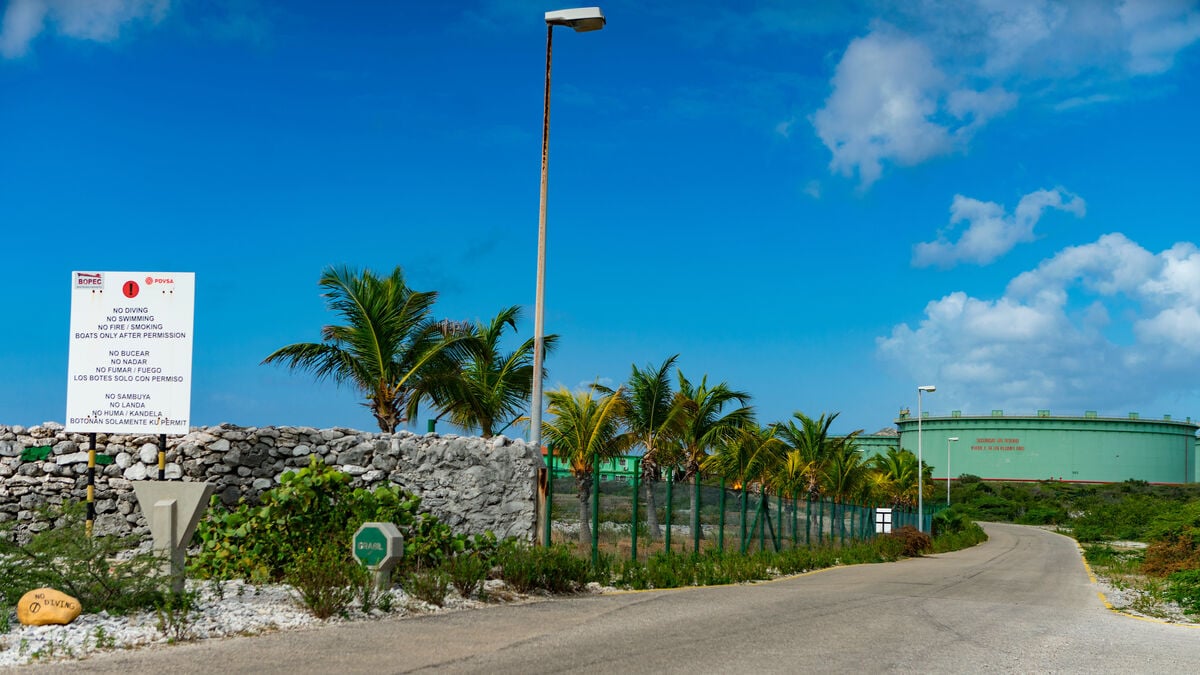
At the end of January, a court in The Hague ruled that the Netherlands had not done enough to protect the Caribbean island of Bonaire - a Dutch municipality - against climate change.
According to the court, the 26,000 residents had been discriminated against compared with residents on the mainland, and demanded an action plan for climate adaptation and that the Netherlands reduce emissions further.
They are testing new theories in Dutch courts, and it has a major impact on other legal areas, says Maria Antonia Tigre, a researcher in international climate law at Columbia Law School.
According to her, the background is dissatisfaction with climate policy, which in many places is stagnant despite more than 30 years of international negotiations.
Civil society organizations are trying to move the needle and get countries to do more. And in many cases they have been successful.
New push
In Sweden, the youth organization Aurora is filing a new lawsuit against the Swedish state on Friday. Spokesperson Ida Edling sees great similarities between that process and the Dutch one.
The Aurora case was a series that ended in a stalemate in February last year, when the Supreme Court announced the case could not be brought before it. At the same time, the Supreme Court opened the way for a climate lawsuit to be formulated differently.
We are doing that now. We are suing the state as an association. Another instruction from the Supreme Court was that what we demanded was too specific. Now we are only demanding that the state's catastrophically inadequate climate measures worsen the climate crisis so much that it violates young people's human rights to life and health, says Edling.
Seniors were right.
The Bonaire ruling is one of several high-profile climate cases in recent years. The International Court of Justice (ICJ) ruled this summer that failing to act on climate change may violate international law and that rich countries have special obligations to take the lead in reducing emissions. The year before, the European Court of Justice ruled that the Swiss state was not doing enough, in a case brought by the women's organization Verein Klimaseniorinnen.
It is difficult to argue that states do not have a responsibility and that they are not violating human rights if they fail to reduce emissions, says Tigre.
The judges give Aurora a boost:
The situation for us is much better than last time, says Edling.
The Aurora case was a court process in which the youth-led organization Aurora sued the Swedish state via a class action lawsuit at Nacka District Court.
Around 300 people argued that the state was not doing enough to combat climate change and that several climate goals were not being met. This in turn endangers the rights of children and young people to life, health and development under the European Convention.
The Supreme Court ruled in February 2025 that the case could not be tried in a Swedish court.
A revised lawsuit will be filed on February 6, 2026, with the Stockholm District Court.