The situation in already conflict-ridden southern Lebanon worsened on Wednesday after Israel warned residents to stay in the area.
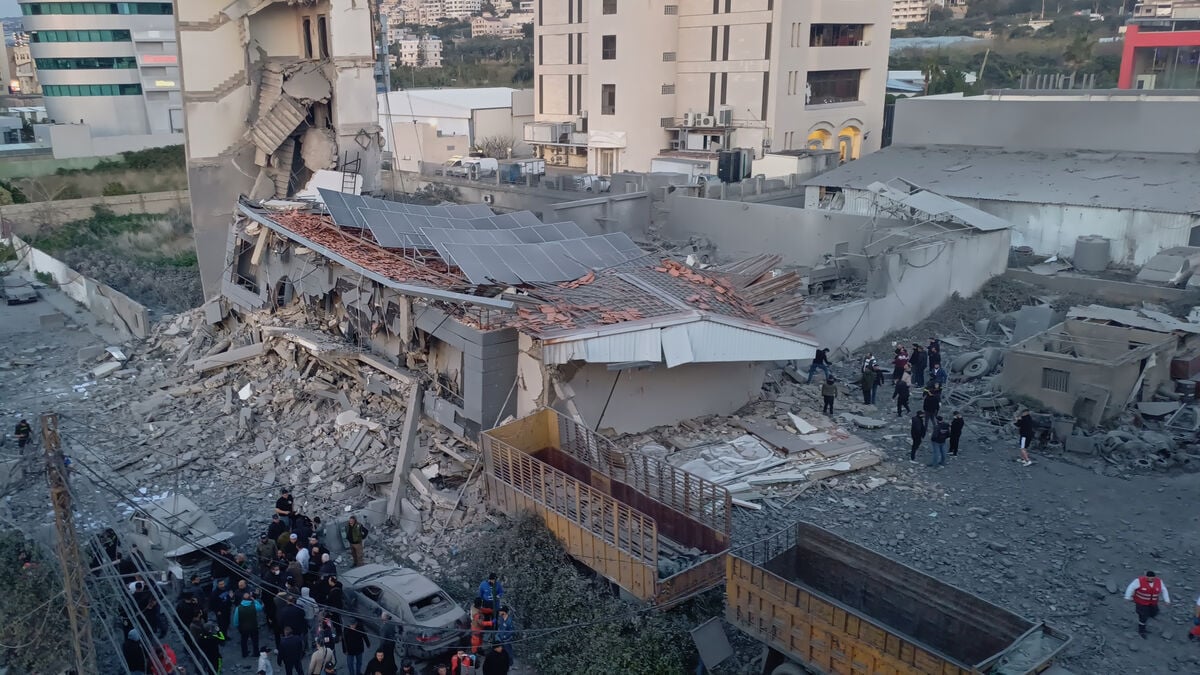
The Israeli military then launched extensive airstrikes against the region. According to a statement from the military, launch pads for rockets and missiles, as well as a drone factory, were hit.
In a televised speech, Hezbollah leader Qassem said that “our choice is to confront (the aggressions) until the ultimate sacrifice.” He defended Hezbollah’s attacks on Israel as the movement’s “legitimate right”:
What Israel did after the (Hezbollah) rocket attack was not a response. It was an aggression that was planned in advance.
Rarely seen
Naim Qassem took over the leadership after his predecessor Hassan Nasrallah was killed in an Israeli attack. Qassem rarely appears in public - and the televised speech was his first since the outbreak of the war.
Health officials in Lebanon said Wednesday night that tens of thousands of residents had fled their homes. The agency also said more than 70 people had been killed since the Israeli attacks began on Monday. More than 430 people had been injured in the attacks.
The Iran-backed Hezbollah movement said attacks on Israeli military forces had intensified.
The militant movement also stated that direct clashes with the Israeli military raged on Wednesday evening, in a marked escalation.
Beirut bombed
The Shiite militia also said it had attacked an aerospace plant in central Israel and a drone control center. Hezbollah justified its attacks on Israel by citing the country's "criminal attacks" on dozens of towns and villages in Lebanon.
In its raids, Israel has also bombed parts of the capital Beirut, while Hezbollah has continued to fire rockets at Israeli targets.
Facts: Difficult border buffer
The long-standing conflict between Israel and the Shiite militia Hezbollah in Lebanon has flared up in recent years in connection with the Gaza War.
According to the ceasefire signed in the fall of 2024, both sides would withdraw from a designated buffer zone in southern Lebanon, where peace would initially be maintained with the help of UN forces. Lebanon's regular but relatively weak army would then step in and establish control.
However, there have been regular skirmishes and Israel and Hezbollah have accused each other of not fulfilling their commitments.