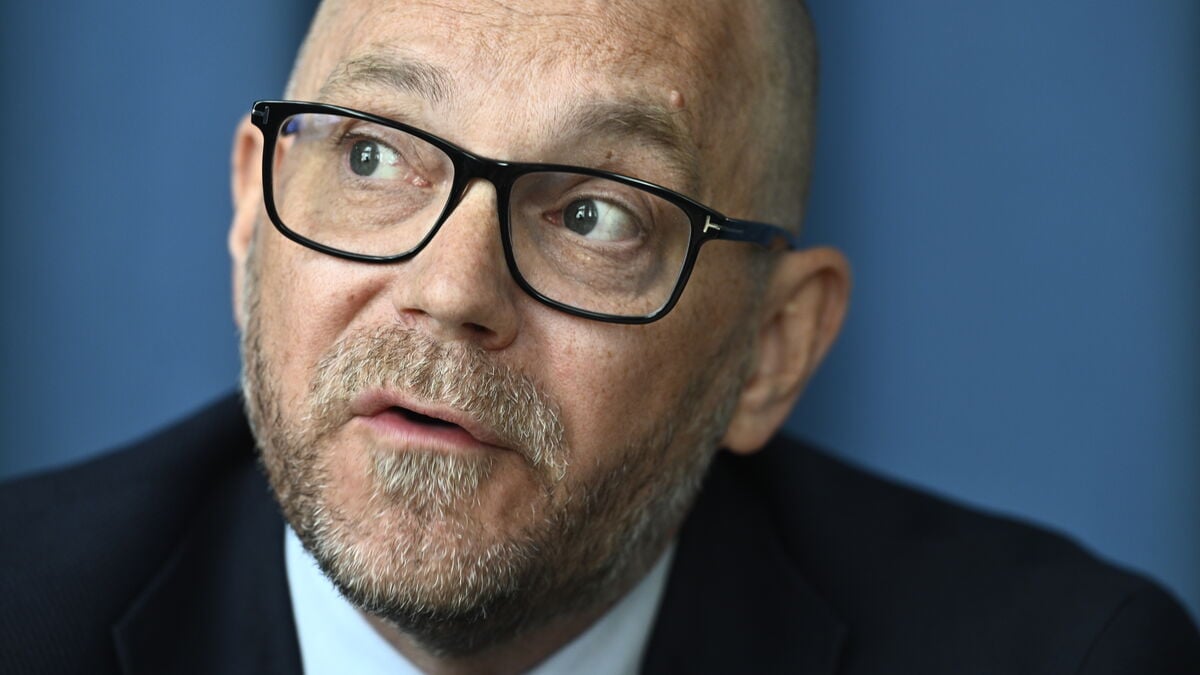
The assignment given to investigator Svante Mandell at the National Institute of Economic Research by the government was to propose tools to phase out fossil fuels and enable Sweden to reach the long-term climate goal by 2045 and meet various EU commitments.
"Electrification is the main route. By 2045 there will still be some liquid fuels, but the majority of the road vehicle fleet will be electrified, he says."
To succeed, the prices of gasoline and diesel need to increase by about three kronor per liter at the pump, according to Mandell - to the same price level as neighboring countries.
“Not popular”
He also points out that taxes should not be raised in the middle of the energy crisis.
"Now the fuel market is very, very tight and prices have been pushed up. We foresee this crisis being phased out until 2028 when they are introduced."
He also proposes increasing the reduction obligation - that is, the requirement for blending biofuels - to 25 percent by 2030, and that more fossil-fuel vehicles should pay a carbon dioxide fee on vehicle tax for a longer period of time.
"Of course, this is not popular in some camps. I can understand that, because I personally think it is good to have low fuel prices. But we still need to have something that slowly but surely drives this electrification forward."
At the other end, proposals include reduced electricity taxes and more money for the electric car premium.
“A shortcut”
The proposals go against the policy that the Tidö parties have pursued in recent years.
"It's a dead end to focus on reduction obligations. We've had a policy in Sweden that has proven to be a dead end," says Britz, who does not want to raise fuel prices in the short term.
Finance Minister Elisabeth Svantesson (M) and SD leader Jimmie Åkesson have also signaled that they do not accept the proposals.
Lower electricity taxes, on the other hand, get the thumbs up from Britz.
"I like anything that makes it more attractive to use electricity instead of fossil fuels," he says.
All power to electrification
Therefore, more needs to be done to increase electrification.
"We need to make sure we have more carrots, so that more people choose electric cars when they replace their cars. That's what brings down emissions," says Britz.
The reduction obligation will be updated and increased gradually from the current 10 percent. The level will be tightened to 21 percent in 2028, 23 percent in 2029 and 25 percent in 2030.
The energy tax on gasoline will be increased by SEK 1.80 per liter and by SEK 1,800 per cubic meter for diesel, which corresponds to SEK 1.80 per liter.
The penalty limit for light vehicles is lowered from 75 to 50 grams per kilometer and the penalty period is extended from three to five years.
The basic amount of vehicle tax will be increased from SEK 360 to SEK 420 and the carbon dioxide amount from SEK 22 to SEK 25.
The climate premium for heavy trucks and construction machinery is extended.
The energy tax on electricity is being reduced.
The allocation for the electric car premium is being increased.
Source: Policy Instrument Inquiry