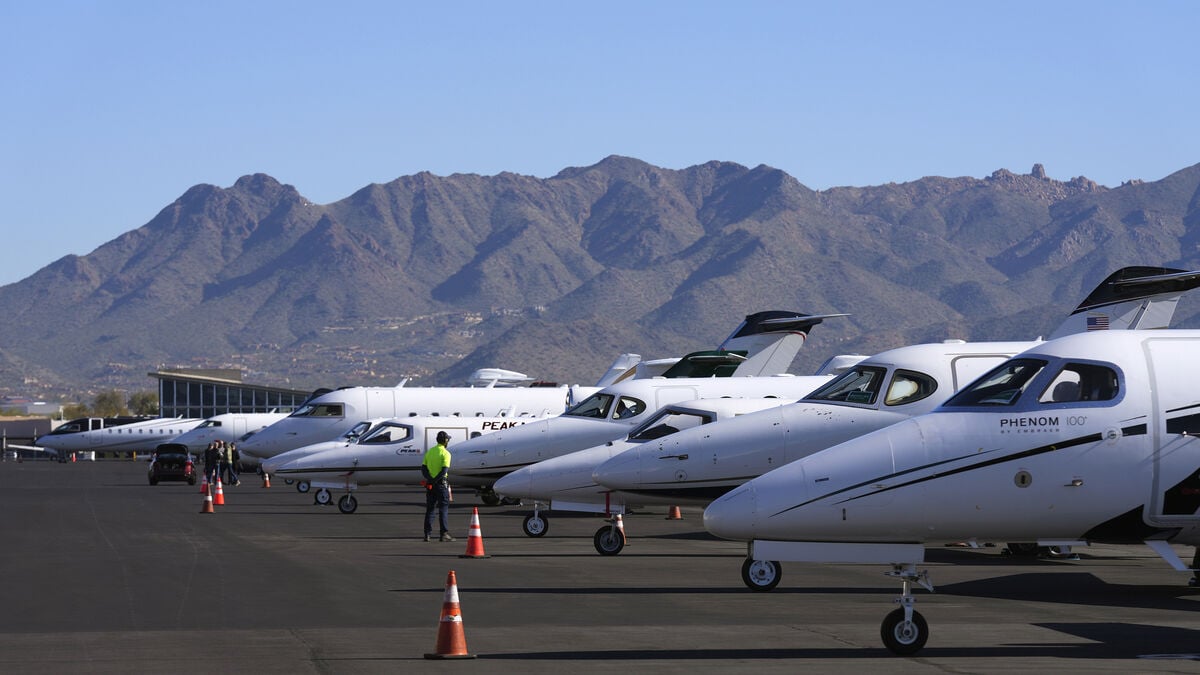
The justice organization Oxfam has studied private business jets, which typically have 4–19 passenger seats. Most take off from airports in metropolitan areas. Private flights from Sweden emitted 35,000 tonnes of carbon dioxide last year.
Used by few
Other types of aircraft may be included in the figures, but Oxfam estimates that the vast majority are private aircraft.
We don't see who is flying, but this is about private flights as a category and the enormous emissions they account for, says Hanna Nelson.
According to a global Oxfam report, private jets are used by just 0.003 percent of the world's population, or a quarter of a million people. Almost seven out of ten private jets take off in the United States. The world's private jets emitted a total of 16 million tonnes of carbon dioxide last year, on a par with Sweden's entire domestic transport sector.
Bring your date
Globally, most private flights take off around Christmas, New Year's and Thanksgiving. Valentine's Day comes next.
You take your date on a little flight, maybe to Paris, maybe somewhere else, says Hanna Nelson.
Oxfam wants to see a ban or at least a punitive tax on “carbon-intensive luxury consumption” such as private jets and luxury yachts, as well as a progressive aviation tax under which those who fly a lot pay more. The rich need to pay for the emissions they cause, Hanna Nelson believes.
Political action is needed to reduce these types of emissions and luxury consumption, she says.
Oxfam has analyzed data from the Private Jet Emissions Tracker, a tool created by the think tank Institute for Policy Studies. The tool is based, among other things, on signals from transponders on aircraft in the private business jet category.
The data shows, for example, where flights start, their routes and flight times.
The category normally includes certain ambulance aircraft, but these have been excluded from the Swedish data.