The background is the technological shift that is taking place in Sweden. Old 2G and 3G networks are being shut down to make room for more modern standards, such as 4G and 5G.
Already in early December, the 2G and 3G networks of Tele2, Telenor and Tre were closed, but in mid-October, PTS received information from these operators that customers with certain phones will not be able to reach the emergency number via their own network - even though the phones use 4G.
7,000 of these phones were blocked on December 1st, but the problem remains for around 60,000 phones. These phones can connect to 112, but with a time delay and positioning data is not included.
It cannot be ruled out that the number will grow further.
Notice of injunction issued
The phones need to be replaced before February 2, when they will also be blocked. However, Dan Sjöblom, Director General of PTS, urges those who have been contacted by their operator to address the problem before they head out into the Christmas traffic.
PTS does not know exactly how affected customers have been informed, but text messages are common and some companies are also said to have published information on their customer websites.
It was in November that the authority notified the three operators of an injunction under the Electronic Communications Act, requiring identification of which phones were affected.
If you provide a telephony service, you are obliged to provide 112 free of charge, without interruption, with location information, says Wessel.
"Unusually"
Sjöblom says that this kind of "urgent, interim injunction" is very unusual.
In the follow-up, it may end up that yes, they have done what can be expected of them, or that they have not done it and then it may affect them in the form of new orders or in the form of a fine for not following the first order, he says.
Should this have been discovered earlier?
"Yes, we think so. This is a decision five out of twelve and a far-reaching decision," says Wessel.
PTS will not release an exact list of which mobile models are affected.
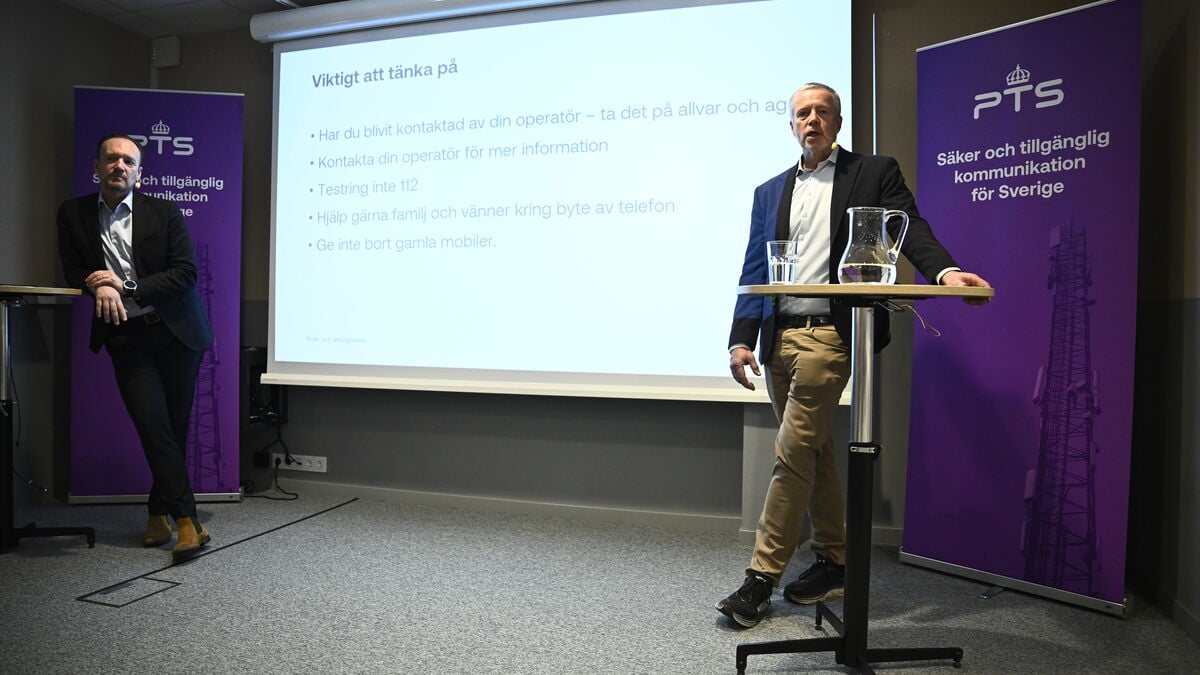
Facts: Consider this
If you have been contacted by your operator – take action.
Contact your operator if you have questions about model and subscription.
Do not test call 112. SOS Alarm emphasizes that it makes it more difficult for people who really need help.
Please help family and friends with changing phones.
Don't give away old phones.
Source: PTS
1G, the first generation of mobile telephony, was launched in Sweden in 1981 and involved a network where people could call each other using wireless phones.
Over the years, several more modern networks have been launched and taken over the majority of traffic in Sweden, regardless of whether it concerns mobile telephony or connected gadgets such as alarms or electricity meters.
5G was introduced in Sweden in 2020.
The current shutdown of 2G and 3G is being carried out partly because more frequency space is needed for 4G and 5G.
Source: NE.se, bytnat.nu