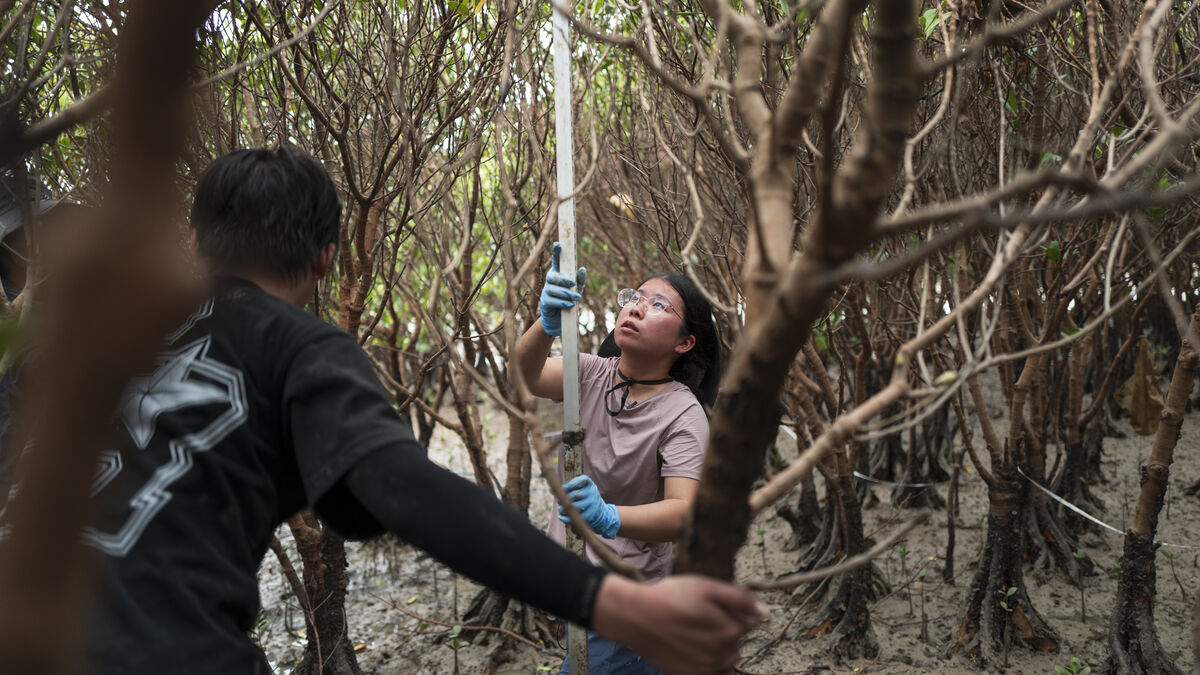
In 2022, countries around the world pledged to restore 1 billion hectares of degraded land to thriving ecosystems by 2030. Halfway to the deadline, 252 million hectares are being restored. Although there is still a long way to go and the pace would need to triple, this is more land than ever before, two UN agencies say in a new report.
"Research says that even if we restore just 15 percent of our priority areas, they could capture and store 30 percent of the increase in carbon dioxide in the atmosphere since the Industrial Revolution, and help avoid 60 percent of species extinctions," said Doreen Robinson of the UN Environment Programme (UNEP) at a press conference.
The report is the first global estimate of its kind. It is based on information provided by countries and analyses and data submitted by various projects. Projects are under way in 149 countries across almost the entire world.
"We have vulnerable and endangered species like the saiga antelope, the mountain gorilla and the jaguar returning to their ecosystems," said Yelena Finegold of the UN Food and Agriculture Organization (FAO) at the press conference.
Corridors connect
Nature can deteriorate or be degraded as a result of overexploitation, destruction, climate change, pollution and invasive species. Between 2015 and 2019, the proportion of degraded land worldwide increased from 11.5 percent to 15.4 percent. The UN highlights 35 flagship projects around the world. One example is the creation of wildlife corridors to reconnect parts of the forest that once stretched across Brazil, Paraguay and Argentina but have since become fragmented. This allows jaguars and golden-headed lion tamarins to move freely between forest areas.
In Kyrgyzstan, the rare snow leopard is making a comeback after extensive conservation efforts. Ecotourism has also become an important source of income.
Along the sacred Ganges River in India, new treatment plants are treating sewage and industrial waste. The shy Gangetic dolphin has also begun to recover in this important source of drinking water.
Five new projects
Five new projects have been announced at the UN biodiversity meeting, two of them in urban areas. In Milan, Italy, three million trees have been planted on former industrial sites and parking lots. In Seattle, invasive plants have given way to native species as 831 hectares have been restored.
The UN Food and Agriculture Organization (FAO) and the UN Environment Programme (UNEP) have jointly produced the report "Nature's comeback - Scaling ecosystem restoration for people and planet", which covers efforts to restore degraded or destroyed nature.
According to the report, 252 million hectares worldwide are being restored. This is far short of the target of 1 billion hectares by 2030, but is more than ever before.
The UN Conference on Biological Diversity is usually held every two years. The current meeting, COP17, is taking place in Yerevan, Armenia, from 19 to 30 October.
COP stands for Conference of the Parties and refers to the parties to the UN Convention on Biological Diversity. The number indicates which meeting it is.
In 2022, Montreal, Canada, hosted the event. The historic agreement reached there includes 23 action targets and is called the Kunming–Montréal Global Biodiversity Framework (GBF). It includes, among other things, a commitment to protect 30 percent of land and ocean by 2030.
The name Kunming was included because the Chinese city was originally supposed to host the meeting, but the venue was changed due to China's Covid restrictions at the time.





What do you think?