The agreement on the concept of so-called "safe countries" was made by the member states' migration ministers in Brussels.
This is a turning point in the EU's migration policy, says Brunner at a press conference in Brussels, together with Rasmus Stoklund, Minister for Migration in this autumn's presidency country, Denmark.
The agreement opens up the possibility of more reception centers outside the EU, similar to what Italy already has with Albania and which Denmark and other countries have also considered.
Forssell: Very important
Migration Minister Johan Forssell (M) welcomes the agreement, even though Sweden currently has no plans to start its own asylum reception centers outside the EU.
Forssell emphasizes the importance of people who have passed through "safe countries" on their way to Europe now being able to be sent back and have their asylum applications processed there instead.
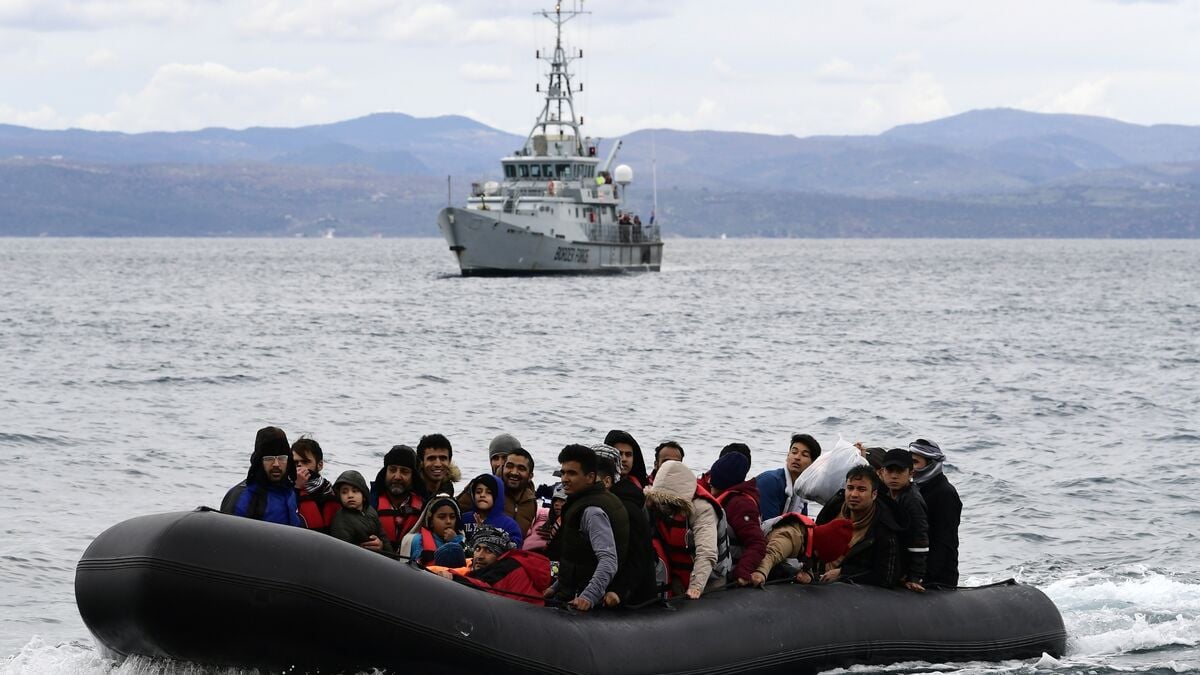
It is very important, both to reduce asylum immigration but also to reduce this death in the Mediterranean that we unfortunately see today, says Forssell in Brussels.
The final shape of the rules must now be negotiated with the EU Parliament. In committee proceedings last week, a narrow majority there supported a similar line that the member states have now approved.
However, the parties on the left are critical.
"As a union, we can do better than the failed Rwanda and Albania models. It is unacceptable," the Social Democratic Party Group S&D writes in a press release .
Ready for "solidarity"
On Monday, migration ministers also agreed on the "solidarity pools" that will help countries in the EU that are under particularly heavy pressure when it comes to taking care of asylum seekers and migrants.
Greece, Cyprus, Italy and Spain will receive assistance, either with money, personnel or the redistribution of asylum seekers to other countries.
However, Sweden does not intend to participate in redistribution.
"It's not relevant for us... We will provide financial support," says Forssell.
In total, 21,000 people will be redistributed in 2026, or a total of 420 million euros in financial support. For Sweden, this could be around 100 million kronor next year.
A third difficult agreement on Monday concerns how to get people who are to be expelled from the EU out of the country more quickly and easily. The decision opens the way for the creation of so-called "return hubs" outside the EU where deportees can be gathered.
Facts: Safe countries - of different kinds
In the context of asylum and migration, a distinction is made between different types of "safe countries".
* Safe countries of origin are countries whose citizens are extremely rarely considered to have a valid asylum application in the EU.
* Safe third countries are countries that are considered safe enough for an asylum seeker from another country to stay in, rather than continuing to seek asylum in the EU.
In recent decisions on Monday, EU member states chose to include Bangladesh, Colombia, Egypt, India, Kosovo, Morocco and Tunisia, as well as all candidate countries for the EU, on a first common list of safe countries of origin, as long as there is no armed conflict or "measures that affect fundamental freedoms and rights."
For third countries, EU countries want to update the rules to enable agreements that asylum processing can take place there, rather than in the EU.
Source: EU Council of Ministers