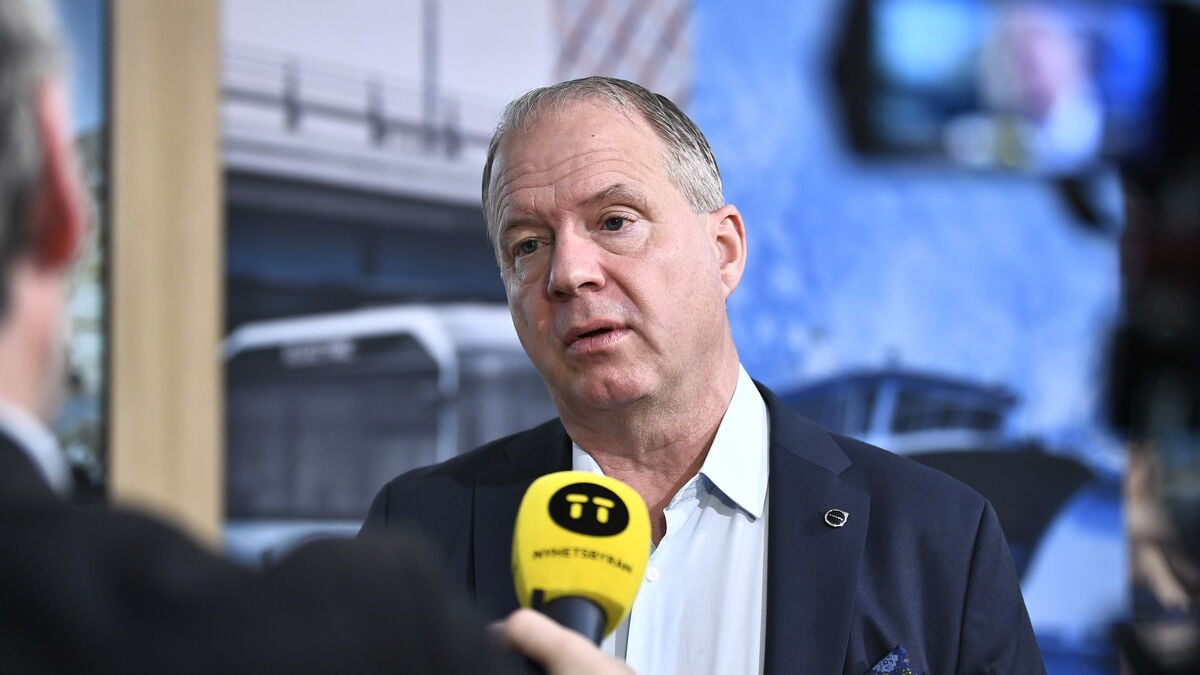
A tailwind could create more Volvo jobs, says Martin Lundstedt, who oversees just over 101,000 employees worldwide.
He says recruitment may be needed in the future:
"We have a volume dependency at our large production facilities, and then we will need personnel. It could be Skövde, Köping and Tuve and so on," he says.
If it recovers in our main markets, it will be good for our Swedish operations, he adds.
Thumbs up on the stock market
The stock market is giving the report a thumbs up. AB Volvo shares rose 1.8 percent in early trading, and have thus risen just over 8 percent since the turn of the year.
Geopolitical unrest and tariffs are affecting industrial flows, the Volvo CEO says. But revenue from service operations is rising and order intake is pointing upwards.
"We have strong order intake, not least in North America, which is of course important to us," says Lundstedt.
There are no direct effects of the Iran war in terms of demand, according to Lundstedt:
"We haven't seen it either in terms of order intake or activity level. And, perhaps most importantly right now, we do not see cancellations in our order book or order portfolio."
"But if we have a longer situation with this conflict and its various effects, then it is primarily the general economy that will be affected."
"Very serious" situation
The situation is "very serious," according to Lundstedt. The focus so far has been on taking care of staff, customers and suppliers in the war-torn region.
But war can also create business in the long run, he admits.
"Looking at the long term, there will be a need to rebuild both civil society and infrastructure," he says.
New defense capabilities and rebuilding energy production are other things that could drive demand for Volvo in the long term.
In the long run, the energy price shock resulting from the Iran war could also accelerate electrification, where AB Volvo has launched new products this year. This is about both climate and energy security, according to Lundstedt.
"I absolutely believe that this will lead to a desire for a more diverse mix of energy solutions."