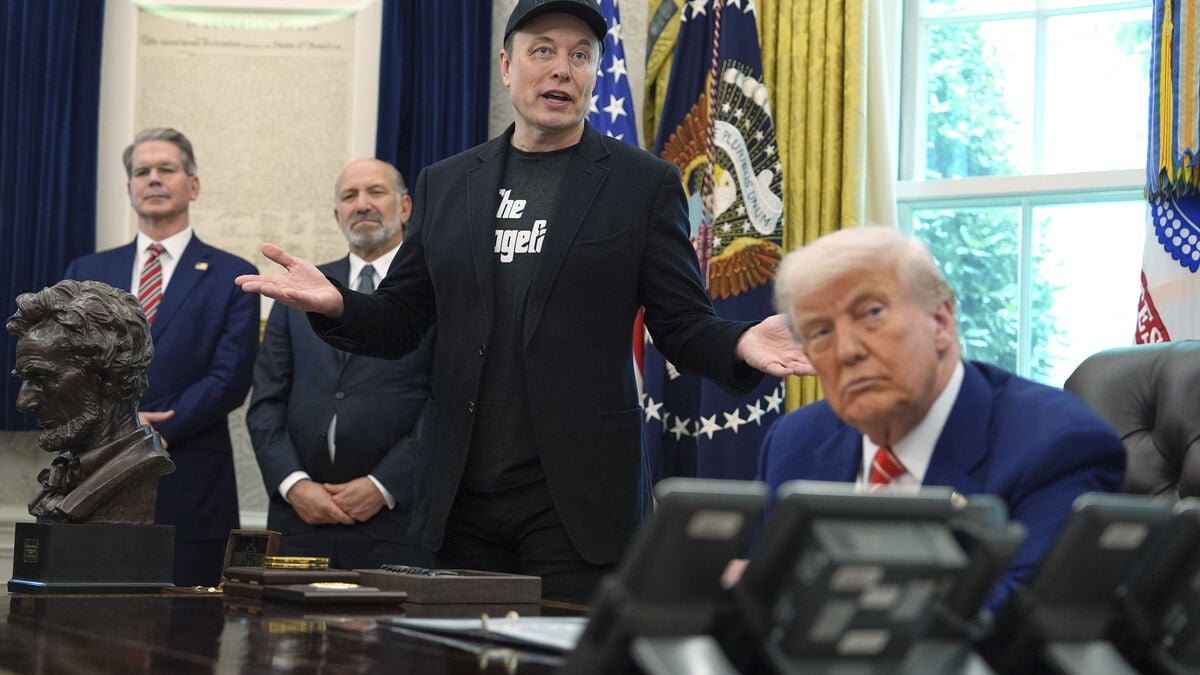
The US national debt hit a new record last week - $40 trillion. Spending remains higher than revenue, despite previous efforts by President Donald Trump and billionaire Elon Musk to cut government spending through the efficiency agency Doge.
"They have cut discretionary spending under Doge, in some places too much. And the military, which is the other part of discretionary spending, they want to increase investments there," says Kopelman.
Expenses are ticking up.
At some point, this will not last. Then they will force deeper cuts.
Exactly when that point will come is difficult to say.
Snowball effect
Then, the revenue side has deteriorated through tax cuts and has not been able to compensate with spending cuts, so the deficits have stalled at a long-term unsustainable level.
It's starting to resemble a rolling snowball.
The higher the debt, the more of the budget deficit is used to pay interest on the debt.
A broad agreement would benefit finances, says Kopelman.
What primarily drives the debt is spending on pensions and healthcare, and there you have to reach an agreement across party lines, and that is difficult in such a polarized climate, she says.
Donald Trump and Treasury Secretary Scott Bessent are hoping for an AI boom.
The administration's hope is that AI will provide a huge productivity boost, and that it will increase growth so quickly that you don't have to worry about getting more tax revenue.
“Temporary Band-Aid”
Last Tuesday, the US 30-year Treasury bond rose to over 5.30 percent - the highest level since 2007. The following day, Scott Bessent announced that the Treasury Department would begin buying back long-term bonds at a higher rate, in an attempt to push down interest rates.
It's part of this, but it's just a temporary patch. It doesn't solve any underlying problems.
The problem is that the purchases are financed with new debt.
You buy long papers and borrow more on the short end, so it's not a good signal when you start doing that.
Bessent has promised a plan within a few days, possibly on Monday, for how to address the deficit.
It is very difficult to see what such a plan would entail, says Kopelman.