The Swedish Competition Authority now wants to tell the electricity grid companies that it has them in its sights.
There is a clear risk that the price will not be fair. Therefore, we want to communicate what we see to the companies so that they have a chance to raise the issue of fair pricing now during the final year of this period, says Marie Östman, Director General of the Swedish Competition Authority.
The electricity network companies are allowed to charge for electricity network delivery according to rules set in advance by the Energy Market Inspectorate for four years at a time. A ceiling is set for how much the companies can earn.
The maximum ceiling for how much revenue companies can have affects the fees, says David Nordström, head of the competition supervision unit at the Swedish Competition Authority.
Counting on new lines
The crux, however, is the calculation method, according to the Swedish Competition Authority, which is tasked with examining competition, even for regulated monopolies such as the electricity network market.
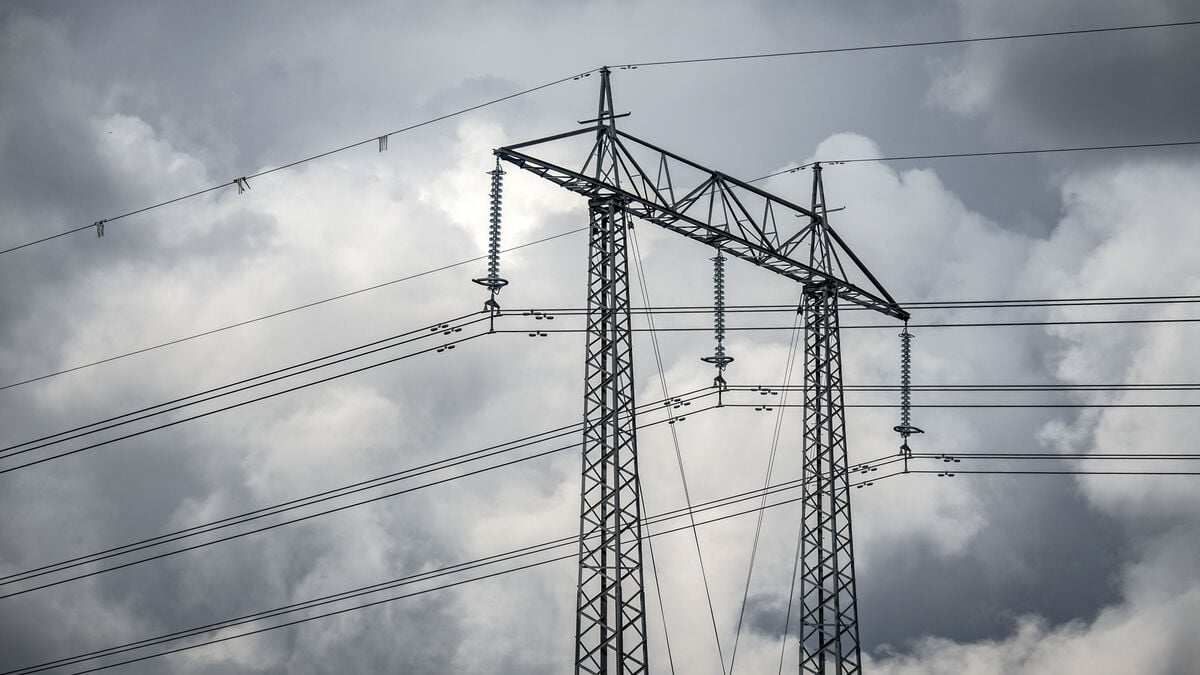
The electricity companies are allowed to charge as if they were constantly building completely new facilities, even though the electricity is routed through old poles and wires. The calculation method is called current acquisition value - instead of actual costs, the companies are allowed to calculate as if they were building completely new.
And construction costs have skyrocketed relative to the general trend, Nordström points out.
He says that the Swedish Competition Authority is now reviewing the electricity network companies and their fees for the current period extending until 2027, and sees that there is reason for concern.
The revenue limits have increased for the current period, and we see a risk of unjustifiably high fees.
SEK 100 billion
This involves an increase in revenue limits of over SEK 100 billion for the period 2024 to 2027, and it is this money that now risks ending up with the electricity network companies, even though their actual costs are not the basis for the price increase.
The industry organization Energiföretagen disagrees with the Swedish Competition Authority's conclusions.
"Such reasoning as presented in the report would be very difficult for the industry to deal with in pricing. Could pricing and revenue levels that remain within the provisions of the Electricity Act really be unreasonable under other legislation?" says Tomas Malmström, responsible for electricity networks at Swedish Energy Companies, in a press release .
A household's electricity bill consists of several parts: the electricity itself, the electricity network fee and energy tax.
For a residential customer who consumes approximately 20,000 kWh in a year, the electricity network fee accounts for approximately 32 percent, electricity for 41 percent and energy tax for 27 percent.
For the apartment customer, who uses 2,000 kWh, the electricity network fee constitutes 45 percent, electricity 36 percent and energy tax 19 percent.
The calculations are based on an average price of electricity.
Source: Godel