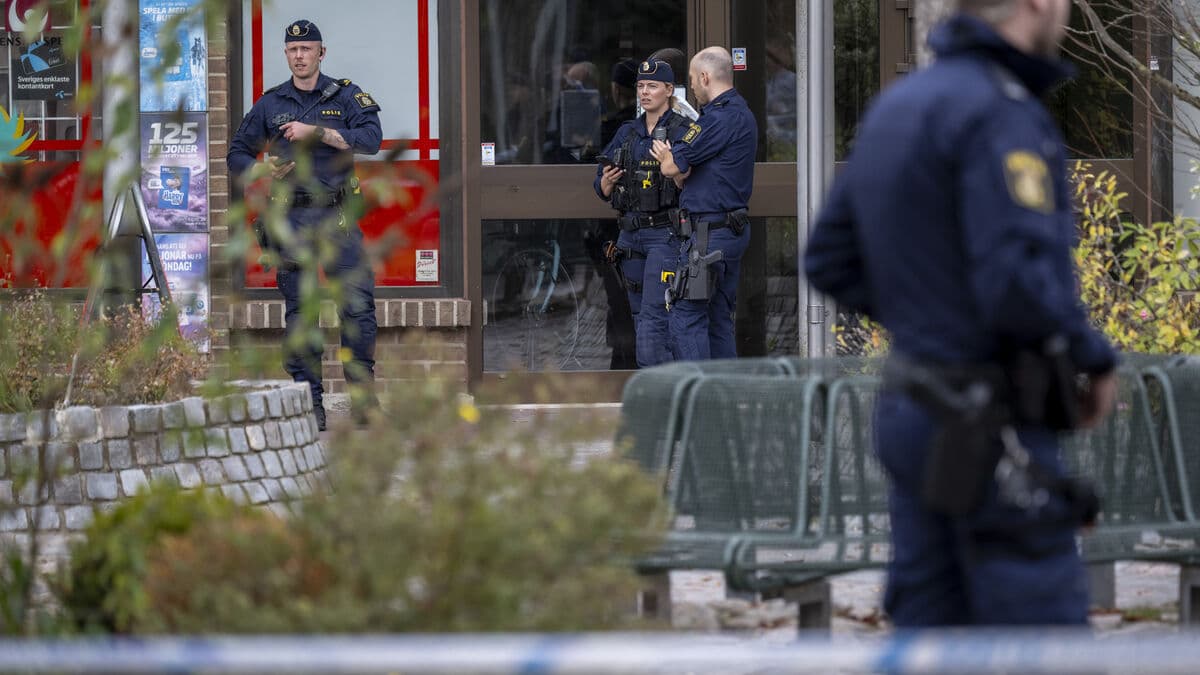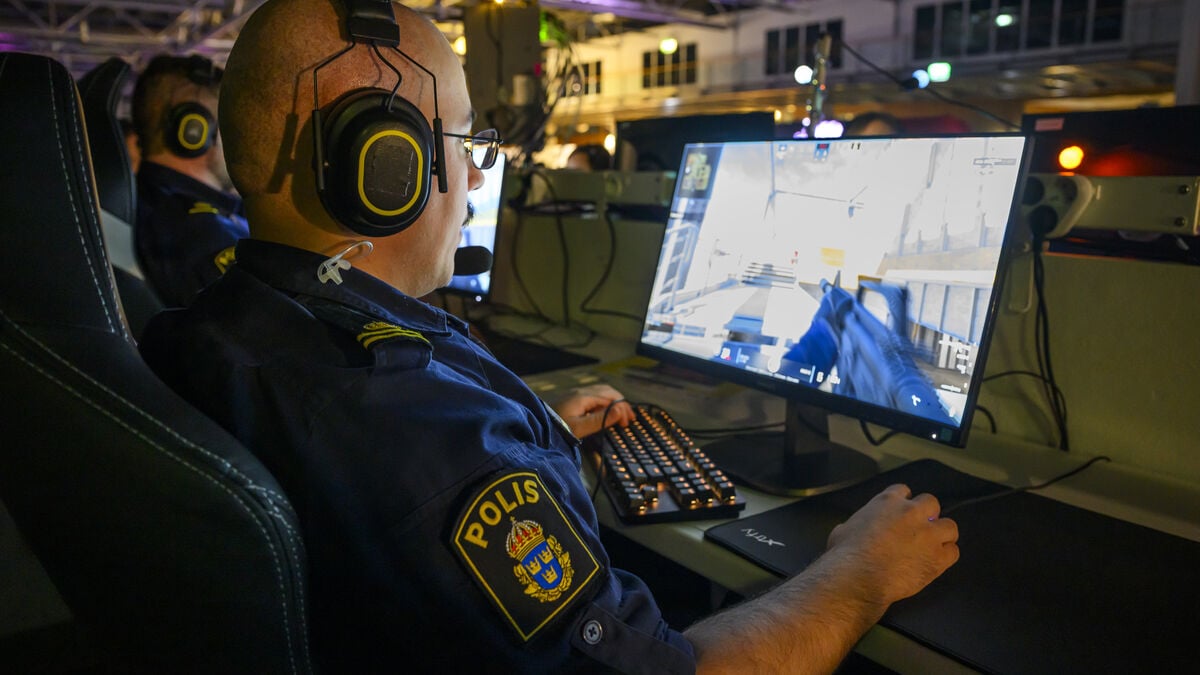
This weekend, 60,000 people visited the Dreamhack gaming festival held in Stockholm. Among those who sat down in the classic LAN section to play against other participants were, for the first time, uniformed police officers.
Gaming is one of our big targets with online patrolling, says Magnus Björn-Bentzen.
Online patrolling, a police presence on digital platforms, has been introduced in various police regions during the year. Dreamhack is the first step from the police to bring that presence into the gaming world.
We want to lower the threshold for young people to contact us, says Magnus Björn-Bentzen.
Secure chat
The police are currently testing the framework for their digital presence. Inspiration comes from Denmark and Norway, where the police have come further than in Sweden on some fronts.
In Denmark, for example, they have their own skins in "Roblox", so people know they are police officers because you can't buy those skins, says Allan Saeed - one of the playing police officers.
At Dreamhack, it's more about "establishing contact" and less about playing "Counter-Strike". But the ambition is for the presence to grow digitally.
If we see that someone is being groomed or recruited into crime, we can invite them to our own secure, encrypted chat and talk there more officially, says Allan Saeed.
Groomed in 45 minutes
Both Saeed and Björn-Bentzen point out that there is a wide spectrum of potential crimes and criminality that occur in the gaming world. Being lured into gang crime, radicalization or being groomed are some of the most common.
Ida Östensson, Secretary General of Child X, was at Dreamhack to warn about grooming in the gaming world.
In games, it takes an average of 45 minutes to be groomed. We know that 41 percent of perpetrators choose online games to groom children. Gaming companies need to take this more seriously.