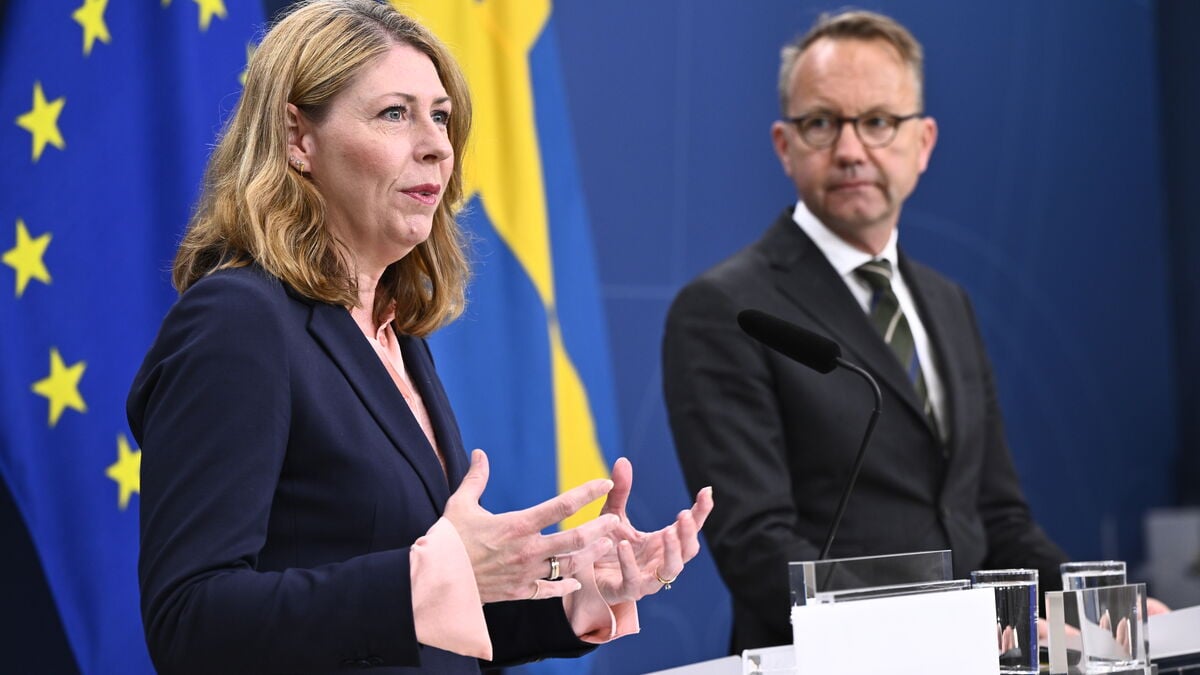
We know it is something we can benefit from even in peacetime, in the event of accidents. It is rare for healthcare personnel to be the first to arrive at an accident without any bystanders present, says Minister of Health Elisabet Lann (KD) at a press conference.
The government's mission for the campaign is to provide information to the public and practical training for civil society.
Stopping bleeding or providing emergency care is of great value to society. This is something we have also seen is a strength in Ukraine, Lann continues.
Medicine for one month
A special investigator will also review the state's responsibility for blood donations. Some regions experience recurring or acute blood shortages.
"It is very important and we welcome this. I want to emphasize the importance of more people donating blood as well," says Björn Eriksson, Director General of the National Board of Health and Welfare.
An estimated 200,000 more blood donors are needed to reach the target of 400,000 and ensure a good supply for surgeries and other procedures. In general, metropolitan regions are more likely to have blood shortages, while rural regions may have better supply.
Eriksson also urges people to keep a month's supply of medicine at home.
Experience from Ukraine shows that the better equipped individuals are, the better we can manage to help each other.
Civil service may be introduced
The government is also instructing the National Board of Health and Welfare to continue investigating what civilian duty in healthcare and dental care should look like. This is about maintaining a strong supply of skills even in times of heightened alert. The minister points to ambulance personnel, nurses, doctors and nursing assistants.
"We have been in a completely new security situation for a few years now. Since Russia invaded Ukraine, we have lived with this presence of war in Europe," says Elisabet Lann.