The Crown Princess has been suffering from pulmonary fibrosis since 2018 and her condition has deteriorated in recent months. On June 5, it was announced that she had been placed on the waiting list for a transplant.
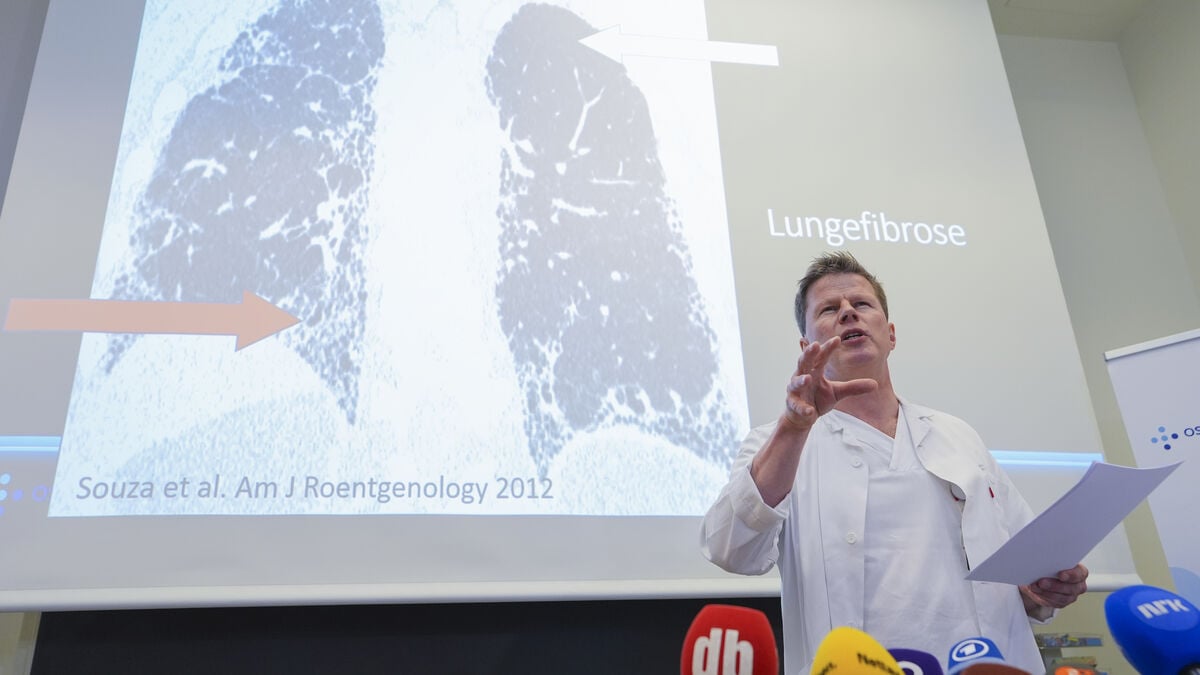
A prerequisite for receiving new lungs is that the patient has had a lung disease for so long that doctors believe they have about a year left to live. At the same time, the patient needs to be healthy enough to withstand the extensive procedure, said senior physician and head of the pulmonary department at Rikshospitalet in Oslo, Are Holm, at a press conference on June 5.
The new lungs need to come from a donor who matches the patient's body, based on blood type and tissue type.
Incision in the chest
During the surgery, which according to 1177 usually takes a full day, the surgeon makes either an incision on each side of the chest or an incision across the front. Once the diseased lungs have been removed, new ones are put in. The body's blood vessels and airways are connected to the new lungs.
During the part of the surgery when the diseased lungs are removed, a heart-lung machine is sometimes used.
After the procedure is complete, the patient receives intensive care in the hospital for one or two days before being transferred to a pulmonary ward.
For the first time after the operation, the patient cannot talk, eat or drink and is given an IV drip. They are also supported by a ventilator that delivers oxygen through a tube in the trachea.
One in eight dies
But a lung transplant is a major procedure. According to heart and lung surgeon Arnt Fiane, who also participated in the press conference when it became known that Mette-Marit had been placed on the waiting list, one patient in eight does not survive the first year.
If we wait a few more years, another person will die, and after ten years, about half will still be alive, said Arnt Fiane.
To prevent the body from rejecting the new lungs, the patient is given drugs that suppress the immune system. These must be taken for the rest of their life and mean that a transplant recipient has a permanently weakened immune system.
In Sweden, approximately 60 lung transplants are performed per year.