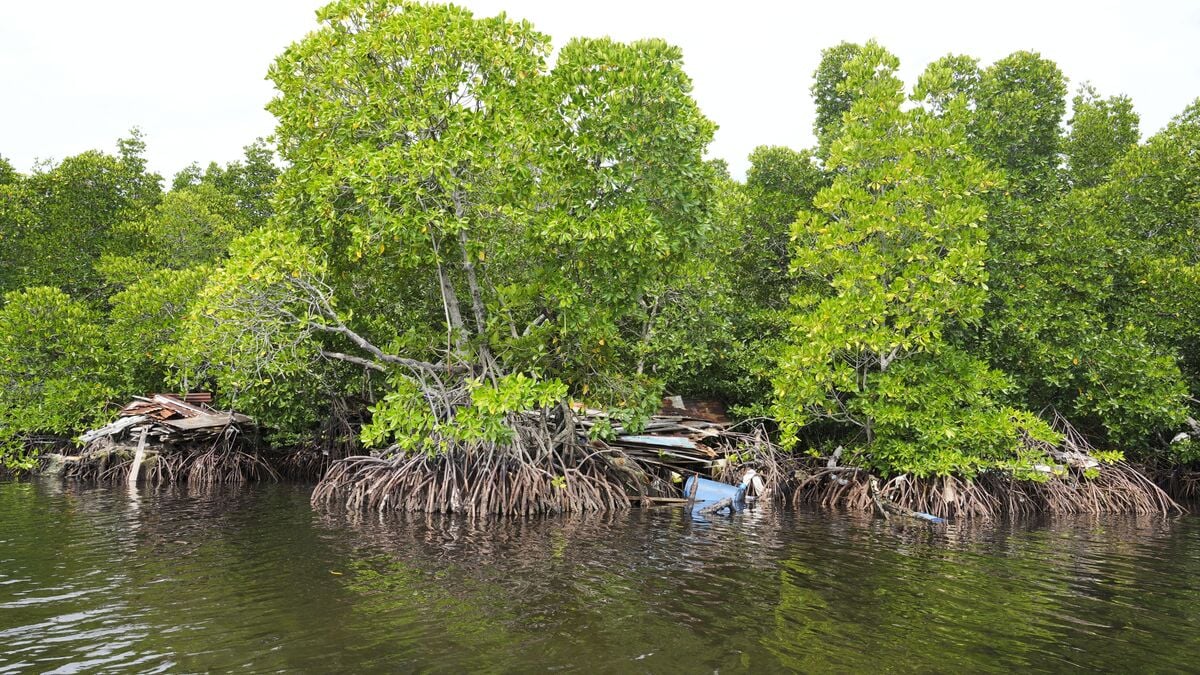
Decades of decline have been reversed. The world's mangrove forests are no longer declining, but are growing overall, according to a study from Tulane University in the US.
The reason for this is, among other things, restoration efforts and natural processes.
“This highlights their strong resilience and their potential as a powerful nature-based solution for climate mitigation and for coastal protection,” said lead author Zhen Zhang, a postdoctoral fellow at Tulane University’s School of Science and Engineering, in a press release.
Extensive felling
Fish farming, agriculture and the expansion of coastal communities have led to the clearing of mangrove forests. From the 1980s to 2010, forests decreased by thousands of square kilometers worldwide, but since then the increases have been greater than the losses. Overall loss from the 1980s is about 1 percent, a much smaller decrease than previously thought.
Mangroves have been relatively unsung environmental heroes. In addition to storing large amounts of carbon dioxide, the trees' tangled roots can slow waves and protect coastal communities. The forests are also important habitats for fish species, whose offspring can get plenty of food and protection from predators.
Shifting attitudes
In many places, attitudes toward the importance of mangrove forests have changed in recent years, including after some mangrove-covered areas provided strong protection during the 2004 Indian Ocean tsunami and the 2008 Cyclone Nargis.
The study is based on satellite data from four decades and has been published in the journal Science.
Mangroves consist of various species of shrubs and trees that grow on loose soil between sea and land in tropical and subtropical countries.
Countless animal species, from shrimp and fish to Borneo's proboscis monkey, live in the mangroves.
Approximately 15 percent of the world's coastlines are covered by mangroves.
Source: NE, IUCN