The announcement of a new phase came late on Thursday and followed calls for residents in southern Beirut, mainly in the Dahiyeh area, and in the Beeka region in eastern Lebanon, to immediately leave the areas.
The warnings led to a mass exodus from areas where the Iran-backed Shiite movement Hezbollah has its strongest stronghold.
Late Thursday, Israeli Lieutenant General Eyal Zamir said in a televised speech that the military is now moving further into Lebanon.
"We are striking with force, at the front and deeper into Lebanon," he said, adding that Israel is occupying key positions in southern Lebanon.
Soldiers injured
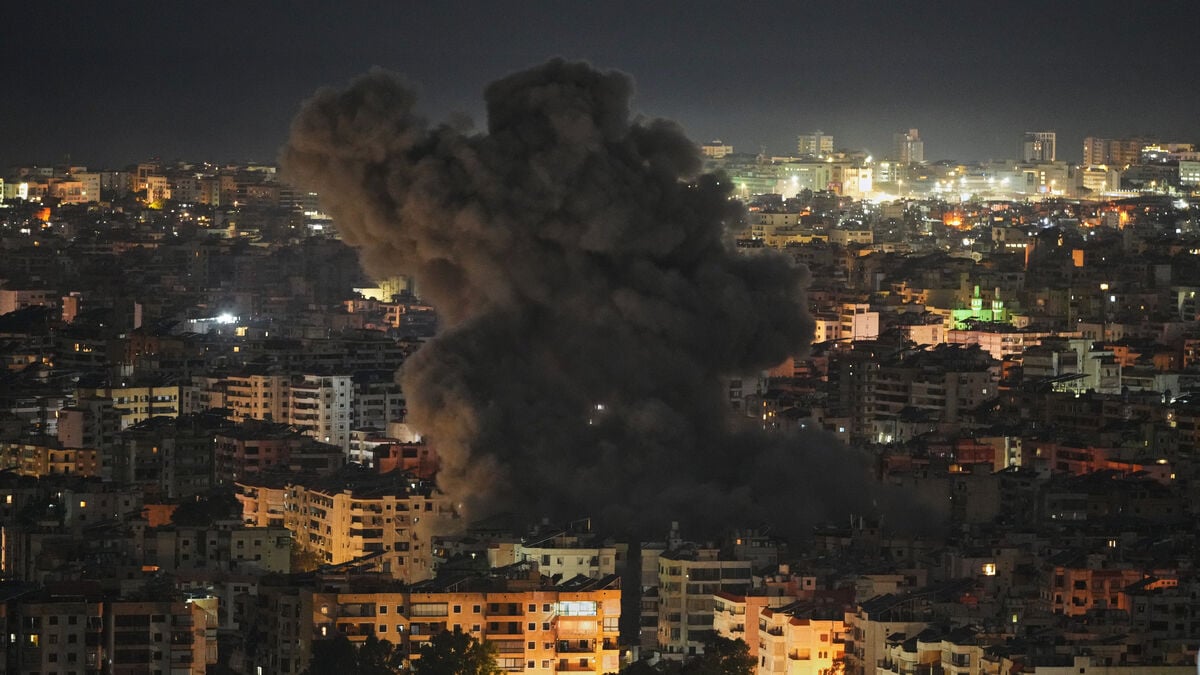
The Israeli military then announced, at 10 p.m. Swedish time, that airstrikes had been launched in the Dahiyeh area. According to a statement, the attacks were targeting Hezbollah facilities.
In parallel, it was reported that two Israeli soldiers had been injured - one seriously and one moderately - in connection with fighting in southern Lebanon.
Lebanese Army commander Joseph Aoun has asked French President Emmanuel Macron for help in ending the fighting. Aoun wants Macron to urge Israel not to bomb Beirut and to try to persuade the parties to reach a ceasefire.
After the conversation with Aoun, Macron urged that "everything" must be done to avoid Lebanon "being once again dragged into a war."
Rising numbers
Macron said he had spoken to "the highest levels" in Lebanon to develop a plan to try to end the fighting in the country.
"In this moment of great danger, I urge the Israeli Prime Minister not to extend the war to Lebanon," Macron wrote on X.
The death toll rose on Thursday in the ongoing fighting, with Lebanon's health ministry confirming that 123 people have been killed and more than 680 injured since Monday.
This weekend's outbreak of war in Iran has been followed by an escalation in Lebanon. A long-running conflict between Israel and Iran-backed Hezbollah flared up in violence in parallel with the war in Gaza, but since the fall of 2024 the parties had agreed to a fragile ceasefire.
According to the ceasefire, which was marked by allegations of violations, Israel and Hezbollah would withdraw from an area in southern Lebanon and gradually hand it over to international forces and Lebanon's regular but relatively weak army.
On Monday, Israel, which still had a military presence in the border areas, announced that forces would move further into the neighboring country and establish its own buffer zone. Tens of thousands of people have been driven from their homes. In recent days and on Thursday night, this has been followed by aerial bombardments.