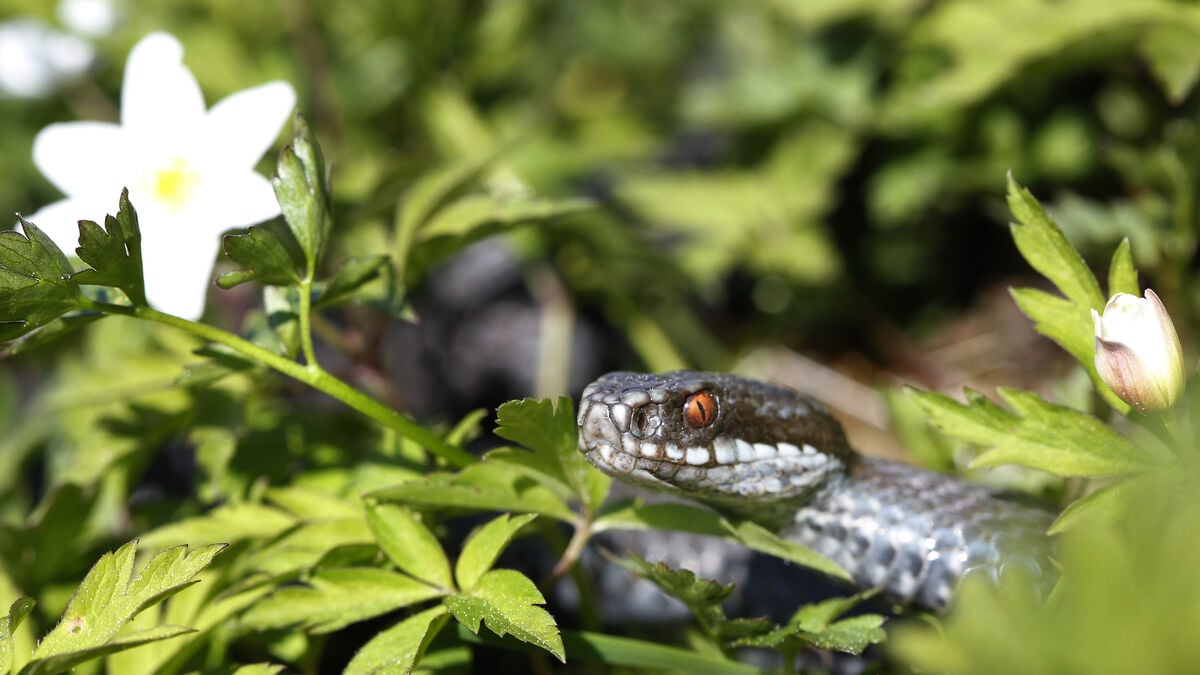
Spring means mating season and as more vipers move around the forest and land, the risk of being bitten increases. For humans, a bite is usually harmless, although you should seek medical attention if an incident occurs. For dogs, the risk of serious consequences is greater.
Dogs often have worse complications than cats, for example, and it is unclear why, says Alinda Dalla-Santa.
Keep an eye on the dog
So what should you do to reduce the risk of your dog being bitten by a viper? According to Alinda Dalla-Santa, it's mainly about keeping an eye on your dog.
If you have your dog on a leash, the snake will feel the ground vibrations when you walk by, and it will have time to scurry away.
In addition, you can avoid places where snakes like to stay, such as sunny, south-facing locations.
Snakes like to lie in the sun, in rock piles and in meadows. It may be good to keep this in mind when you are out and about.
If an accident occurs - stay calm
Dogs are often bitten on the nose, head or front legs - and bites on the paws are something to be especially careful of.
This means increased blood circulation, which can then transport the poison further and spread throughout the body. This increases the risk of serious complications, says Alinda Dalla-Santa.
If your dog is bitten, it's important to stay calm - for both the animal and the person. It's also a good idea to know where the nearest veterinary clinic is.
If your dog becomes stressed, adrenaline and blood circulation increase, and the venom spreads. However, if you are calm, your dog will probably be too. This will give you more time to take your dog to a vet for treatment.
Facts: Viper
The viper, Scandinavia's only wild venomous snake, is found throughout Sweden, even north of the Arctic Circle, though not in the farthest north or on the highest mountain peaks.
It is characterized by its zigzag pattern along its back, which is black in males and dark brown in females. The basic color is gray and brown or reddish brown, but completely black individuals occur. The species usually grows up to 65 centimeters in length, but females can be longer.
The viper thrives in areas such as bogs, heather heaths, forest edges, roadsides, meadows and field edges, but avoids dense forests as it is dependent on places with high levels of sunlight.
In mild and warm springs, the viper can appear as early as February, otherwise usually in March - April.
If you are bitten by a viper, you should always seek medical attention and a bitten pet should always be checked by a veterinarian.
Sources: SLU Species Data Bank and Animal Care Guide