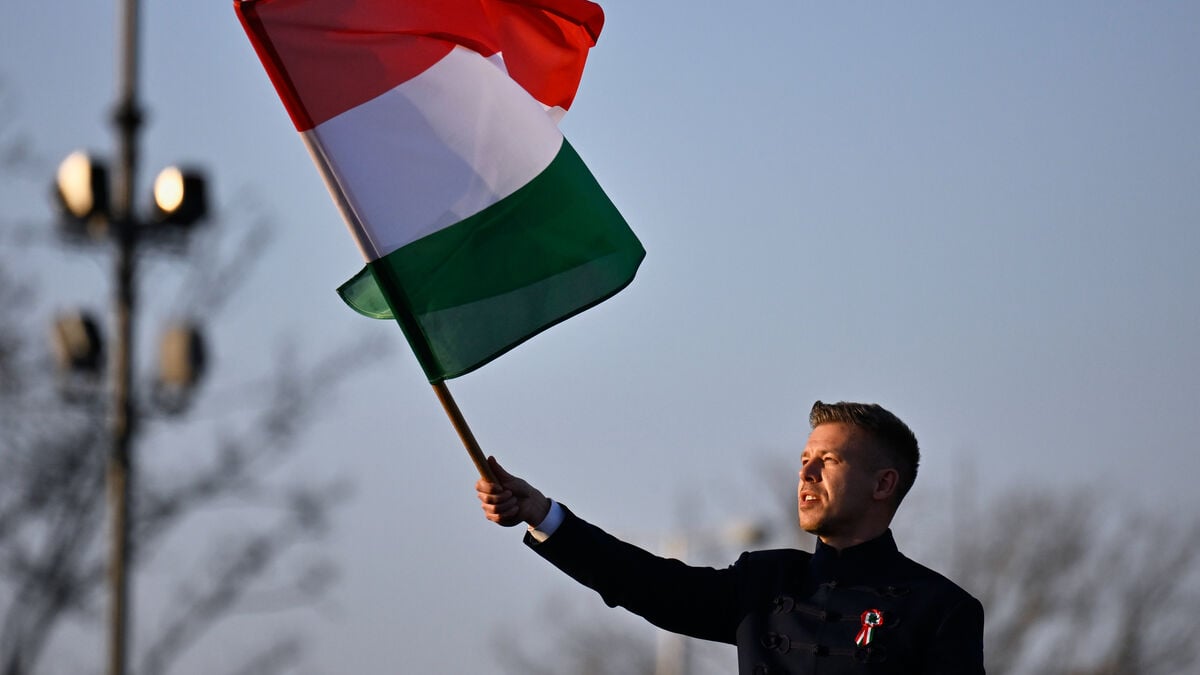
The 45-year-old Magyar is a lawyer by training and became interested in politics at an early age. He began his political career in Hungary's leading party, Fidesz, and for many years belonged to the top echelons of the party.
In 2024, a political scandal erupted in the country after it was revealed that the then president had pardoned a man who helped cover up child abuse.
The president was forced to leave, while Magyar's ex-wife Judit Varga – who had already resigned as Minister of Justice – was forced to leave the Hungarian parliament and to withdraw as Fidesz's top candidate in the EU parliamentary elections.
Magyar broke with Fidesz but had no plans to leave politics. He took over the small Tisza party, which has since climbed in the polls and is the first party in many years to seriously threaten Prime Minister Viktor Orbán, the EU's longest-serving leader.
Clear critic
In April 2024, tens of thousands of people gathered in the country's capital, Budapest, to show their support for Magyar and to protest against the country's government. At the time, the Fidesz defector vowed to challenge Orbán's "power factory."
Since then, Magyar has toured Hungary to attract votes and has positioned himself as a sharp critic of his former party colleagues. The 2024 European elections were a success for Tisza, who received almost 30 percent of the vote.
Magyar has promised to crack down on corruption, rebuild Hungary's democratic institutions, and take a more pro-EU course. At the same time, like Viktor Orbán, he favors a strict migration policy.
“Chance for change”
Right-wing politician Péter Márki-Zay, who has previously challenged the incumbent government, has described Magyar as "arrogant" and "self-centered," but said these may also be the qualities needed to take power from Orbán, writes Politico.
At the same time, there are question marks about how much Magyar has actually departed from Orbán's political line.
Left-wing voters may not be entirely happy with his agenda, but they still support him because he represents the greatest chance for change, Andrzej Sadecki, an analyst at the Center for East European Studies in Warsaw, told the AFP news agency.
Corrected: In a previous version there was an inaccuracy about the consequences of the abuse scandal for Judit Varga.