The community may need a week to adjust. The amount of recommended reserve water may seem like a lot. If the household cannot solve the storage problem, it is better to have something than nothing at all, says Åsa Rosengren, microbiologist at the Swedish Food Agency.
Six out of ten people do not store any water at home. This is according to a recent Novus survey, conducted on behalf of Water Aid and Svenskt Vatten.
Cooking and hygiene
Households should have extra drinking water to last a week when they do not have access to tap water. The Swedish Food Agency recommends three to five litres of water per person per day.
The water reserve should be sufficient for cooking and basic hygiene, but not for flushing toilets.
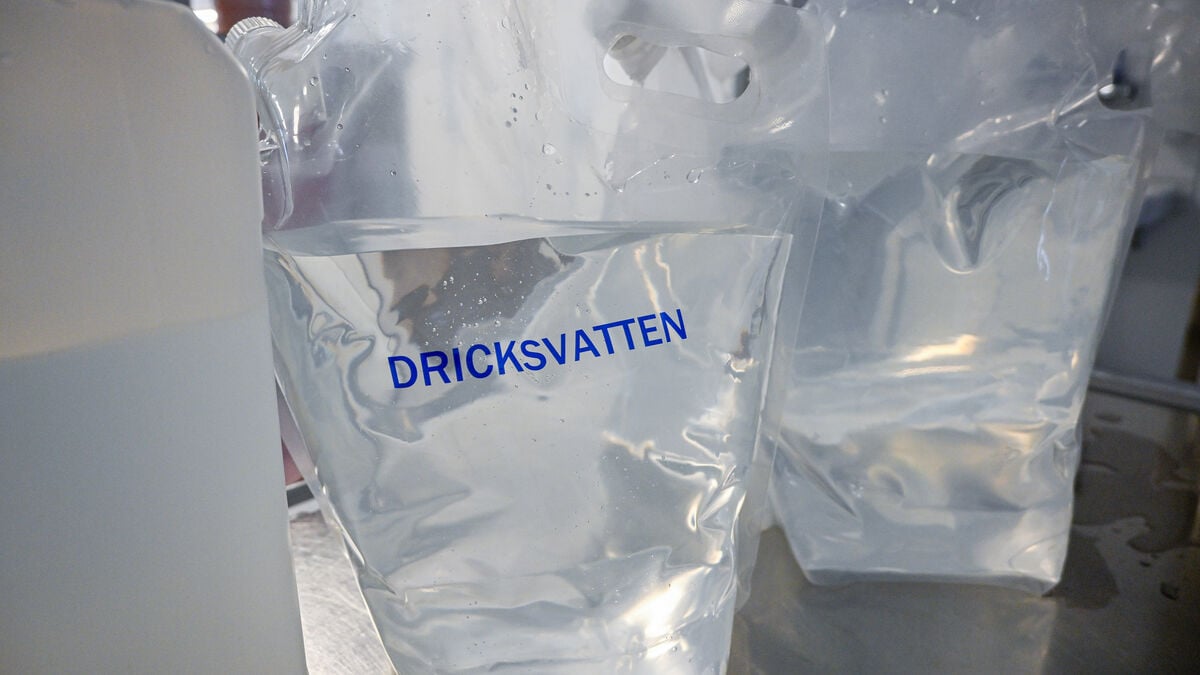
The easiest way to set up your own storage of drinking water is to buy plastic containers that are specifically designed for water. Or use containers that are clean and have not been used to store anything other than water.
How long the water lasts in the containers depends.
If you store the water in a dark, cool place and in clean plastic containers, the water can last for several months as drinking water. The plastic container does not need to be sterile, but it should be intact and clean. The water you flush with should be water that has been tested to be of good quality, such as municipal drinking water.
If the household does not have a cool place to store the water, you should at least make sure it is dark.
Even if the plastic container is not sterile, it does not mean that it is dangerous. There may be small, completely harmless bacteria that can live on sunlight. They can cause the water to become slimy and smelly over time.
Store in the dark
The water can also take on the smell of the plastic and start to smell pungent and unpleasant. You have to decide for yourself whether you want to drink it by smelling, looking and tasting it, says Åsa Rosengren.
For people with severely compromised immune systems, it is recommended to boil stored water. For this group, it may be practical to buy bottled water. This water should also be stored in a dark place.
Another tip is to buy a few extra containers to fill up when the water company has set up so-called safety points for water refilling.
Households with their own well are responsible for having access to drinking water in a crisis. If the electricity goes out, the water pump will not work - so those with their own well should get a backup generator, Rosengren points out.