Since the war in and around Iran began a few weeks ago, electricity contracts for delivery in the second quarter have risen by 20 percent. In electricity area 4, southern Götaland, electricity is traded at an average of 90 öre per kWh, excluding all surcharges.
That's very high for this time of year, says Christian Holtz, electricity analyst at the consulting firm Merlin & Metis.
Then, in winter, even higher prices are expected, he continues.
Runaway gas prices
Even in Norrland, you can expect higher prices, although the increase in öre will not be nearly as large.
The background is skyrocketing gas prices on the Amsterdam commodity exchange, which have more than doubled in a few weeks, with sharp swings as gas facilities are bombed. This will raise electricity prices even more on the continent, with a contagion effect into Sweden, most clearly in the southern half, continuing into 2027.
Gas stocks in Europe are already below normal levels.
At the same time, it is now becoming more expensive to fill them, says Holtz.
Even before the war, a weaker situation for Swedish hydropower had pushed electricity prices above normal.
Very expensive
Time to fix the electricity price, some households might think.
It can be done, but it is very expensive at the moment, he says.
Of course, the electricity companies have already taken into account the expected rising electricity prices and have raised the price of fixed electricity contracts. A one-year contract is currently just over 1 krona per kWh, excluding VAT and other surcharges.
Last year, with hindsight, it was most advantageous to fix the electricity price in April, according to Patrik Södersten, electricity price expert at Fortum. That is not the case this year. Perhaps the situation will be better in the fall.
"Right now, however, the cost of signing a longer fixed contract is high," he says in a written comment.
Best: control consumption
Then it's probably smarter to try to control your electricity consumption, if you can, says Christian Holtz.
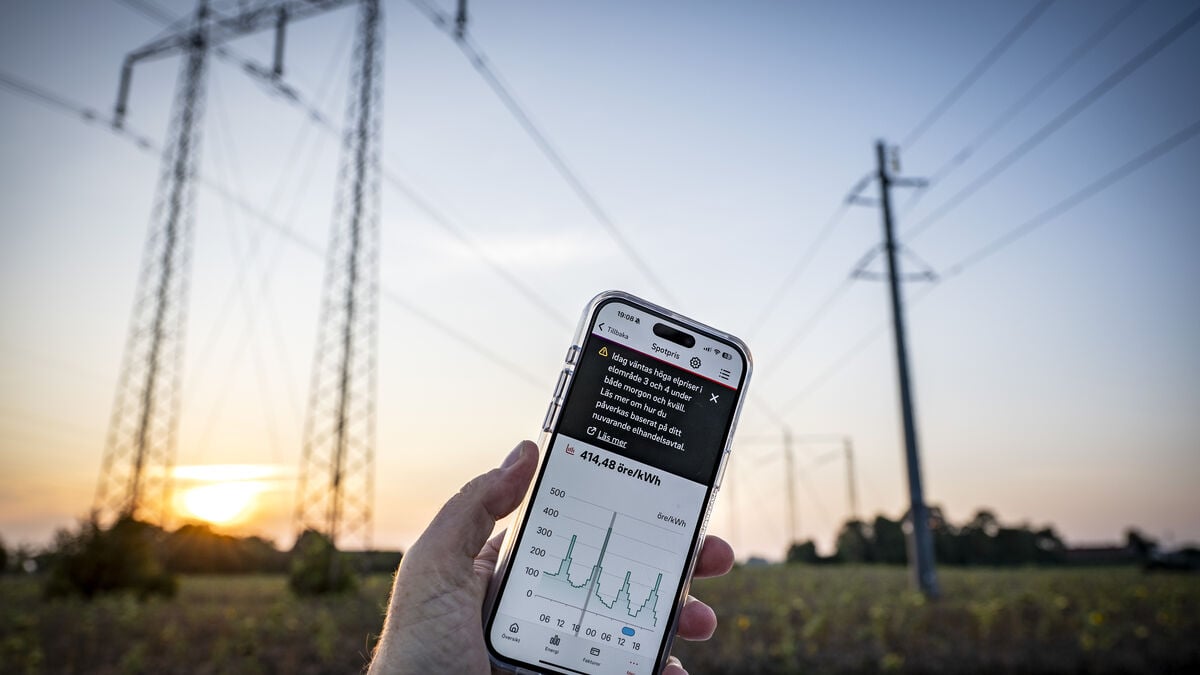
The price differences are enormous during the day, explained by high solar production in Germany, among others. This will likely continue during the summer, with sometimes negative prices in the middle of the day and perhaps 2 kronor per kWh in the morning and evening.
The most you can earn this summer is by reducing your electricity use during these hours when prices are really high, says Holtz.
Facts: Electricity price so far in March
Average electricity price on the Nord Pool electricity exchange up to and including March 20 (all of March 2025 in brackets) in the different electricity areas:
Electricity area 4, 93 öre/kWh (60 öre)
Electricity area 3, 67 öre/kWh (51 öre)
Electricity area 2, 23 öre/kWh (11 öre)
Electricity area 1, 24 öre/kWh (16 öre)
On top of the exchange price, there is the electricity retailer's markup, electricity tax, VAT and electricity network fee of well over one krona per kWh.
Source: Nord Pool, TT