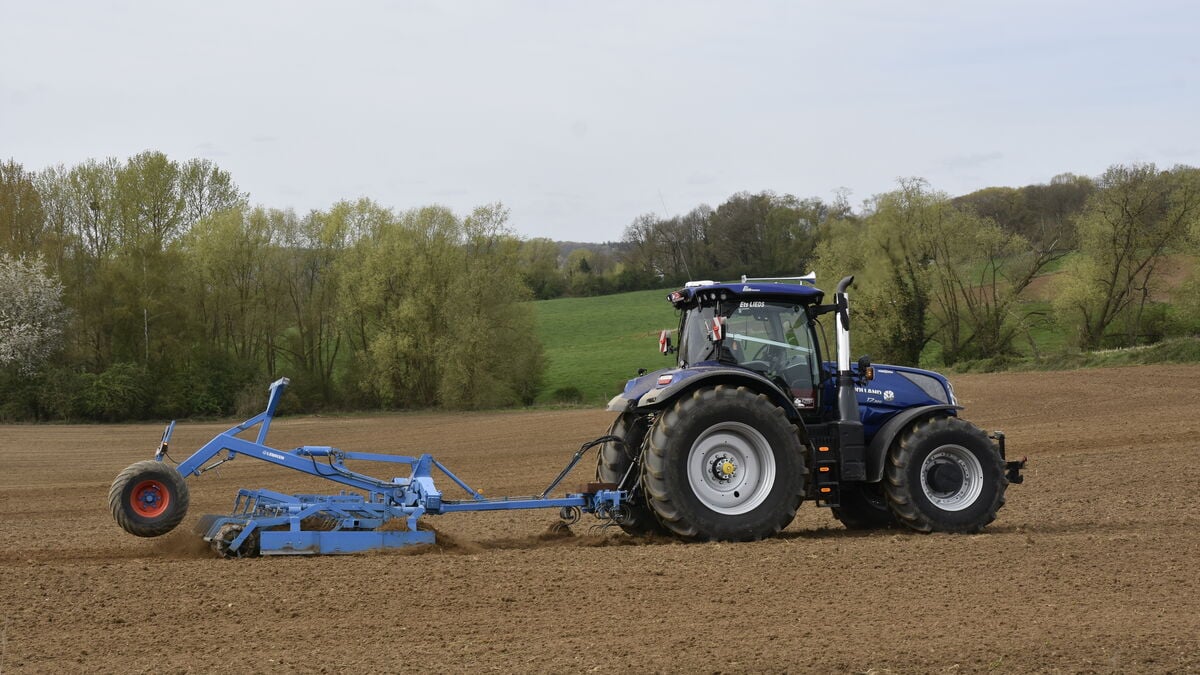
Organic farmer Gwenaël du Bus in Gottechain, a few miles east of Brussels, is struggling with staff - not those who work here, but rather those who don't want to.
It's hard to find people these days who want to sit on a tractor. Wages are rising in Poland and Romania so they don't want to come here anymore. It's good for them, but not so good for us, you say to du Bus when TT comes to visit with a group of journalists from Brussels.
The farmers here are eager to make themselves heard as the EU member states are once again in what is perhaps their most intense negotiation to agree on a new seven-year budget.
Fighter jet in the air
Agriculture and regional policy are still two of the biggest expenditure items and are proposed to receive just over half, 54 percent, of the funds in 2028-34.
At the same time, there is strong pressure to also invest in other areas.
As a blatant example, an F-35 fighter jet suddenly roars past over du Bus, from the nearby Beauvechain air base. The war in Ukraine has made defense and security emerge as heavy new items in the EU budget, with demands for more money and more joint efforts.
Trillions
The European Commission presented its major budget proposal last summer. It totals approximately 19 trillion Swedish kronor - 19,000 billion - corresponding to 1.26 percent of the EU countries' total gross national income, GNI.
Since then, the member states and the European Parliament have been scrutinizing the proposal to decide what they think. As usual, the Parliament wants a higher budget - ten percent more than the Commission. Sweden, in turn, is among the countries pushing in the other direction.
"There will always be good reasons to increase the budget - especially if you think someone else is paying," Prime Minister Ulf Kristersson (M) said sourly last week, when he and other heads of state and government in the EU had their first proper summit discussion on the budget.
Tough reality
Right now, the EU countries are working to put together a first counterproposal by June, with figures on how much should go to what. As usual, this will be met with continued protests from various quarters. Any agreement is not expected until the beginning of the year at the earliest - if even then.
Until then, everyone will do what they can to influence the final outcome. More angry tractor protests are expected in Brussels.
Out in Gottechain, Gwenaël du Bus describes a tough reality, where it took him ten years to make a profit.
"My wife was responsible for all the joint income. It's only been the last five years that I've been able to draw any salary," says the organic farmer.
Every seven years, the EU prepares a long-term budget that sets the framework for joint spending in the coming years.
Traditionally, the budget is dominated by agricultural subsidies and measures to even out economic disparities between different parts of the EU. However, it includes extremely small sums for things like healthcare and education, which each country is responsible for.
The budget is mainly financed through national levies, with countries contributing according to their population and economic strength. Smaller amounts also come from customs duties and common EU taxes - which several EU countries, the Commission and Parliament are keen to increase.