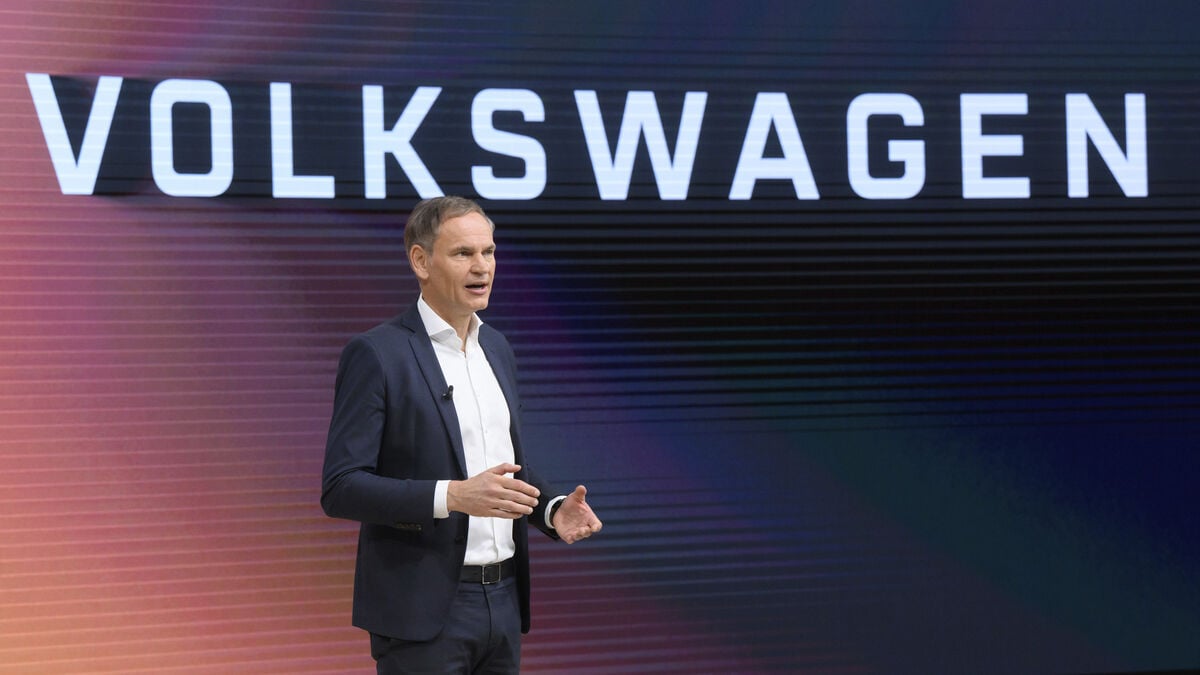
The rescue plan for Volkswagen was presented by CEO Oliver Blume on Thursday.
Germany is our home and remains an important industrial location, Blume notes in a video statement without going into specific figures.
According to Der Spiegel, production at the Zwickau and Emden plants will be phased out within five years. This will be followed by the closure of two more plants: Hanover by 2032 and Neckarsulm by 2034, the newspaper writes. In addition, it reports reduced investments of around 50 billion euros.
The China problem
The big problem is China. Until now, Volkswagen has sold very well in the Chinese market, but now sales are falling and profits have fallen sharply. And in the markets in Europe - including Germany - competition from Chinese carmakers such as BYD and Chery has become increasingly difficult.
They have grown a lot lately and now make up twelve percent of the European market for passenger cars, says Jonas Grafström, economist and vice president at Ratio, the Swedish Business Research Institute.
It is not unreasonable to imagine that a Chinese automaker will devour Volkswagen, at least some parts, over time.
According to Grafström, Volkswagen has bigger problems than many other European car groups. In Germany, energy costs are 200 percent higher than in China and the United States, partly as a result of the closure of nuclear power.
Wages in Germany are also high, and they haven't rationalized as much as, for example, Toyota in Japan. The crisis is not just a German crisis - there is overproduction in the car market worldwide - but the Germans haven't caught on to this in time, he says.
First closure
He doesn't believe that all the planned cuts will come to fruition. The unions and the state government have a lot to say about it, and will probably say no to several of the reduction plans.
The question is what can be done. According to Grafström, both Volkswagen and other manufacturers will be forced to cut back on operations. Tariffs are already quite high and there is a reluctance from governments to subsidize the industry.
He points out that Volkswagen can't do much more than what has already been done. But it's clear that the setback is hurting a lot.
It must be remembered that Volkswagen has never before closed a factory in Germany, not since the company was founded by Hitler 89 years ago.