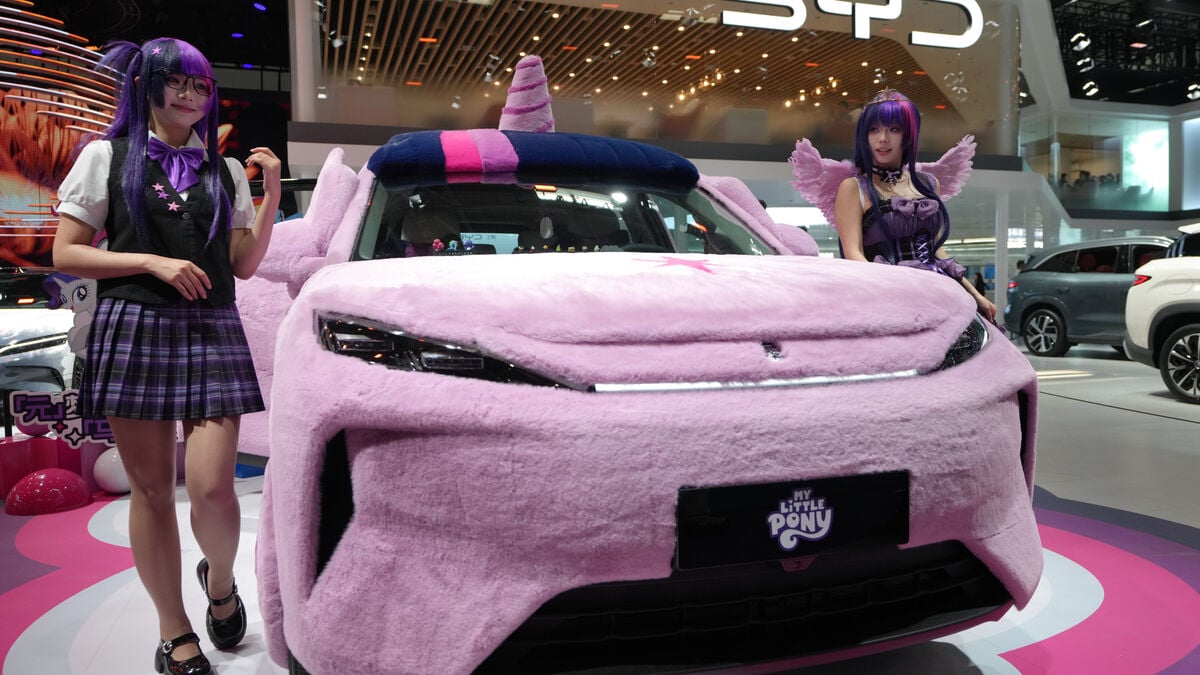
This weekend, the Beijing Auto Show, which has been running for just over a week, ends. For visitors, it is a real challenge to take in everything in one day. With an area of just over 300,000 square meters, about 50 football fields, it is now by far the world's largest auto show.
Around 1,500 different models, of which just over 180 are being shown for the first time, also fill the exhibition area. Among these, two things stand out: they are almost exclusively all-electric models, and mainly Chinese car manufacturers are on display.
Challenging market
It is in this market that Volvo Cars, whose main owner is Chinese, wants to gain market share. However, it is a challenging situation and it has not become easier, admits Volvo Cars CEO Håkan Samuelsson:
"It puts pressure on the entire Western car industry. The time when you could successfully sell a European-developed car just by assembling it in China is over. Now it has to be more local," Samuelsson told TT when he presented the company's interim report this week.
For Volvo Cars, this has meant deepening cooperation with the Geely Group in areas such as development and procurement. This will be important, Samuelsson admits, when, for example, software needs to be developed on site in China.
"It's very difficult for us to do in Europe; it has to be developed locally, so the cars will be different, more Chinese. 'China for China' cars, as we call them."
A plethora
However, this does not mitigate the competitive situation. In Europe, manufacturers such as BYD and Xpeng have stepped in, but at home there is a plethora of Chinese car manufacturers currently focusing entirely on the domestic market. A telling example is Dreame, known for manufacturing robot vacuum cleaners, which has now presented its own electric car model at the motor show. Several of them also receive extensive government support such as loans and access to land.
The competitive landscape will leave its mark, not only on European car manufacturers and not only on the Chinese market but also in Western Europe, Samuelsson says, drawing parallels to Japanese car manufacturers.
"When Toyota and Honda came to Europe, they put enormous pressure on local manufacturers. What we will see now from the Chinese is probably a notch higher. It is certainly very good for the customers, but very unpleasant for competitors who will then have much tougher times."
Facts: Volvo Cars sales in China
During the first quarter of 2026, Volvo Cars' sales amounted to 28,330 cars. This was a decrease of 17 percent compared to the same period last year.
Volvo Cars attributes the decline to "the competitive market, seasonal effects and the Chinese New Year celebrations."
Sales of electrified models increased by 116 percent to a total of 7,604 cars.