Plenty of water in the power reservoirs, continued mild and probably windy weather in the long-term forecasts. In addition, gas prices are relatively low in Europe, which indicates electricity prices at manageable levels.
Much points to stable electricity prices in 2026 as well, lower in the southern half of the country but slightly more expensive in Norrland compared to 2025, and thus far from the crisis levels reached in the winter of 2022/2023, according to analysts TT spoke to.
"Good conditions"
"We can conclude that the market believes in a cheaper electricity year in 2026 thanks to good conditions for hydropower, expanded renewable electricity production, stable nuclear power and a smaller proportion of fossil fuels," says Maria Erdmann, CEO of electricity trading company Godel.
On the Nasdaq electricity market, electricity is traded at around 60 öre and 80 öre respectively in electricity areas 3 and 4 on average for 2026, which can be compared with just over 70 and 90 öre respectively last year, including VAT and a flat-rate surcharge charged by electricity traders. In Norrland, electricity areas 1 and 2, current forecasts point to electricity prices around 35 öre per kilowatt hour (kWh) compared to 31 öre the previous year, according to Godel's compilation.
But, of course, there are uncertain factors. Nuclear power could have new problems. And the winter could be colder than now.
"If it is a severe winter, it will be expensive now, but also later in the year because the water reservoirs will be emptied faster," says Patrik Södersten, electricity price analyst at Fortum.
The hammock - the new electricity curve
In the worst-case scenario, severe pressure on the electricity system could cause serious damage. Sweden is still without reserve power after the failed rounds of tendering for the power reserve in the autumn. However, a new tender is underway.
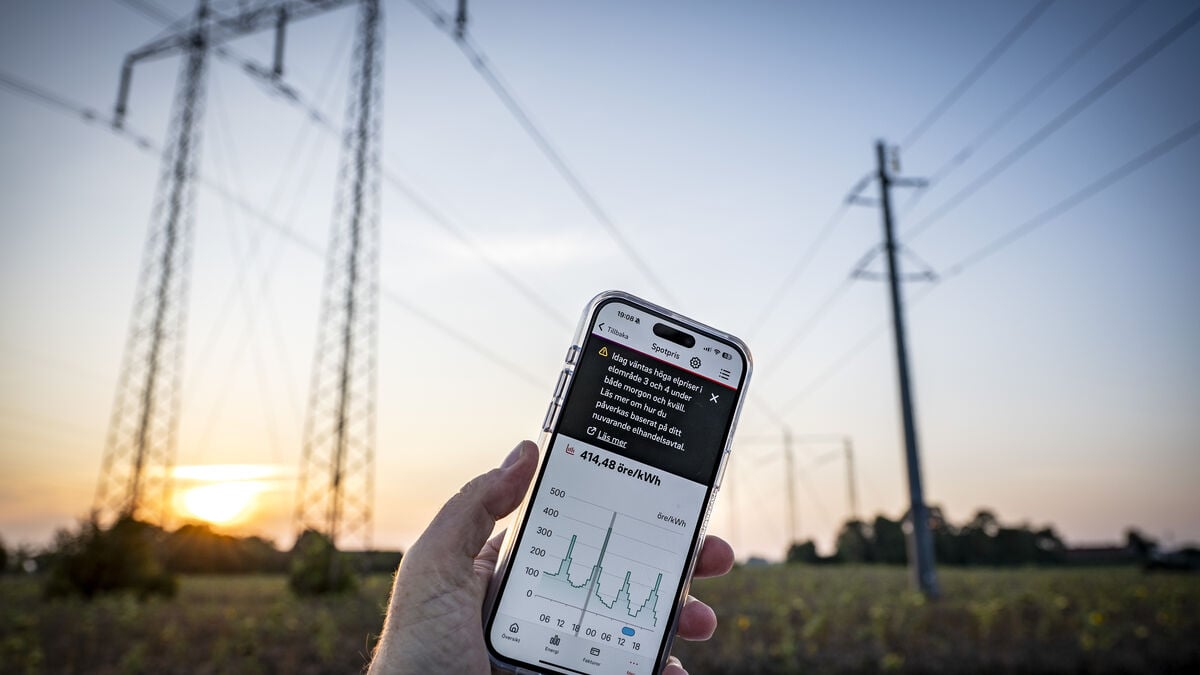
The large price variations are likely to persist. And as the summer months approach, the new trend is expected to pick up again. More and more solar power flowing in from Germany and other surrounding countries is causing the price of electricity to be lowest most of the time in the middle of the day, with higher prices at night - an unusual phenomenon a few years ago. In the electricity industry, the price curves over the day have been described as a hammock.
"Counteracting each other"
For example, charging your car at night no longer seems as obvious. At the same time, electricity companies use their power tariffs to guide customers to consume electricity at night.
"Yes, those things counteract each other a bit," says Patrik Södersten.
An alternative is to charge the car during the day with lower power over a longer period of time.
Facts: How the forecast can be beaten
This is how the electricity cost can be expected to end up for a townhouse owner who consumes approximately 10,000 kWh over a year, based on the current electricity price on the futures market. (Cost for 2025 in brackets).
Electricity area 1: SEK 3,900 for the whole year (SEK 3,300)
Electricity area 2: SEK 3,800 for the whole year (SEK 3,300)
Electricity area 3: SEK 6,700 for the whole year (SEK 7,700)
Electricity area 4: SEK 8,400 for the whole year (SEK 9,600).
The figures refer to the actual cost of electricity, including VAT and a flat rate surcharge that the electricity companies charge. On top of this, there is an electricity network fee and electricity tax.
Source: Godel, Nasdaq and Nord Pool.