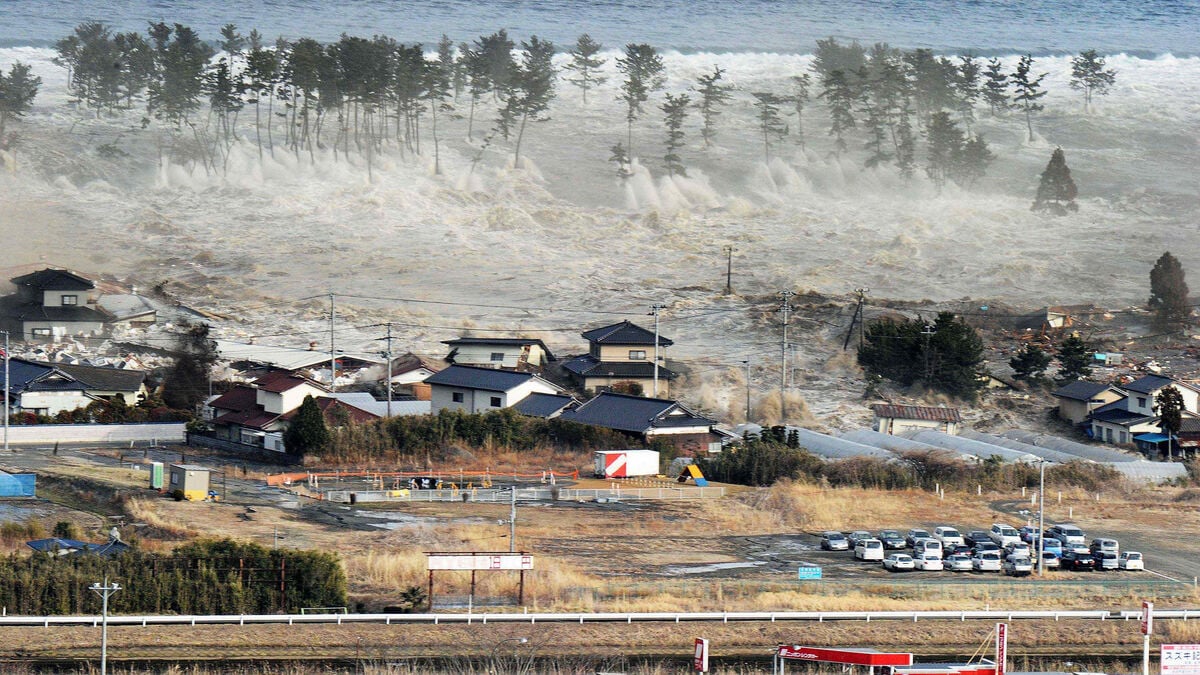
The 2011 Tohoku-Oki earthquake had a magnitude of 9.0 and caused widespread devastation, including the tsunami that caused the meltdown at the Fukushima nuclear power plant. The quake caused the main island of Honshu to move 2.4 meters eastward.
But about a quarter of an hour after the main quake, the island moved again - at most 5 to 6 millimeters eastward, according to satellite data.
"Usually you can see this kind of movement when the actual earthquake occurs. But here there was no known aftershock at this time, which made us curious," lead author Sunyoung Park told the University of Chicago's website.
She and her colleagues have concluded that a seismic wave from the quake traveled thousands of kilometers into the planet's core, from where it bounced back to the surface and caused the edges of tectonic plates to shift. The energy is equivalent to a powerful earthquake with a magnitude of 7.5.
According to the researchers, the discovery poses a new kind of threat during strong earthquakes. These waves can have a massive impact on already affected areas several minutes after the main quake and can also cause movements over a wide area.
“This adds a whole new angle on seismic risk that we didn't know about before,” said Park.
The study is published in the scientific journal Science.