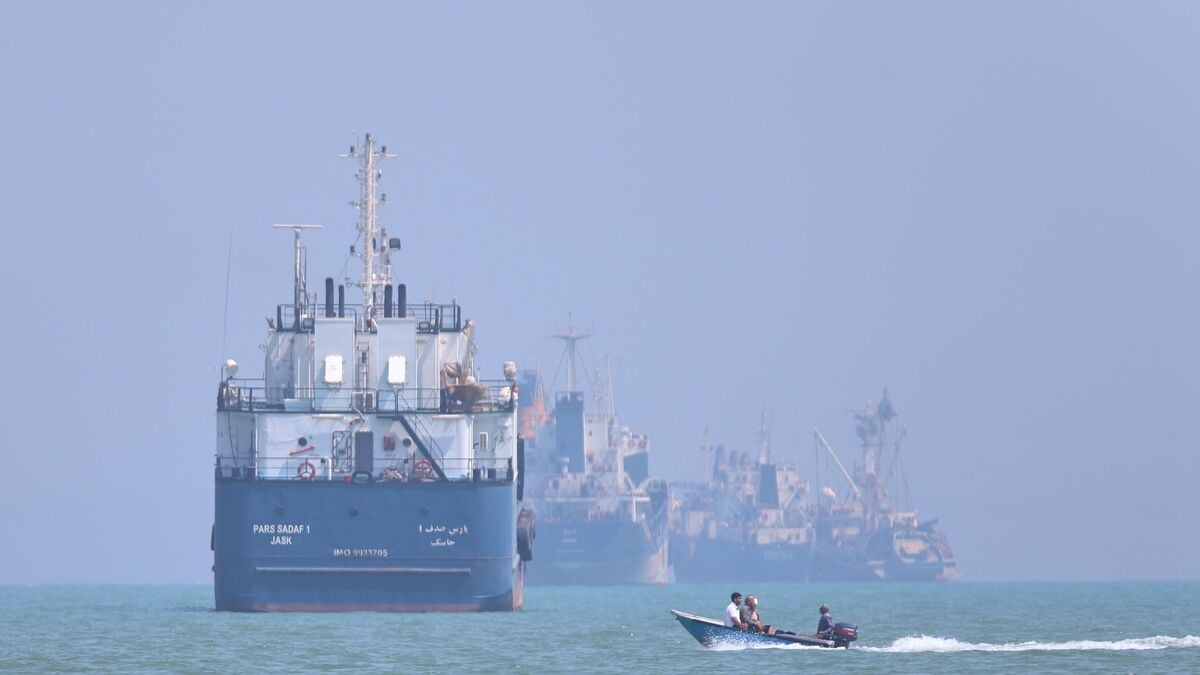
There have been many developments around the Strait of Hormuz since the war in Iran began, notes Anders Hermansson, CEO of the industry organization Swedish Shipping.
Therefore, he believes it will take some time for shipping traffic to resume, even if the announced agreement between the US and Iran becomes a reality by the end of the week.
"For quite a long time, there has been great uncertainty about whether the strait is open or closed," he says.
The shipping companies need to know that it is actually a stable situation, that it is safe to go through.
Crew changes
Most of the ships stuck inside the strait have been there since the war began at the end of February.
However, the shipping companies that Swedish Shipping has been in contact with have, in the meantime, been able to carry out crew changes and receive supplies for the ships.
No Swedish ships or sailors
According to Anders Hermansson, none of the ships inside the strait are Swedish-registered. However, there are a few ships with various connections to Swedish shipping companies.
"Currently, there are no Swedish-flagged ships inside the Strait of Hormuz and, as far as we know, no Swedish sailors aboard other ships," he says.
However, there are a handful, or fewer than a handful, of ships that are owned or operated by Swedish shipping companies, for example. They are in slightly different locations and the shipping companies involved are closely monitoring developments.
The Strait of Hormuz between Iran and Oman is 33 kilometers wide at its narrowest point.
Iran and Oman have territorial waters in the strait.
The strait is important for crude oil shipments from Saudi Arabia, Kuwait, Iraq, Qatar, Bahrain, the United Arab Emirates, and Iran because it connects the Persian Gulf with the Gulf of Oman and the Arabian Sea.
The majority of oil shipments go to countries in Asia.
Source: NE, AP.